
Zipper cable Sleeves vs Split cable Sleeves: The Right Match for Cable Mess

The router, the TV box, the laptop, the printer, the chargers — each one comes with its own cable. The result? A messy pile under the desk that somehow eats your phone charger when you need it most.
Using cable sleeves isn’t a new idea. Slip one on, and instantly your space looks cleaner and safer — fewer tangles, less dust, and no more frayed cables. But what most people don’t realize is that not all sleeves are the same. The two most common types — zip cable sleeves and split cable sleeves — may look similar, yet they’re built for completely different needs.

So, how do you choose? The key lies in understanding your scene — what matters more: perfect sealing, or quick flexibility? Let’s break it down.
1. Understanding the Core Difference: Two Personalities, Two Logics
Zipper cable Sleeves – The “Seal and Protect” Type
Zipper cable sleeves are easy to spot — they come with a built-in zipper running along the side. To use, simply gather your cables, tuck them in, and zip them up. That’s it.
What makes them great is their tight, enclosed protection. A zipped cable sleeve seals out dust, pet hair, and debris, while also preventing cables from rubbing against each other. In industrial versions, the materials can even be flame-retardant, oil-resistant, and temperature-tolerant, making them suitable for workshops, automotive wiring, or outdoor installations.

Split cable Sleeves – The “Flexible and Quick” Type
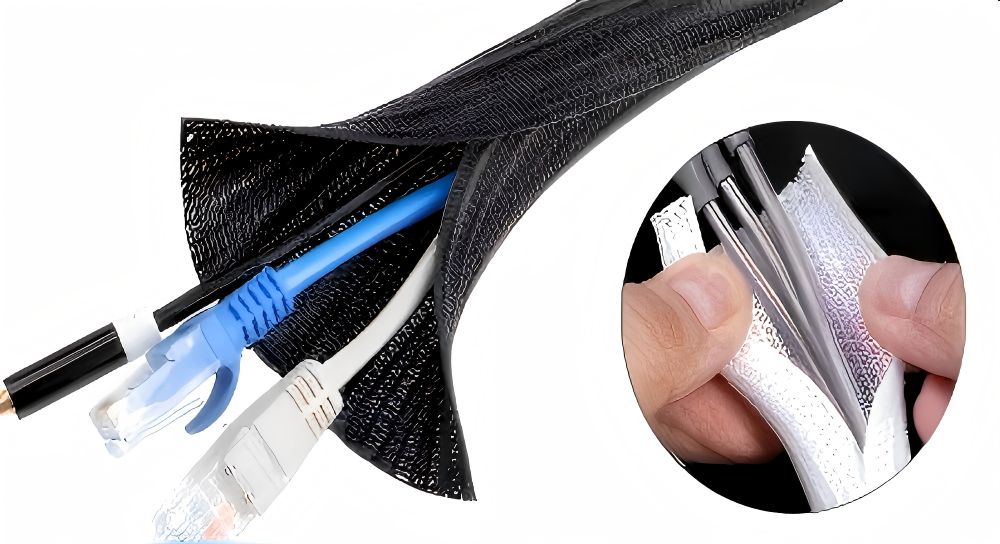
Split cable sleeves, on the other hand, feature a continuous opening along the side. You don’t have to thread cables from one end — just snap them in through the slit.
Need to add or remove a cable later? Pull it open, make your change, and close it back — no tools, no disassembly. That’s what makes split cable sleeves the go-to choice for dynamic setups where cables are often switched or replaced — such as offices, labs, or server rooms.
Of course, the trade-off for that flexibility is slightly less sealing protection. If your environment is dusty or oily, you may need extra sealing clips or wraps for added defense.
2. Scene-Based Selection: The Right Sleeve for Every Environment
No matter where you’re using them — at home, in the office, or on the factory floor — choosing the right sleeve starts with one question:
“Do I need protection, or do I need flexibility?”
Let’s look at how each type performs across different settings.
•Home Use: Choose by Cable Stability
At home, cables usually fall into two groups — the ones that never move (TVs, desktops, routers), and the ones you plug in and out every day (chargers, tablets, game consoles).
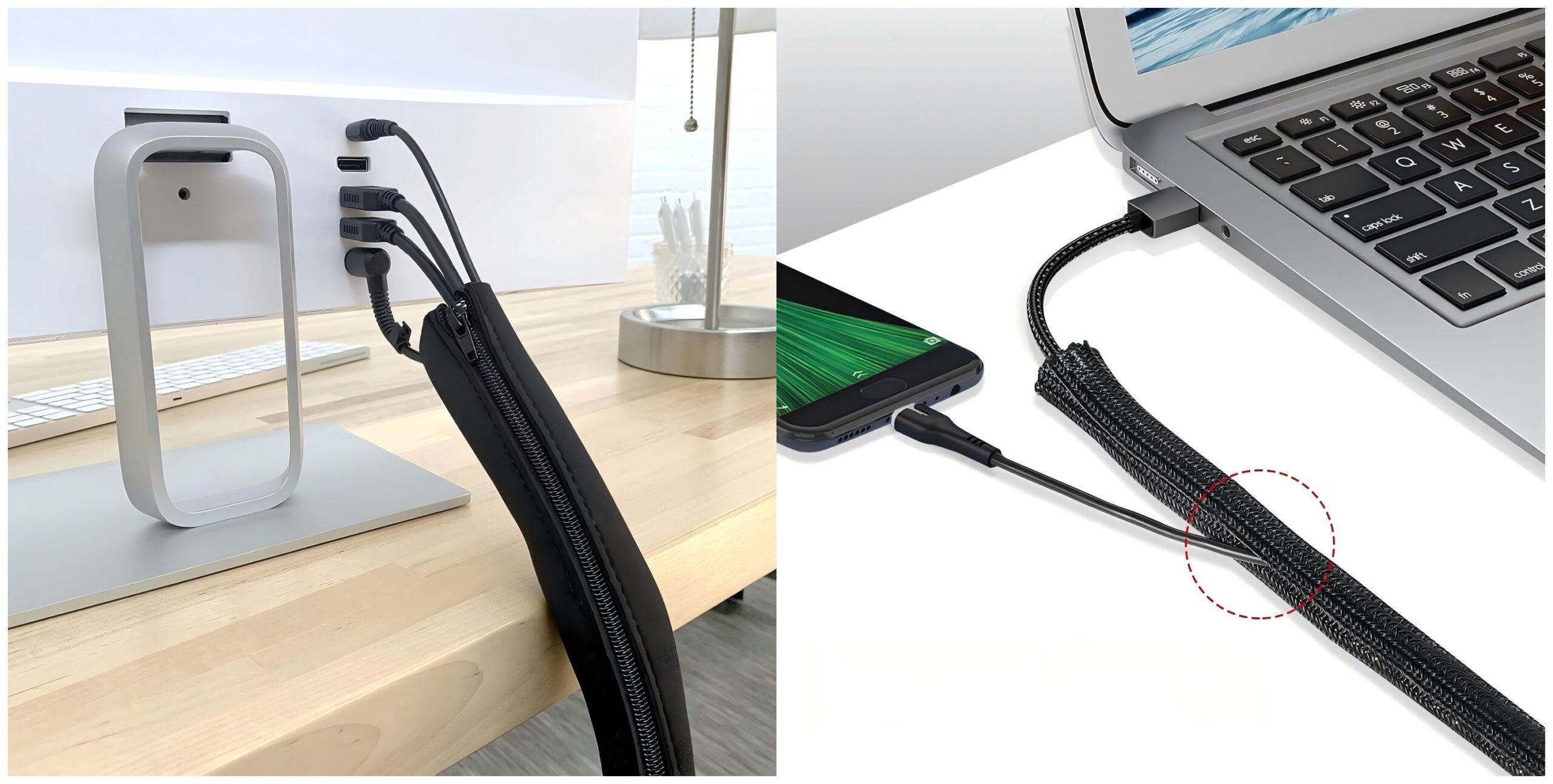
Use zip cable sleeves for fixed setups. Behind the TV, under the desk, or around your PC — zip cable sleeves keep everything sealed, clean, and pet-safe. Some even come in stylish colors to match your decor.
Use split cable sleeves for frequently moved cables. Perfect for charging stations or entertainment corners where devices change often. You can open the sleeve anytime to swap cables without redoing your whole setup.
•Industrial Use: Choose by Environment & Maintenance Needs
In factories or industrial facilities, cable protection isn’t just about looks — it’s about safety and uptime.
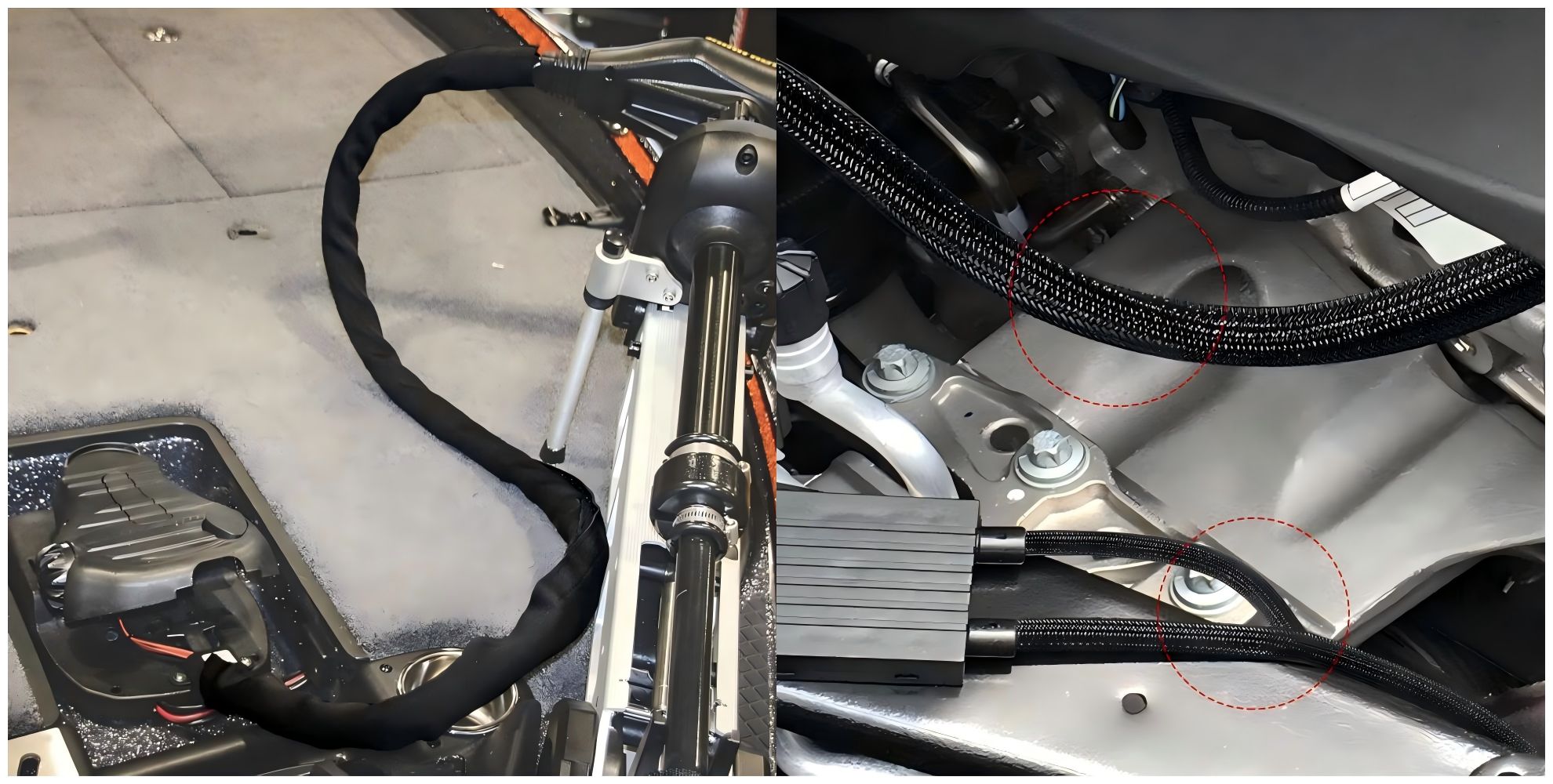
Zip cable sleeves work best in harsh conditions where cables stay in place — like automotive wiring, robotic arms, or outdoor telecom units. With materials that resist oil, UV, and heat, they protect cables from environmental damage and mechanical impact.
Split cable sleeves are ideal for systems that need regular maintenance or reconfiguration, such as production lines, repair stations, or data centers. They open and close instantly, letting technicians inspect or replace cables without disassembling the whole setup — saving time and reducing downtime.
3. Beyond Cable Management: The Hidden Long-Term Benefits
Final Takeaway: Don’t Just Organize — Optimize
Cable sleeves today aren’t just “tidy-up tools.” They’re part of a smart system that adapts to how you work and live.
If you need tight sealing and long-term protection, go for the zip cable sleeve.
If you value speed, access, and flexibility, the split cable sleeve will make life easier.
So next time your cables start to look like spaghetti, don’t just grab the first sleeve you find.
Ask yourself one simple question:
“Do I need something that seals tightly — or something that adjusts easily?”
Once you know that, you’ll not only fix the clutter but create a cleaner, safer, and more efficient space — whether it’s your living room, your office, or your factory floor.

Hey there, I’m Tracy!

Get A Quote


Related Post You May Also Like
Spiral Wrap Sizing: 9 Mistakes That Ruin Cable Bundles
[pac_divi_table_of_contents included_headings="off|on|on|off|off|off" exclude_headings_by_class="on" active_link_highlight="on" level_markers_3="icons" title_container_padding="10px|15px|10px|15px|true|false" title_container_bg_color="#333333" body_area_height="650px"...
The Hidden Hero of Electrical Safety: Why Insulation Sleeves Are Often Overlooked
[pac_divi_table_of_contents included_headings="off|on|on|off|off|off" exclude_headings_by_class="on" active_link_highlight="on" level_markers_3="icons" title_container_padding="10px|15px|10px|15px|true|false" title_container_bg_color="#333333" body_area_height="650px"...
Velcro Cable Management Sleeve: A Reusable Solution
[pac_divi_table_of_contents included_headings="off|on|on|off|off|off" exclude_headings_by_class="on" active_link_highlight="on" level_markers_3="icons" title_container_padding="10px|15px|10px|15px|true|false" title_container_bg_color="#333333" body_area_height="650px"...
How to Hide the Cables: 5 Easy Cable Management Guide
[pac_divi_table_of_contents included_headings="off|on|on|off|off|off" exclude_headings_by_class="on" active_link_highlight="on" level_markers_3="icons" title_container_padding="10px|15px|10px|15px|true|false" title_container_bg_color="#333333" body_area_height="650px"...
0 Comments