
How to Use Spiral Wrap: Installation and Material Selection
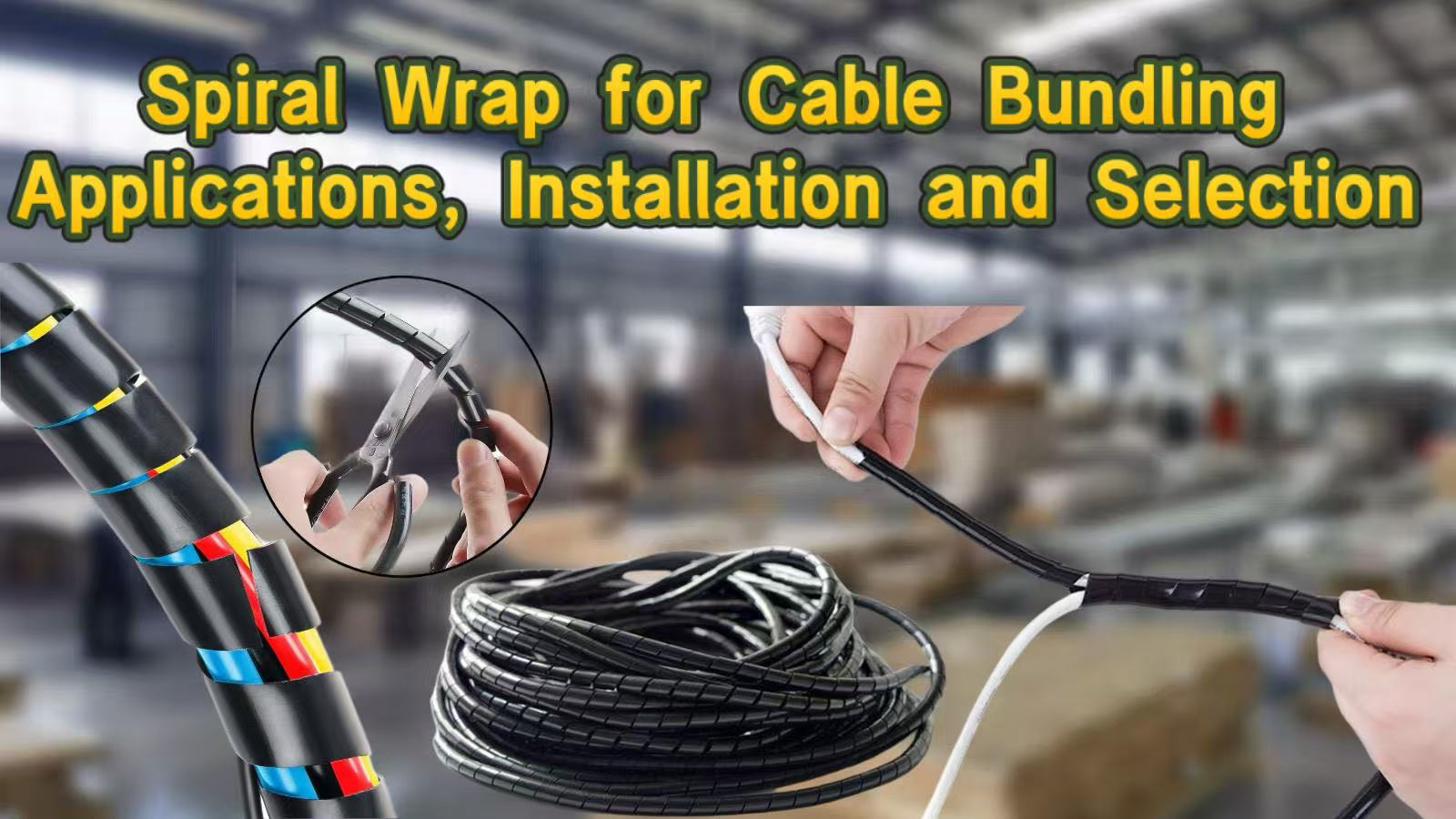
When you manage several cables in one routing path, you need more than a way to hold them together. You also need to control abrasion, keep the bundle flexible, and access individual cables when required. Spiral wrap gives you a practical way to manage these requirements without creating a fully enclosed bundle.
What Can You Do with Spiral Wrap?
When you have multiple cables running in the same direction, you can use spiral wrap to turn them into one organized bundle for cable bundling.
This is useful when your installation has:
Multiple power and signal cables
Different cable sizes in one routing path
Cables that need to bend after installation
Individual cables that need to exit the main bundle
Existing cable assemblies that need additional protection
Spiral cable wrap does more than bundle cables. It helps with cable routing, cable protection, and easy cable access. If a cable needs to branch out, you can pull it through the gap between the spiral turns without removing the whole wrap. This makes it useful for changing layouts and easy maintenance.
How Does Spiral Wrap Help You Protect a Cable Bundle?
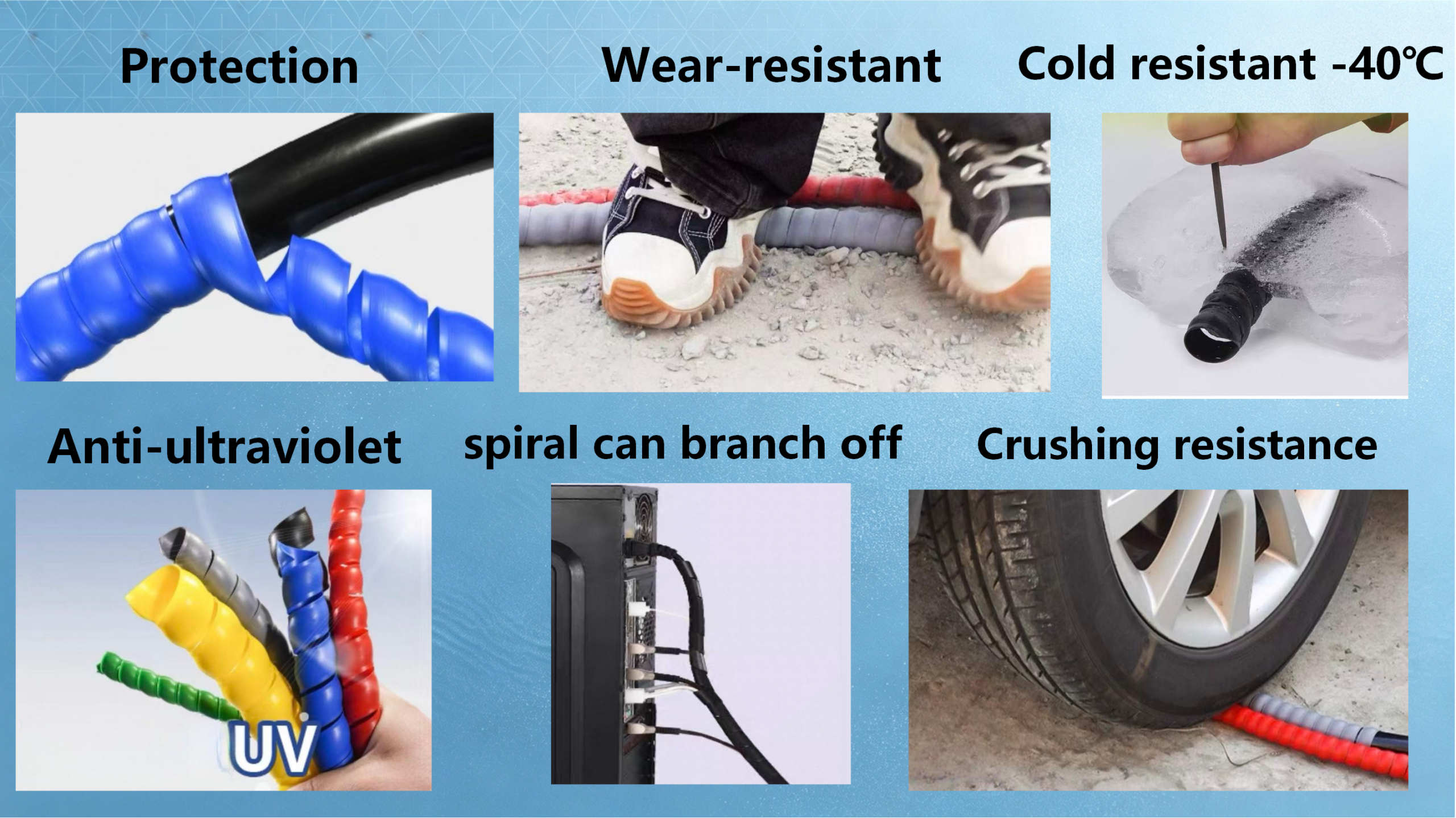
Spiral wrap is designed to protect cable bundles while keeping them flexible and easy to access. It helps reduce abrasion caused by contact with equipment, brackets, edges, or other cables, providing cable abrasion protection. It can also withstand temperatures down to -40°C, making it suitable for cold environments.
For outdoor applications, UV resistance helps protect the wrap from long-term sunlight exposure. Its spiral structure simplifies cable branching. You may pull individual cables out through gaps between coils, with no need to remove the whole wrap. It helps reduce abrasion caused by contact with equipment, brackets, edges, or other cables, providing cable abrasion protection.
These benefits suit automotive harnesses, industrial machinery, outdoor equipment and other cable routing jobs that require cable protection, flexibility and easy access.
How Do You Install Spiral Cable Wrap?
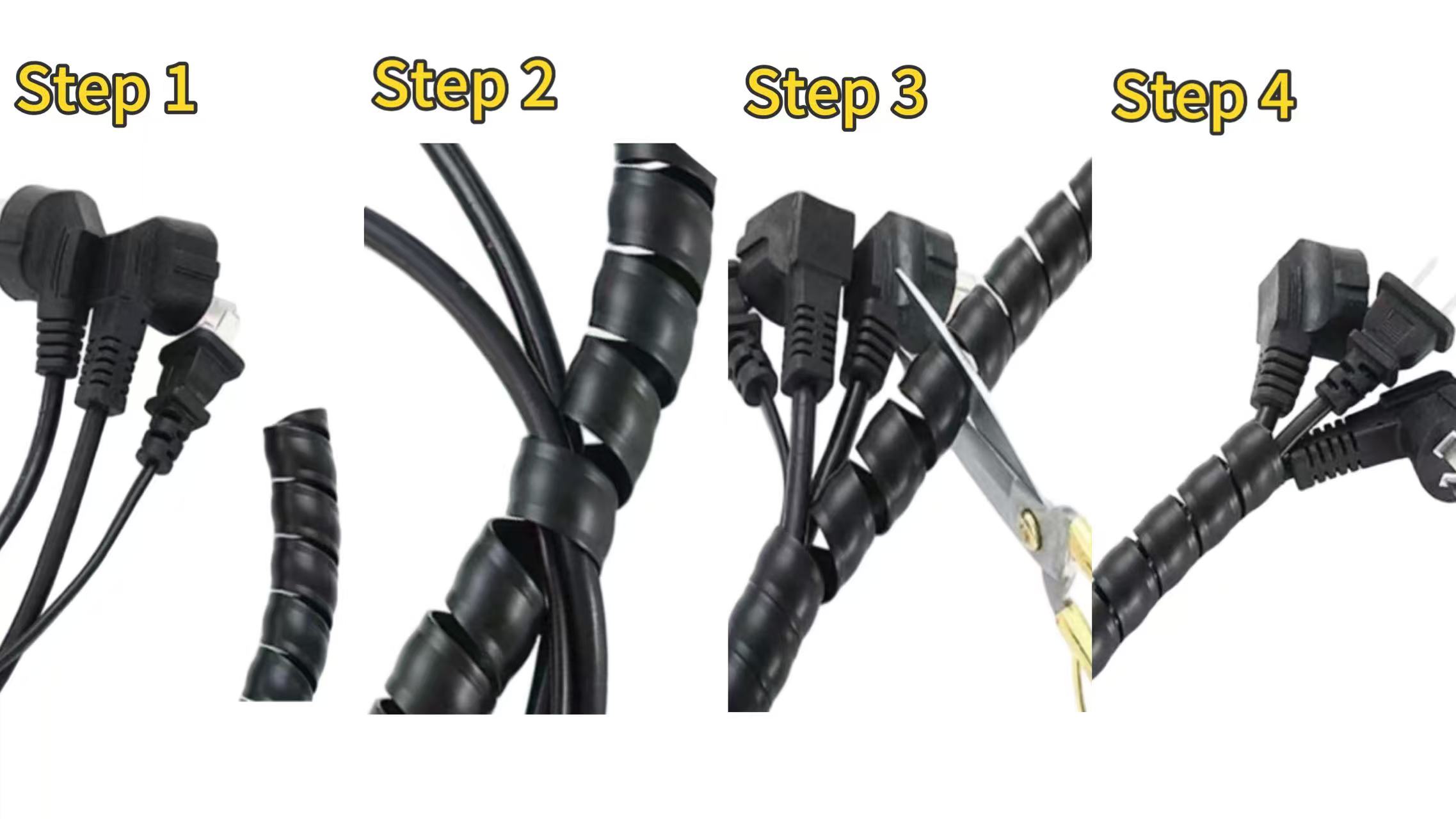
Spiral Wrap can be installed without disconnecting the cables. The basic installation process is simple:
1. Measure the Cable Bundle
There is a simple method, wrap a string around the cable bundle and mark where it meets. Then measure the string with a ruler to get the bundle circumference.Leave extra space if you plan to add more cables later.
2. Choose the Right Size
Select a Spiral Wrap size that fits the bundle while allowing enough flexibility for the application. Consider the cable diameter, number of cables, bending requirements, and future expansion.
3. Wrap the Cables
Start at one end of the bundle and wind the Spiral Wrap around the cables. Keep the wrap secure but avoid excessive tension. Adjust the spacing between turns according to the required flexibility and protection.After installation, simply cut it to the desired length as needed.
4. Check the Installation
After wrapping, make sure the bundle can follow its intended routing path without excessive compression or tension. For moving cables, check the bundle during actual movement.
How Should You Choose Spiral Wrap Material?
The right material depends on the working environment, required flexibility, abrasion resistance, and temperature range—not simply appearance or price.
Polyethylene Spiral Wrap
Polyethylene spiral wrap is a flexible and cost-effective option for cable bundling and protection. It is suitable for routine cable management that does not require extreme temperatures and chemical resistance.
Operating temperature range: Around -40°C to +100°C.
Nylon Spiral Wrap
Nylon Spiral Wrap is an option when higher abrasion resistance than standard general materials is required. It works well for industrial equipment, automotive applications and other environments where cable harnesses are subject to frequent mechanical contact.
Operating temperature range: Around -40°C to +125°C.
PTFE Spiral Wrap
PTFE Spiral Wrap is designed for harsh environments where high temperature and chemical resistance are critical. It offers a wide temperature range excellent chemical resistance and low friction.
Operating temperature range: Up to around 260°C。
Where Can You Use Spiral Wrap?
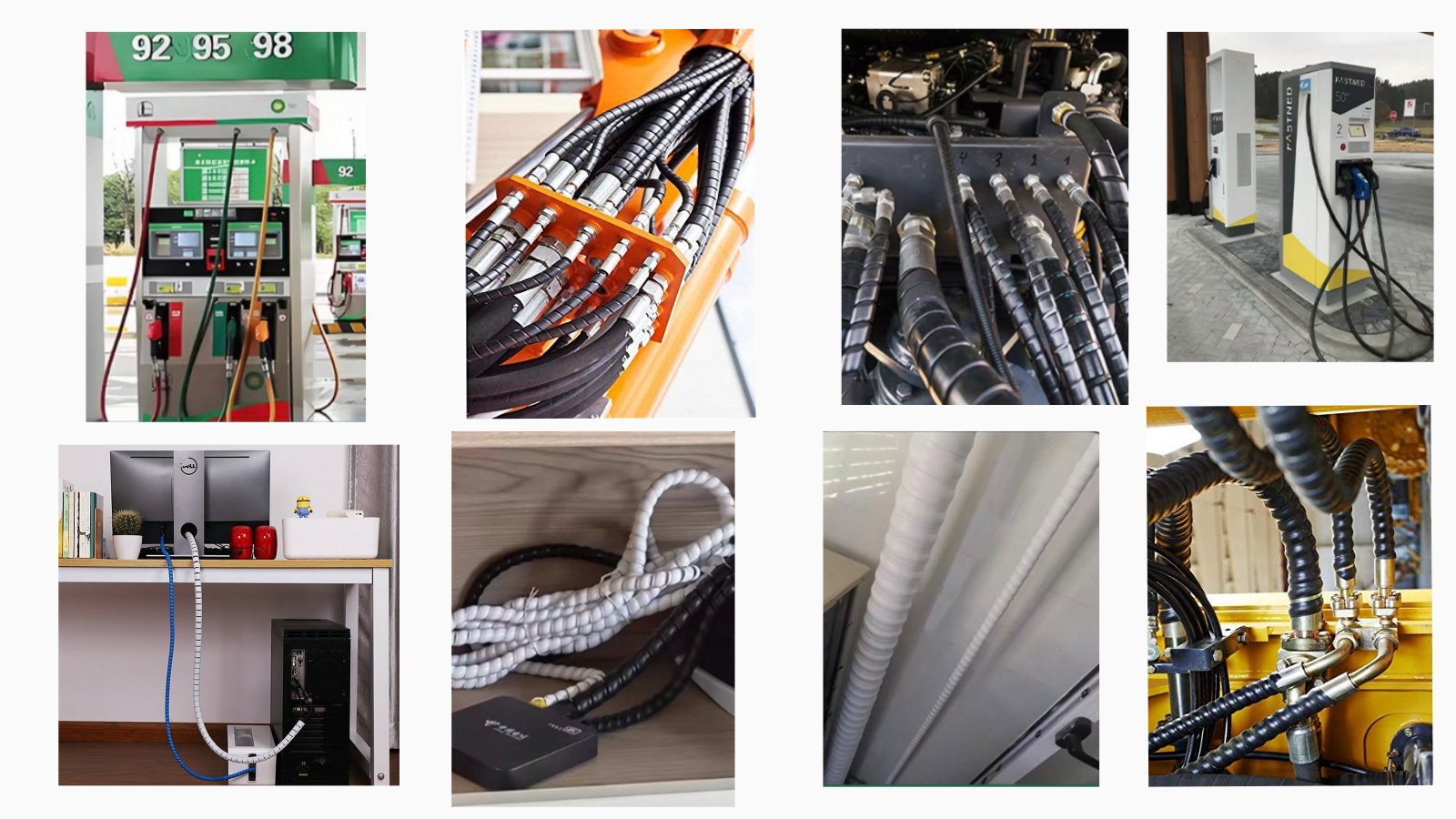
Automotive Cable Harnesses
Cars have many wires running through the engine bay, doors, dashboards, and other tight areas. Spiral Wrap can group these wires and help reduce rubbing against nearby parts. Its open design also makes it easier to access individual wires during maintenance. This makes it suitable for Automotive Wiring and automotive wire harness protection.
Robotics and Automation Equipment
Robots and automated machines often have cables that move, bend, and change direction during operation. Spiral Wrap can keep these cables together and help prevent them from spreading around the machine. For high-frequency movement, the wrap should be selected based on the cable movement and bend requirements. It also works for Robotic Cable Protection Spiral Wrap and robot cable protection applications requiring flexible cable routing.
Industrial Machinery
Industrial spiral wrap can be used for Industrial Cable Management and industrial cable protection. Industrial machines may have power cables, control wires, sensor cables, and air lines running between different components. Spiral Wrap can bring these lines into a cleaner bundle and make cable routing easier.
Electrical and Electronic Equipment
Control cabinets can contain many wires going to different terminals, switches, sensors, and other components. Spiral Wrap can group wires according to their routing direction and keep the wiring area more organized. It is useful when cables may need to be checked, replaced, or added later.It can also be used for control panel wire protection and control cabinet cable management.
Office and Computer Cable Management
Desks and workstations often have power cords, monitor cables, network cables, and USB cables running in different directions. Spiral Wrap can combine these cables into a single bundle and reduce loose cables around the desk. This makes it useful as an office cable organizer and for office cable management around workstations.
Hydraulic and Pneumatic Lines
Machines may use electrical cables together with hydraulic hoses or pneumatic tubes, providing cable and hose protection. Spiral Wrap can help keep several flexible lines together along the same route. When used on moving lines, the size and spacing should allow enough room for normal bending and movement.
Appliances and Electronic Equipment
Home appliances and electronic equipment often have several internal wires that need to follow a fixed routing path. Spiral Wrap can help keep these wires together and away from moving or sharp components. It can also provide a simple way to organize wires without using a fully enclosed tube.
Charging and Battery Systems
Battery packs, charging equipment, and power systems may contain multiple cables that need to be routed together. Spiral Wrap can help organize these cables and provide basic protection against rubbing during installation and use. The material should be selected according to the temperature, abrasion, and electrical requirements of the application.
How Does Spiral Wrap Compare with Other Cable Protection?
You should choose the protection method according to the problem you need to solve.
| Solution | When You May Consider It | Main Consideration |
|---|---|---|
| Spiral Wrap | Flexible bundling and easy breakout | Protection performance varies with material and opening gap |
| Braided Sleeve | More continuous bundle coverage | Less convenient for individual cable breakout |
| Heat Shrink | Tight and more permanent protection | More difficult to modify after installation |
| Hook and Loop Cable Tie | Simple cable fastening | Limited physical protection |
| Split cable Sleeve | Frequent opening and closing | Focuses on wire harness organization while providing basic abrasion protection |
FAQ About Spiral Wrap
Q1: What size Spiral Wrap do I need?
A: First, the outer diameter of the cable bundle. Second, consider whether extra space is required for movement installation or additional cables.
Q2: How do you install Spiral Wrap?
A: You may wrap the existing cable bundle from one end to the other. Before installation, identify outlet points and adjust spiral pitch per user requirements for protection and flexibility.
Q3: Can Spiral Wrap protect cables from abrasion?
A: Yes, it provides a physical barrier to prevent friction and contact. Actual protection relies on material spiral pitch installation and application conditions.
Q4: Can you use Spiral Wrap for moving cables?
A: You can use it for some moving applications, but you should evaluate the movement frequency, bend radius, torsion, and cable construction before making a selection.
Q5: Can cables branch out from Spiral Wrap?
A: Yes. The spiral structure allows individual cables to exit through the gaps without removing the complete wrap.
Q6: Which material is better for Spiral Wrap?
A: There is no single material that fits every application. PE can suit general cable bundling, while Nylon may be considered where higher abrasion resistance is required. PTFE can be considered for demanding temperature or chemical conditions.
Conclusion
Choose Spiral Wrap based on your application, bundle size, movement, abrasion, environment, and breakout requirements. This helps you select the right size and material while avoiding unnecessary costs. A Spiral Cable Sleeve provides flexible cable bundling, routing and mechanical protection for automotive, industrial, robotic, office and electronic applications.
Hey there, I’m Mia !

Get A Quote


Related Post You May Also Like
Ways to Hide Cables Under Your Desk
[pac_divi_table_of_contents included_headings="off|on|on|off|off|off" exclude_headings_by_class="on" active_link_highlight="on" level_markers_3="icons" title_container_padding="10px|15px|10px|15px|true|false" title_container_bg_color="#333333" body_area_height="650px"...
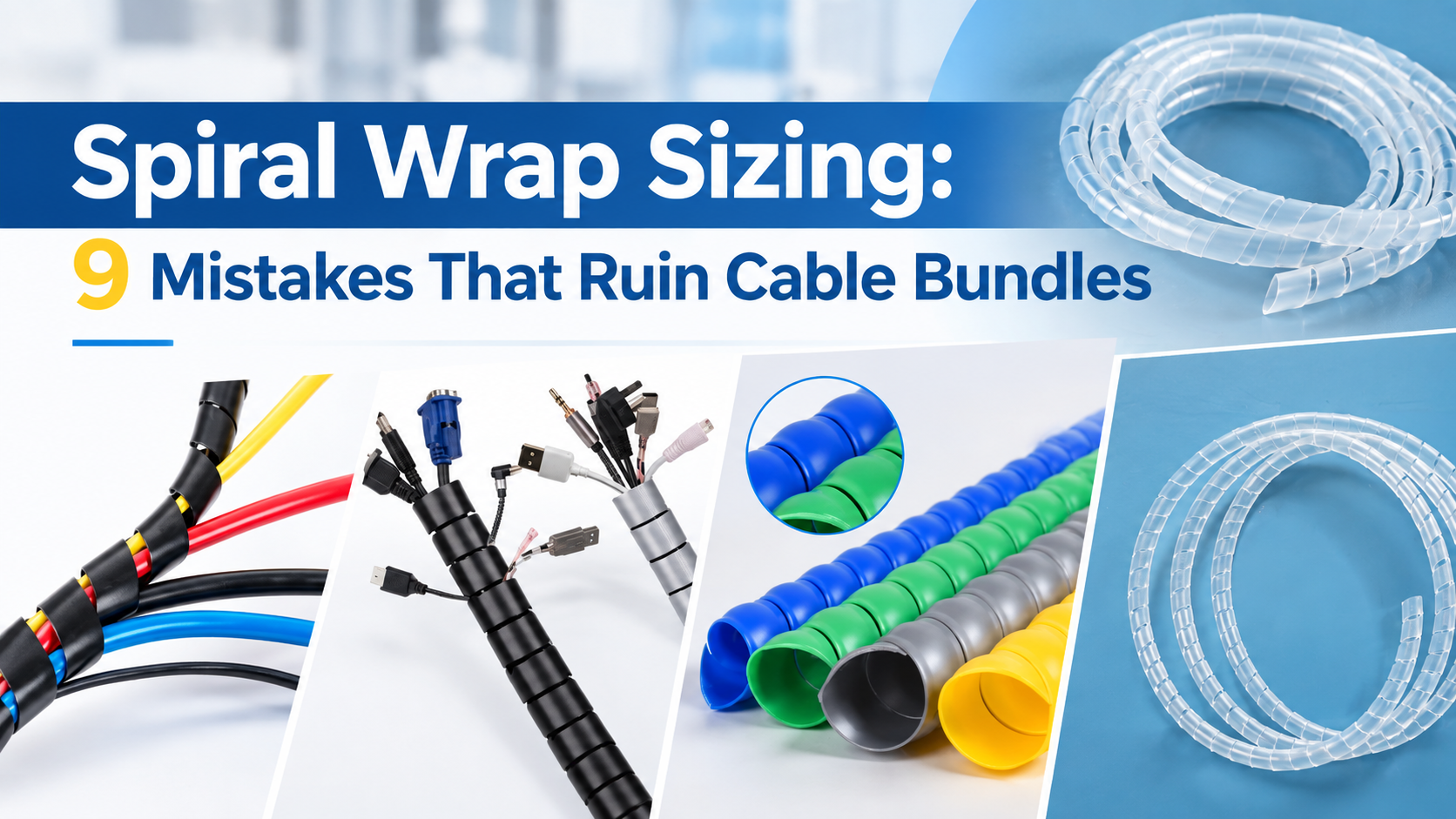
Spiral Wrap Sizing: 9 Mistakes That Ruin Cable Bundles
[pac_divi_table_of_contents included_headings="off|on|on|off|off|off" exclude_headings_by_class="on" active_link_highlight="on" level_markers_3="icons" title_container_padding="10px|15px|10px|15px|true|false" title_container_bg_color="#333333" body_area_height="650px"...
How to Better Protect Your EV Charging Cables
[pac_divi_table_of_contents included_headings="off|on|on|off|off|off" exclude_headings_by_class="on" active_link_highlight="on" level_markers_3="icons" title_container_padding="10px|15px|10px|15px|true|false" title_container_bg_color="#333333" body_area_height="650px"...
How to Find Reliable Cable Sleeve Manufacturers in China
[pac_divi_table_of_contents included_headings="off|on|on|off|off|off" exclude_headings_by_class="on" active_link_highlight="on" level_markers_3="icons" title_container_padding="10px|15px|10px|15px|true|false" title_container_bg_color="#333333" body_area_height="650px"...