
Guide to Corrugated Conduits for Robotics
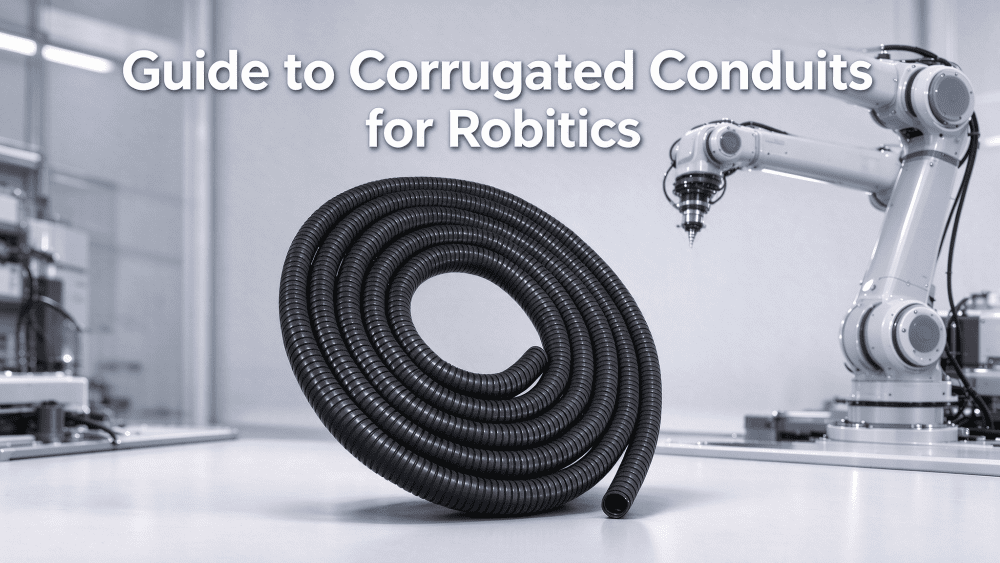
Corrugated conduit is widely used in robotic cable protection .Knowing how to select, route and secure corrugated conduit specifically for robotic dress packs is important.
Material Choice Defines Dress Pack Service Life
Wire loom tubing protect robot cables and hoses. They stop damage from friction, hits, dust, liquid splashes and repeated bending. Material choice directly affects service life and working performance.
PA Corrugated Conduits

PA6 corrugated conduits best for: fixed wiring, low-cycle moving cables, general indoor automation stations. Not for: long-time high humidity, continuous high-flex robot joints.

PA12 corrugated conduits great for: 6-axis articulated robots, delta robots, high-cycle moving harnesses. Not for: strong acid, strong alkali and high-temperature steam.
PP (Polypropylene)Corrugated Conduits
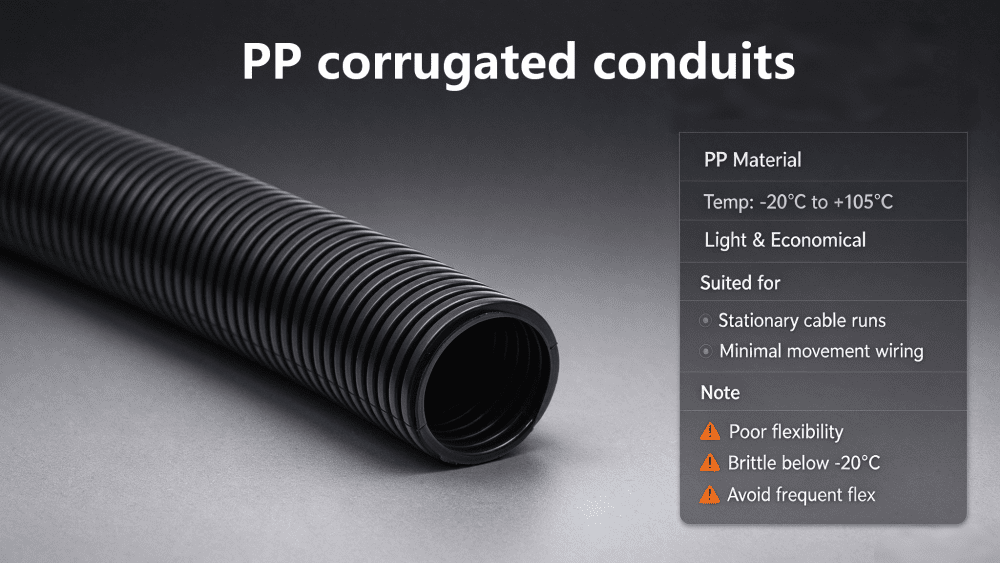
PP wire loom is light and cheap.Its flexibility is poor and easy to crack after repeated bending. PP material continuous working temperature is from -20°C to +105°C, with short peaks to 120°C.So it will get brittle when temperature is below -20°C.
PP corrugated conduits suited for: Stationary cable runs within control cabinets, secondary wiring with minimal movement. Avoid for: fast back-and-forth travel, ongoing flex movement, cold work zones.
PE (Polyethylene)Corrugated Conduits
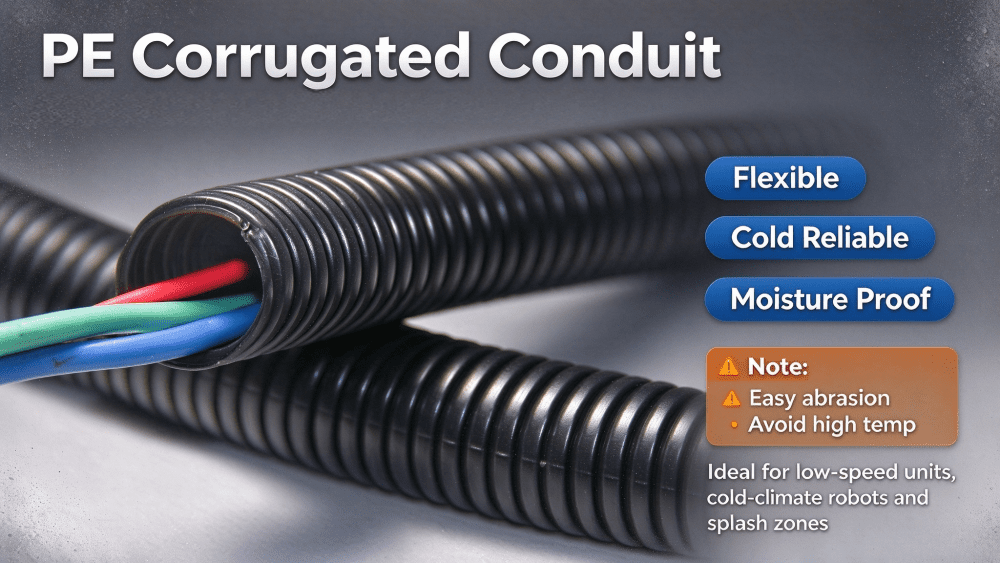
The supple and bendable structure is PE feature. It performs reliably in chilly surroundings and provides solid protection against water and dampness. Even so, its outer layer abrades quickly with rubbing contact. It loses firmness and deforms as heat builds up, and metal shavings can easily leave surface scratches.
PE corrugated conduits is ideal for: Low-speed motion units, outdoor robots operating in cold climates, splash zones without sharp fragments. Avoid for: high-temperature.

| Comparison Item | PET Braided Sleeve | Split Braided Sleeving |
|---|---|---|
| Material | polyester monofilament | Polyester monofilaments & polyester multifilaments |
| Structural Design | Closed | Open |
| Stretchability | Yes(up to 1.5 times) | None |
| Installation | From Top to end | From open side |
| Maintenance | Hard | Easy |
| Environmental Performance | -50℃ ~ +150℃,flame retardant | -50℃ ~ +150℃,flame retardant |
Polyurethane corrugated conduits is very reliable. The PUR corrugated conduit is built to resist wear, tears and oil. It twists many times without breaking .Its continuous working temperature is from -40°C to +90°C, short peak up to 125°C. Besides it stays flexible even at very low temperatures.
Best for: 6-axis robot arms, parts that keep flexing, welding areas and oily workshops.
Not recommended: Long-term exposure, to polar solvent
Split vs. Closed Corrugated Conduits

Closed corrugated conduits are seamless single-piece tubes, without any cut along the side. They wrap cables in a fully enclosed protective cover. Closed corrugated conduits grip cables firmly and won’t pop open or slide around as the robot moves nonstop. They block dust, cutting fluid and liquid splashes far more effectively. They also stop cables from being pulled out or sliding out of the sleeve easily.
You must feed cables all the way through from corrugated conduits one end during fitting. This is slow work if your cables already have plugs and connectors attached.
Closed corrugated conduits ideal for: brand-new cable assemblies, pre-built factory robot wiring, workstations with lots of coolant or dust, six-axis joints with heavy twist loads. Not suited for: fast field upgrades, adding protection to finished cables where you cannot take connectors apart.
Split Corrugated Conduits
Split corrugated conduits have a continuous slit along the tube length. You can open the side wall and wrap the conduit around cables directly. No need to pull cable ends or disconnect existing plugs and sensors.
Split corrugated conduits save a huge amount of work when you add protection to robots that are already wired up. The side slit can gradually separate after long periods of sharp twisting or strong pulling. Split corrugated conduits cannot keep out fine dust and splashed liquid as reliably as the closed version. Improved split styles come with interlocking ridges that snap the slit shut once installed.
Split corrugated conduits great for: on-site maintenance, updating old robot cable sets, temporary cable protection, wiring you need to adjust often.
Not recommended for: places with lots of liquid splashes, spots with constant strong twisting, applications that require full dust sealing.
How to Choose the Right Conduit Size
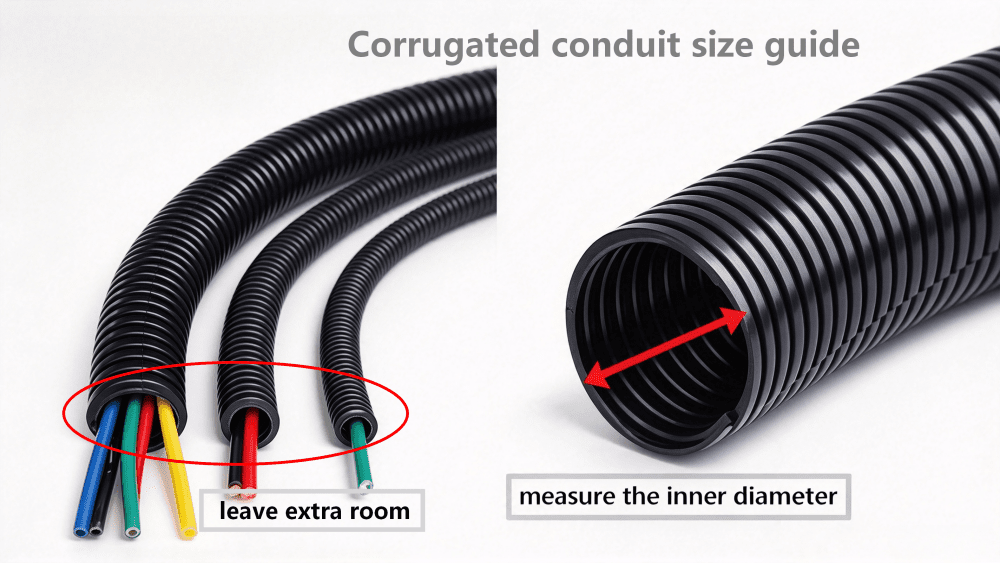
Cables and tubing inside robot dress packs twist continuously during operation. An undersized conduit crushes cable jackets, while an oversized one allows messy shifting and bunching at bends.
First measure the outer diameter of cable bundle, including power wires, signal lines and pneumatic hoses. For dynamic six-axis robotic harnesses, limit the bundle cross-section to 60% of the corrugated conduit’s inner area. This clearance lets wires rotate and slide freely under torsion.
Match your required inner diameter to standard AD sizes and round up. Add extra space for closed corrugated conduit if cables have pre-fitted connectors. Also check the minimum bend radius. Leave extra room for future cable additions, and note that interlocking split corrugated conduits have slightly reduced usable space. Always test the full robot motion range to avoid pinching.
Installation Tips
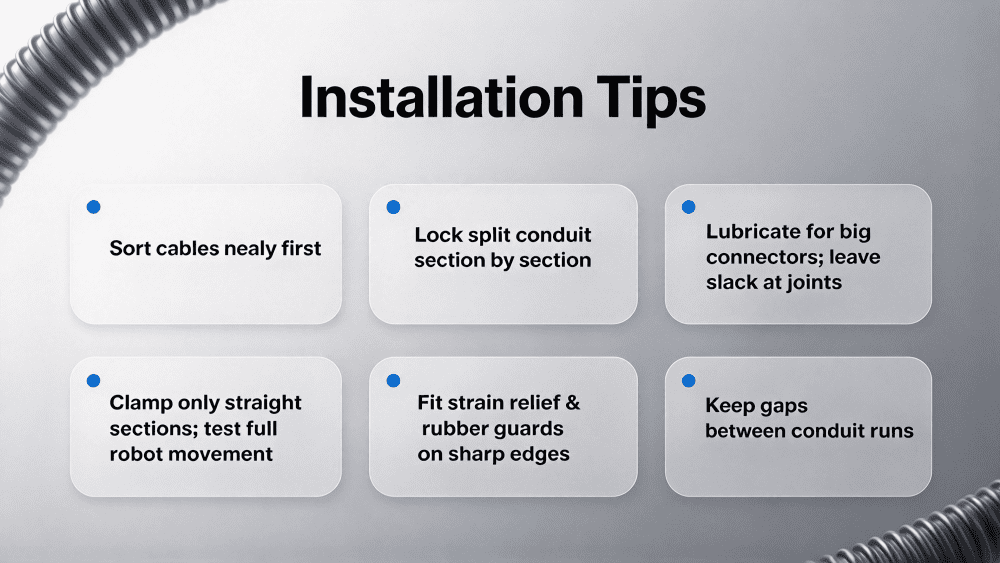
Get your cables sorted and tidy before putting the corrugated tube on. Cables that are all jumbled up will rub together and wear fast as the robot moves back and forth.
Lock the interlocking ridges of split corrugated conduit section by section. If you close the whole slit in one quick action, hidden weak points will open under twisting force.
Use cable-safe lubricant when threading large connectors through closed corrugated conduit. Set aside sufficient slack at every rotary joint. Never pull the cable bundle tight.
Secure mounting clamps only on straight corrugated conduit segments. Clamps placed on bending areas restrict normal flex and trigger fatigue cracks. After installation, run all robot axes through their full travel range. Check for pinched cables, persistent chafing or unlocked seams.
Install strain relief adapters at both outlet ends. These fittings absorb pulling loads and stop conduit ends from tearing. Add rubber edge guards when conduit passes through metal cutouts. Bare sharp metal edges can easily slice through the tube’s outer layer.
Leave gaps between separate corrugated conduit runs.Don’t let the tubes touch each other. Constant rubbing will make them wear out sooner.
FAQ
Q1: Which material suits dynamic 6-axis robot cables best?
A: PA12. It withstands millions of bends. PA6, PP and PE are only for low-movement use.
Q2: Split vs solid conduit, what’s the difference?
A: Split corrugated conduit fits finished cables for easy repairs. Solid conduit offers better dust and splash protection but needs cables threaded through.
Q3: How to pick the right corrugated conduit size?
A: Keep cable fill below 60% of inner space to allow free twisting.
Q4: Why does split corrugated conduit keep popping open?
A: Closing the seam all at once or constant heavy torsion will unlock it. It is not for high-twist work.
Q5: Can PA6 be used for frequently bent robot joints?
A: No. PA6 wears fast under repeated flex. Use it only for stationary or low-cycle wiring.
Q6: Key installation rules for robotic conduit? A: Arrange cables neatly, leave joint slack, clamp only straight sections, separate power and signal wires.
Q7: When should we avoid split corrugated conduit?
A: Avoid it where heavy splashing, constant high torsion or full dust sealing is required.
Q8: What leads to early conduit damage?
A: Overfilled tubing, clamps on bend zones, tight zip ties and tube-on-tube friction.
Hey there, I’m Vicky!

Get A Quote


Related Post You May Also Like
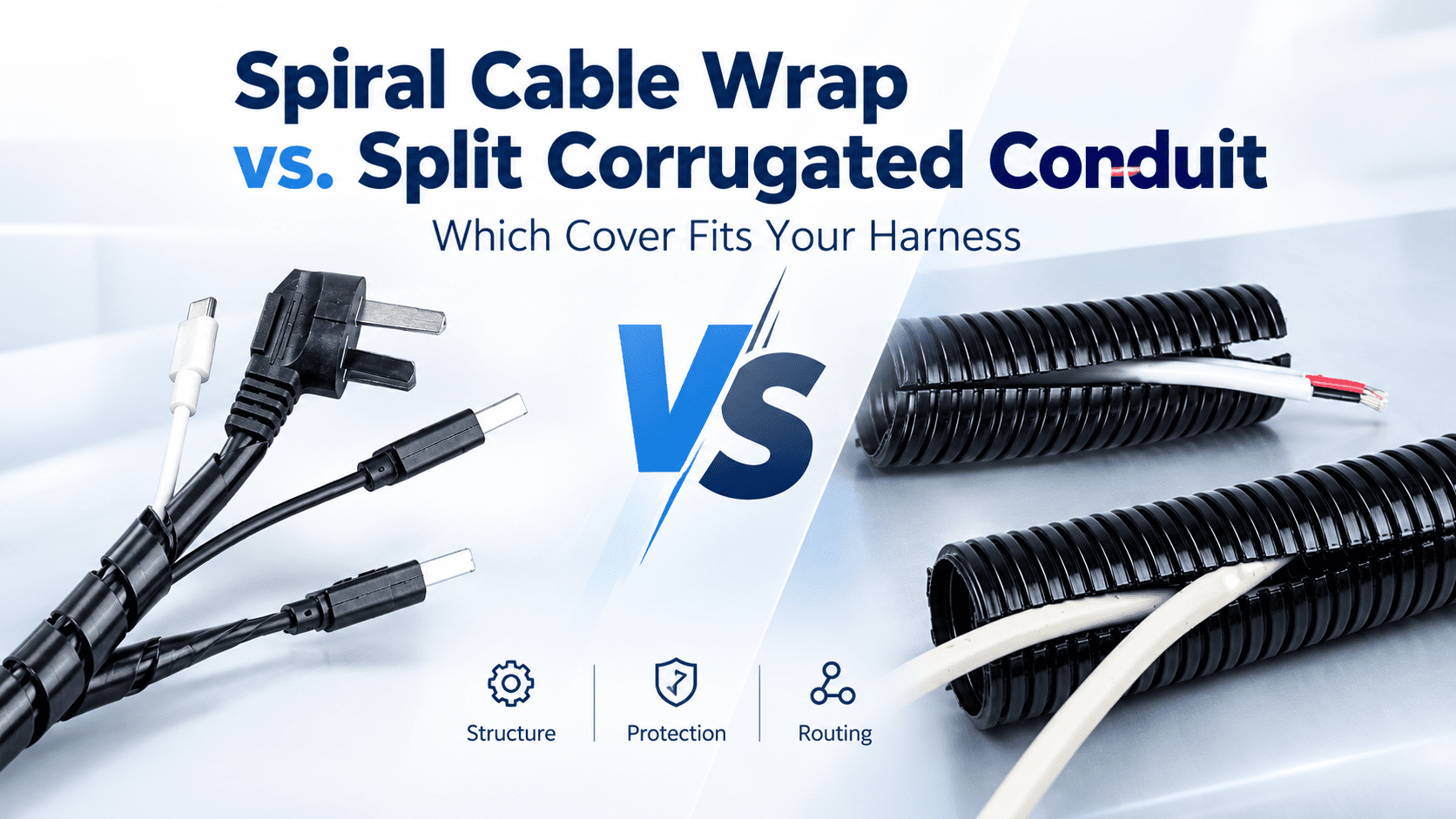
Spiral Cable Wrap vs. Split Corrugated Conduit: Which Cover Fits Your Harness?
[pac_divi_table_of_contents included_headings="off|on|on|off|off|off" exclude_headings_by_class="on" active_link_highlight="on" level_markers_3="icons" title_container_padding="10px|15px|10px|15px|true|false" title_container_bg_color="#333333" body_area_height="650px"...
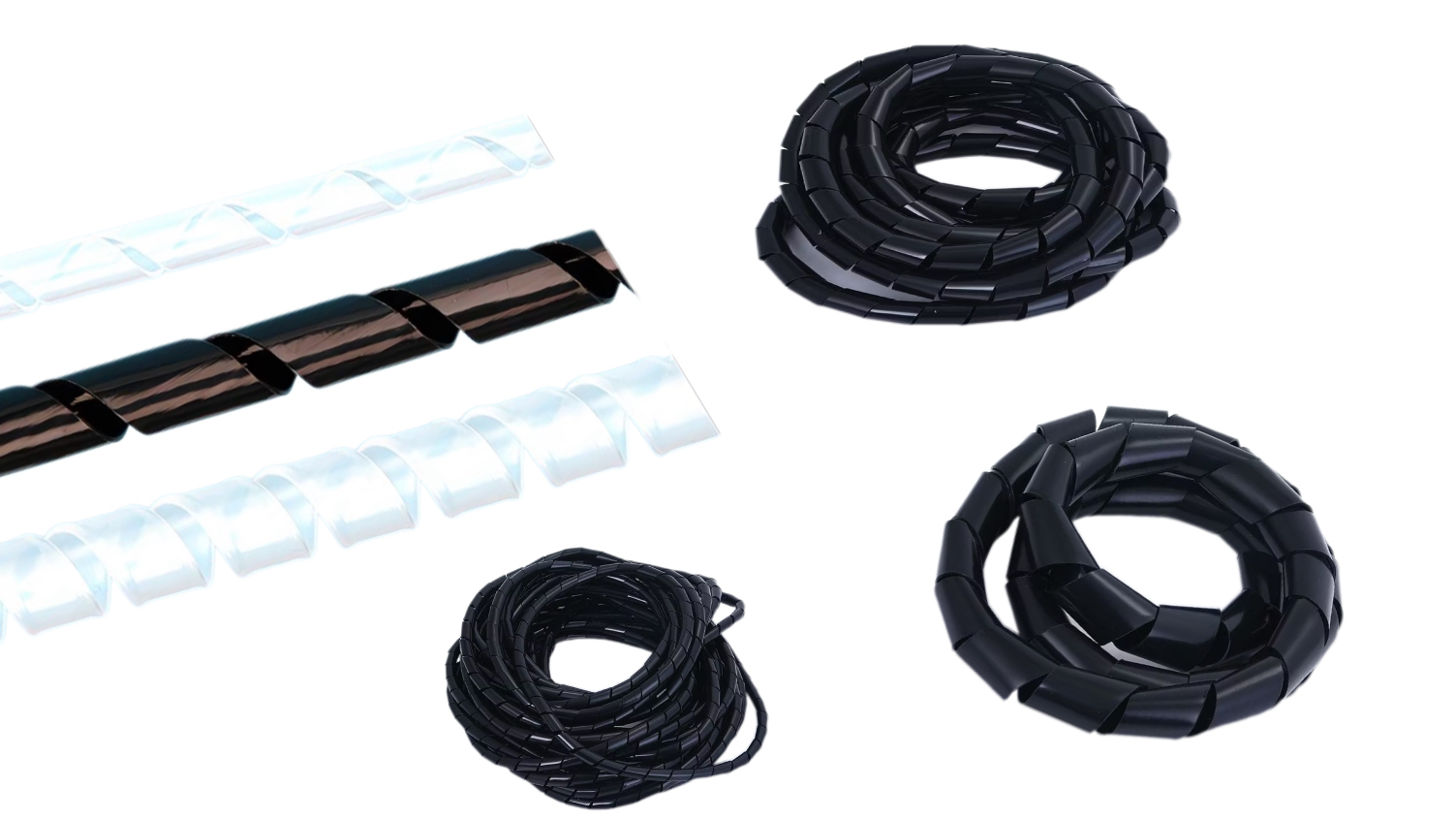
How to Select the Right Spiral Cable Wrap Size
[pac_divi_table_of_contents included_headings="off|on|on|off|off|off" exclude_headings_by_class="on" active_link_highlight="on" level_markers_3="icons" title_container_padding="10px|15px|10px|15px|true|false" title_container_bg_color="#333333" body_area_height="650px"...
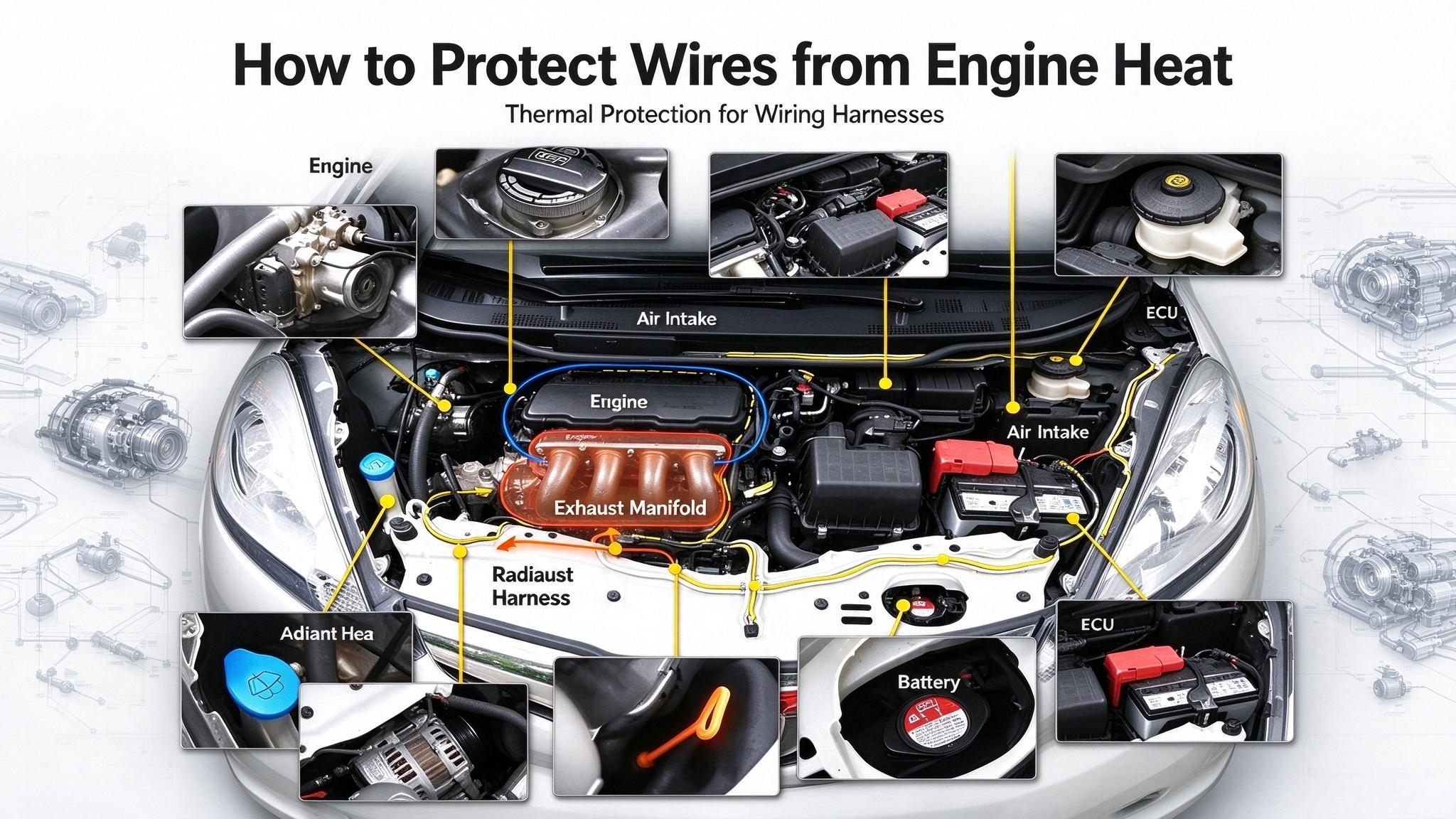
How to Protect Wires from Engine Heat
[pac_divi_table_of_contents included_headings="off|on|on|off|off|off" exclude_headings_by_class="on" active_link_highlight="on" level_markers_3="icons" title_container_padding="10px|15px|10px|15px|true|false" title_container_bg_color="#333333" body_area_height="650px"...

How Data Centers Reduce Cooling Costs Through Better Cable Management
[pac_divi_table_of_contents included_headings="off|on|on|off|off|off" exclude_headings_by_class="on" active_link_highlight="on" level_markers_3="icons" title_container_padding="10px|15px|10px|15px|true|false" title_container_bg_color="#333333" body_area_height="650px"...