
How to Protect Wires from Engine Heat
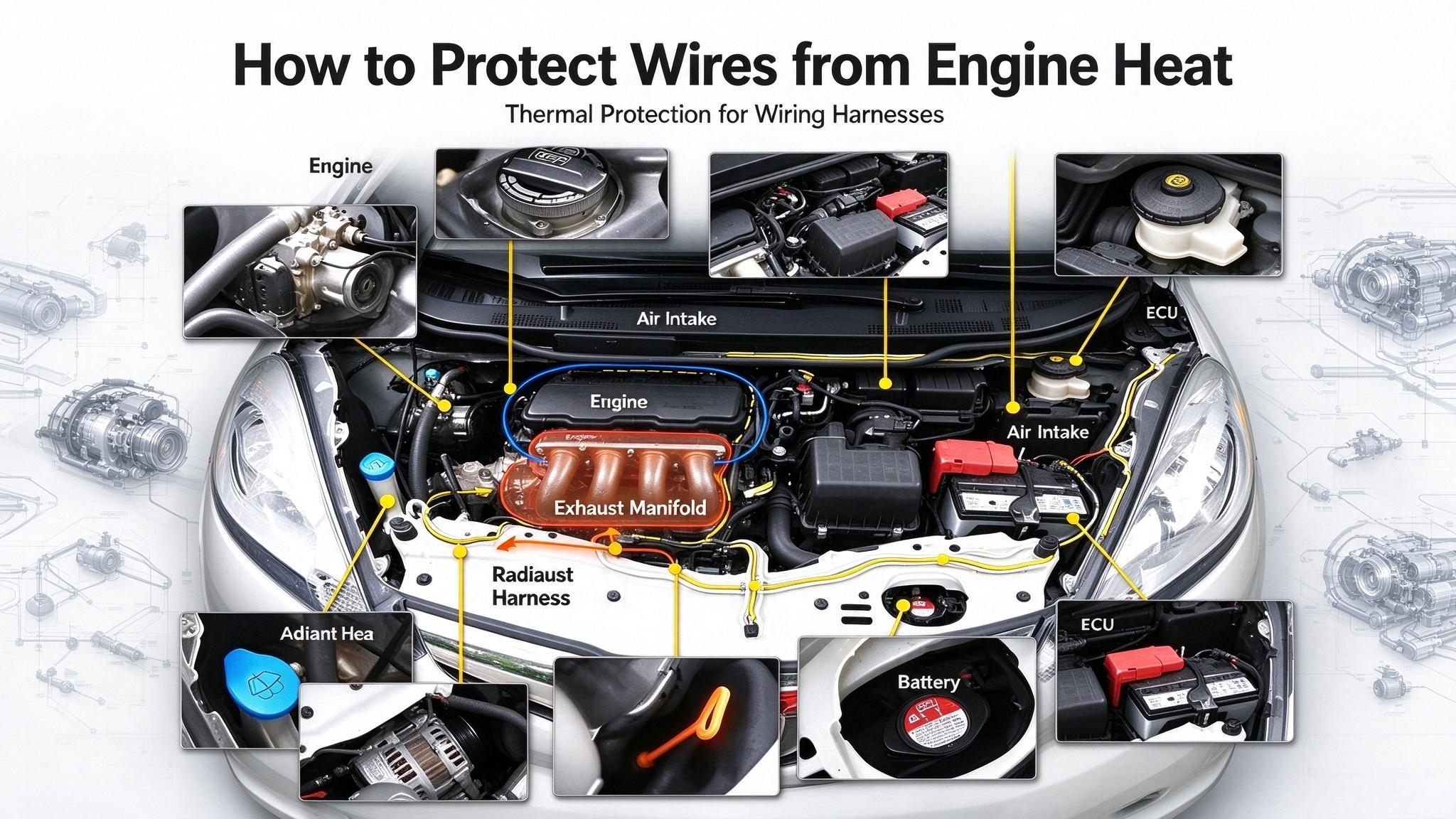
When designing wiring harnesses for engines, turbochargers and exhaust assemblies, don’t leave engine harness thermal sleeve selection till the later design phase. I’ve seen many harness engineering teams lock in specs late in development, and this simple oversight often causes field failures and expensive rework after products ship.
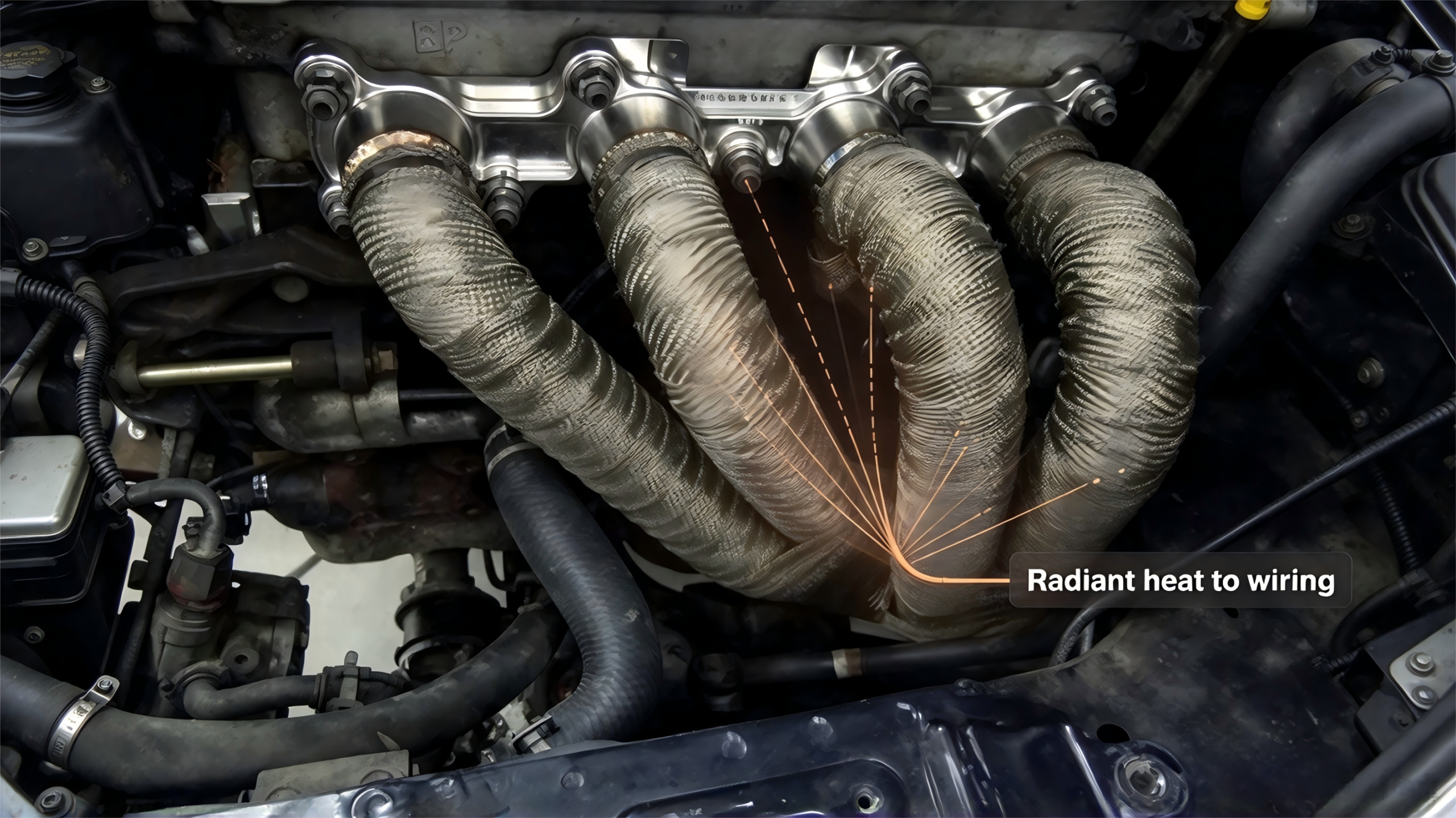
We’ve run into this issue many times, even when engineers choose high-temperature rated wire. One real example: a race car harness built with 125°C GXL wire failed within a single season. Its insulation turned brittle purely from radiant heat coming off the turbo. The harness never even touched exhaust parts. This case proves high-temperature wire alone cannot fully protect your harness. You need thermal sleeving matched to your actual working environment.
Map Your Harness Operating Conditions First
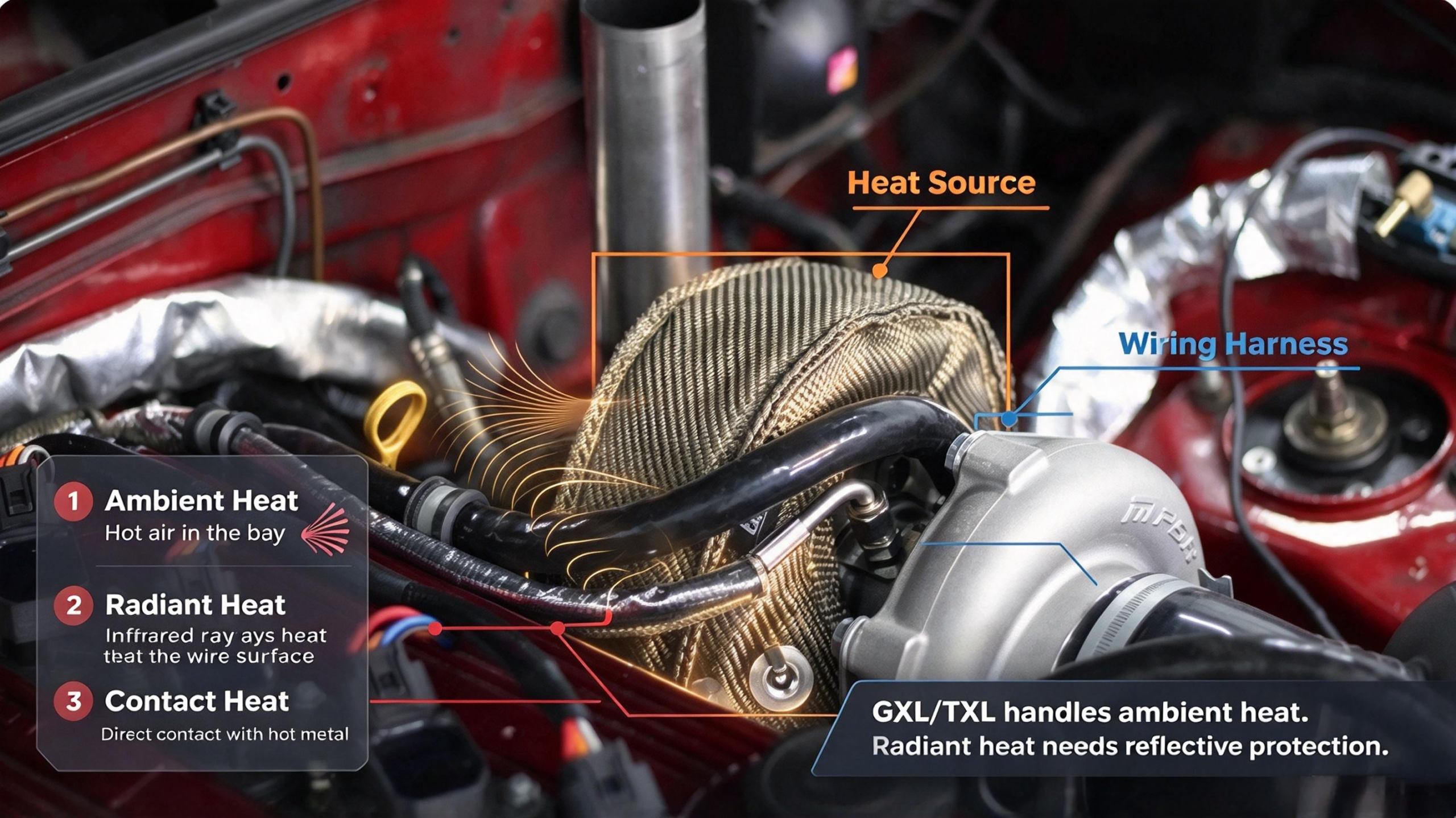
Before finalizing any sleeve product, document your real-world operating conditions. These details decide which product works reliably — and which will wear out early over the service life.
Find out exactly where the heat originates: exhaust manifold, turbo housing or exhaust pipe. Check out the gap between your harness and hot parts. And then see if heat hits the wiring in all the time or just now and then. Pay attention for oil, coolant and chemical splashes, because that can damage the sleeve. Meanwhile, don’t skip mechanical checks. Harnesses shake nonstop, bend repeatedly, rub on brackets and get nicked by sharp metal edges.
Three heat failure modes affect under-hood harnesses. Ambient heat refers to trapped hot air inside the engine bay. SAE J1128 GXL/TXL wire works well for regular harness runs in such environments. Radiant heat comes from infrared radiation released by hot glowing metal. It’s the top culprit behind harness failures close to turbos and exhaust manifolds. Air temperature around the harness might stay normal, but radiant heat can still overheat wire insulation.
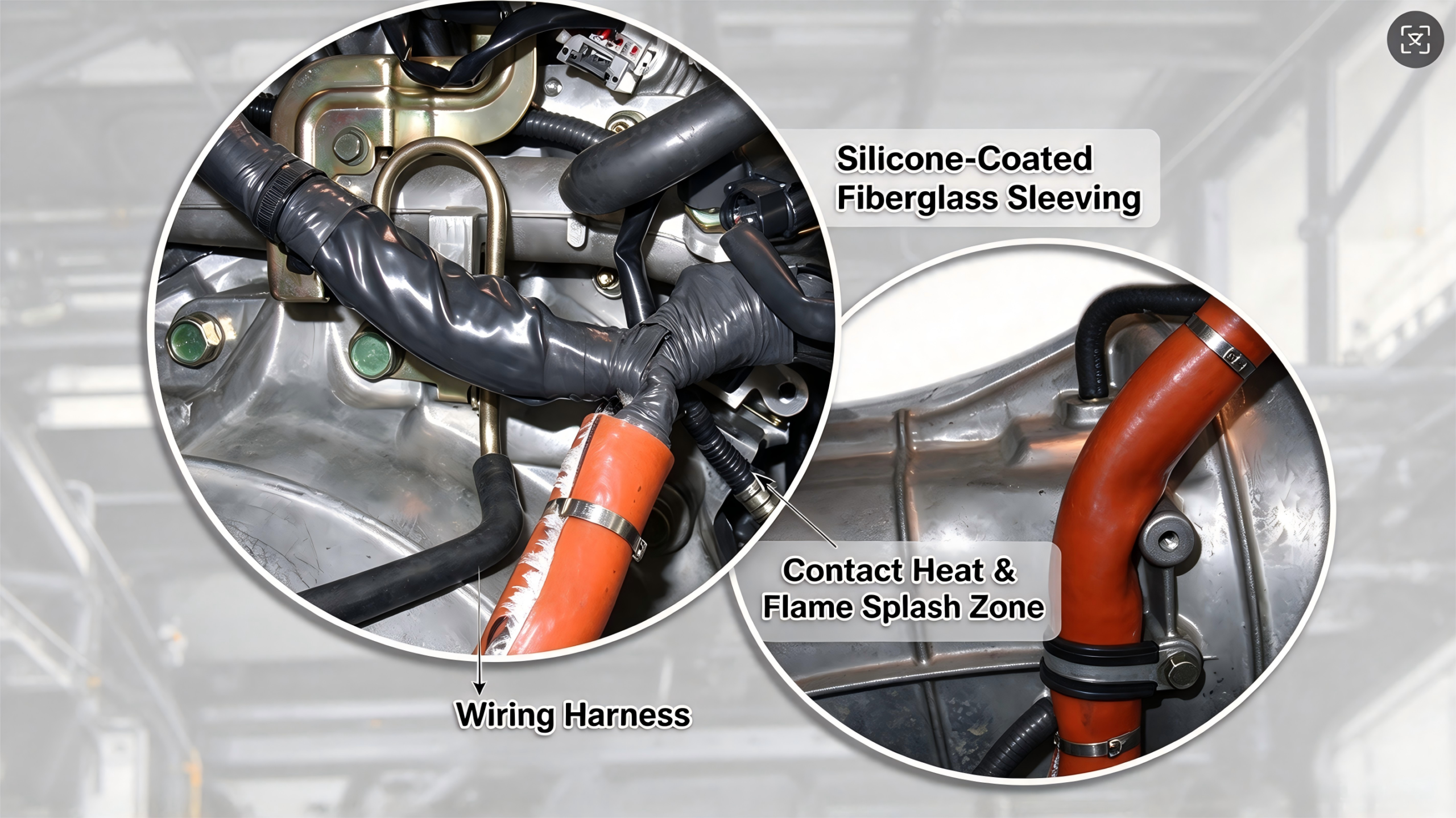
Contact heat happens when harness sits directly against hot metal. No sleeve holds up long under continuous contact.
During installation, leave an air gap between sleeve and hot metal. Air gap is still the simplest and most practical thermal barrier. Secure harness sections at regular intervals to cut vibration and abrasion. A common design mistake: connectors and seals need the same temperature rating as your sleeve. If they don’t match, the connector will become your new failure point.
We offer custom options to fit different project constraints. If connectors are pre-crimped, side-split thermal sleeving works perfectly; you won’t need to remove terminals while installing. Working with tight packaging space? We adjust inner diameter and wall thickness to match your harness bundle. For high-volume assembly, we supply pre-cut lengths goods with finished edges. That will avoid fraying.
Silicone-Coated Fiberglass Sleeve
This is our most common pick for general engine bay routing and areas with occasional flame splashes. It also woks for turbo harnesses exposed to moderate radiant heat, reliably blocking conductive heat and minor flame splatter.
Before placing an order, it is important for run through a few practical checks. Confirm peak continuous temperature, plus whether oil or coolant may splash onto the sleeve. Record harness bundle diameter and mark bending zones. Also confirm if your connectors get crimped before sleeving.
When installing, keep an air gap between sleeve and hot metal. Air gap remains the simplest thermal barrier. Fasten harness at regular intervals to reduce vibration and abrasion. Pay attention to this common pitfall: connectors and seals must match the sleeve temperature rating, otherwise the connectors become your weak link.
Aluminized Fiberglass Sleeve
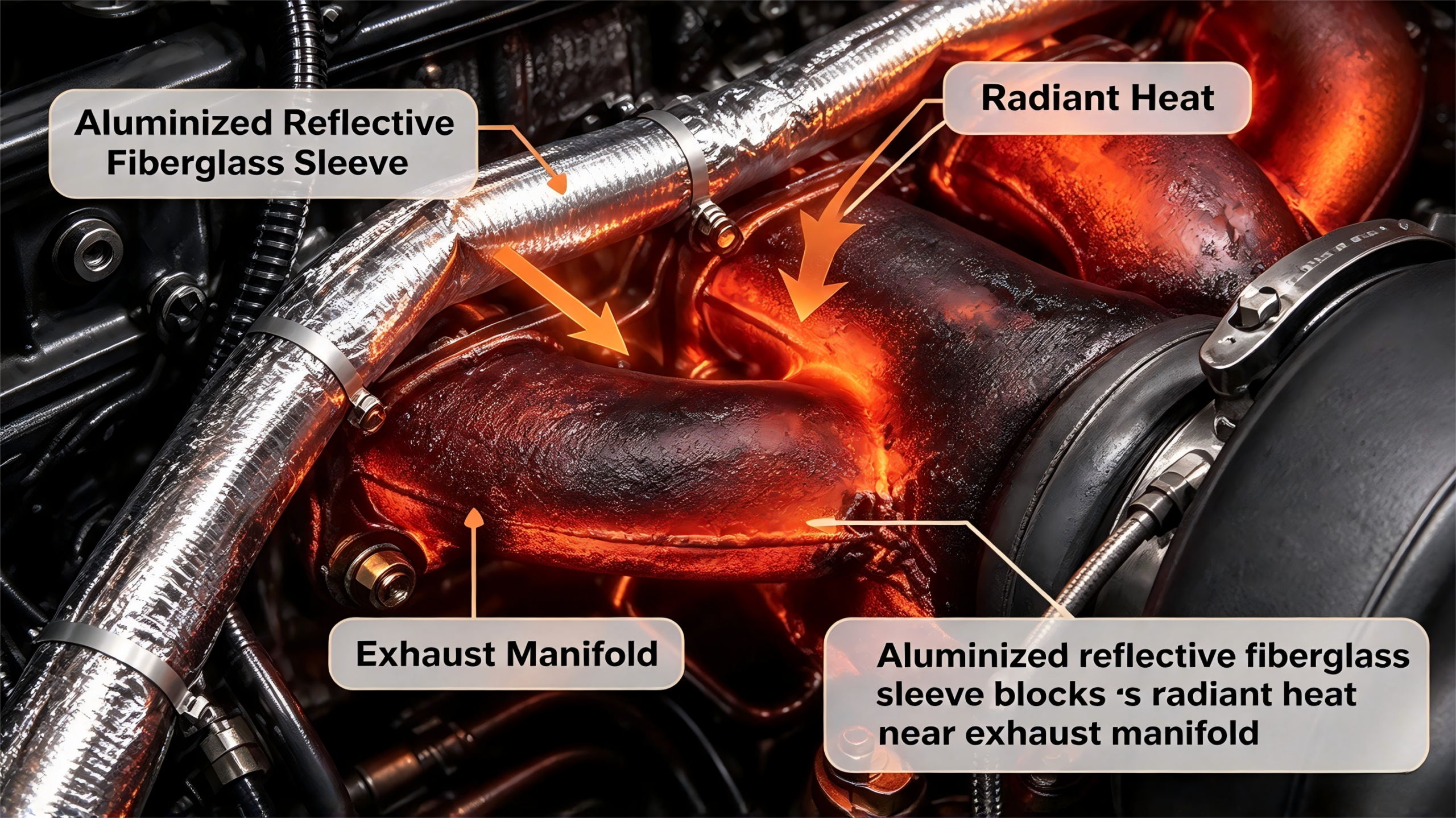
Use this sleeve for harness runs near exhaust manifolds and turbo housings where radiant heat persists nonstop. The outer aluminized layer reflects infrared heat and noticeably lowers wire surface temperature.
Our internal test readings: 350°C heat source → ~55°C drop in wire temperature 450°C heat source → ~83°C drop in wire temperature 550°C heat source → ~110°C drop in wire temperature
Keep its limitations in mind. Oil and dirt stuck to the reflective coating slowly weaken its heat reflection performance. Abrasion wears down the aluminized layer after repeated thermal cycles.
Double-check these project parameters first. Measure the gap between harness and manifold or turbo, confirm peak heat temperature, and evaluate oil contamination and abrasion risks. Write down bundle diameter and minimum bend radius.
During installation, maintain clearance away from hot metal and anchor the harness firmly. Thermal cycling plus vibration gradually wears sleeves over time. Make sure connector temperature ratings match your sleeve selection.
Custom options work for different production scenarios. For finished harnesses with pre-mounted terminals, side-split sleeves let you install without pulling connectors off. Where packaging space is limited, we customize inner diameter and wall thickness. For large orders, we supply pre-cut lengths with crimped or stitched edges to stop fraying.
High Silica Sleeve & High Silica Tape
Reserve this material for extreme thermal conditions: direct flame, molten splatter and sustained ultra-high heat. It’s overkill for standard passenger car engine bays. We typically use it on heavy off-road equipment, aerospace parts and metallurgy machinery. High silica tape works great for odd shapes, connectors and joints where standard tubular sleeves cannot wrap properly.
Before selecting, confirm continuous and peak operating temperatures, and check if flame or molten splatter will occur. Look closely at complex harness geometry: joints, connectors, irregular bundles, and assembly flexibility requirements.
Wrap connectors, bends and transition areas with high silica tape. Pull the wrap tight so vibration won’t loosen it.
We supply custom-width tape and tubular sleeves built to your required inner diameter. Slit sleeves fit harnesses that already have connectors installed. Cut-to-length kits are also available for serial production.
Zone-based Quick Reference
| Zone | Location | Thermal Risk | Recommended Build |
|---|---|---|---|
| 1 | Far from headers / turbo | Low ambient heat | GXL / TXL wire only |
| 2a | Turbo routes with flame splash | Conductive heat + occasional flame | GXL/TXL + silicone fiberglass sleeve |
| 2b | Close to exhaust manifold | Continuous radiant heat | GXL/TXL + aluminized reflective sleeve |
| 3 | Extreme flame / molten splash | Severe thermal hazard | GXL/TXL + high silica sleeve or tape |
Assembly & Pre-Production Validation
Choosing the right sleeve means nothing without proper assembly. Bad installation will cause premature failure. So the connectors, seals and terminals must share the same temperature rating as the sleeve. Just one mismatched component can bring down the whole harness assembly.
Secure harness bundles every 300 mm to reduce vibration and surface friction. Don’t rely solely on lab temperature ratings. Factor in thermal cycling that harnesses face out in the real world. Keep harnesses separated from hot metal parts. Any harness routed within 200 mm of turbos or manifolds needs thermal shielding.
Common Misconceptions
Myth 1: GXL / TXL high-temperature wire alone protects wiring near exhaust components. Fact: These wires only handle ambient heat. Radiant heat slowly degrades wire insulation over time.
Myth 2: All thermal sleeves deliver equal heat protection. Fact: Silicone fiberglass handles conducted heat. Aluminized sleeves block radiant heat. High silica materials stand up to flame and molten splashes.
Always check for sharp metal edges. These slowly wear sleeves as heat cycles repeat.
We strongly suggest sample testing before full production. Fit samples onto your real harness bundle, connectors and bend geometry to test installation fit.
Before the mass production, we will supply you the sample. You can do the testing catches fit and performance issues.
FAQ
1. Does radiant heat damage wires even with engine harness thermal sleeve?
It won’t break the wires right away, but insulation turns brittle over time. As the harness cycles through hot and cold repeatedly, small cracks start to show. This eventually leads to random glitches and shorts.
2. When should I use side-split thermal sleeving for pre-terminated harness?
Go with side-open sleeves when your harness already has connectors crimped on. It’s also the right pick for retrofits where you can’t fully disassemble the wiring harness.
3. How do I pick sleeve inner diameter of thermal sleeve for tight packaging?
First measure the widest point of your bundled harness. Leave some slack for wire bending, and remember to factor in the sleeve wall thickness plus room needed to fit it during installation.
4. Can aluminized fiberglass sleeve survive heavy oil splash on turbo harness?
A little oil splatter won’t immediately destroy it, but repeated heavy oil spray will break down that reflective aluminum layer. If your turbo harness sits where oil sprays often, stick with silicone fiberglass sleeve instead.
5. Do I need sample validation for custom thermal sleeve before mass harness production?
Yes. We always recommend sample testing. It checks fit, thermal performance and vibration resistance, helping you avoid costly field failures once production starts.
6. Can high temperature thermal sleeving bend freely at harness transition joints?
It depends on sleeve material and wall thickness. We adjust wall thickness specifically for bend zones. High silica tape is often the better pick around tight joints and complex transitions.
Submit Your Project Details for Custom Thermal Sleeve Proposal
Send us the materials and data and then we can build a specification tailored to your harness: Drawings or photos showing harness routing Bundle dimensions, bend locations and connector sizes and etcs. Required test standards and acceptance criteria
Closing Thoughts
Engine bay wire protection isn’t as simple as grabbing a standard thermal sleeve off the shelf; it needs to fit your whole harness design.If you’ve got pre-terminated harnesses and need side-split sleeves, custom sizes to fit tight engine bays, or pre-cut lengths for high-volume builds — we build thermal sleeves to match your harness design. Send over your project specs, and we can get samples started for testing.
Hey there, I’m Cheney!

If you have any questions about cable management sleeve protection, feel free to contact me.
Get A Quote


Related Post You May Also Like
How to Select the Right Spiral Cable Wrap Size
[pac_divi_table_of_contents included_headings="off|on|on|off|off|off" exclude_headings_by_class="on" active_link_highlight="on" level_markers_3="icons" title_container_padding="10px|15px|10px|15px|true|false" title_container_bg_color="#333333" body_area_height="650px"...

How Data Centers Reduce Cooling Costs Through Better Cable Management
[pac_divi_table_of_contents included_headings="off|on|on|off|off|off" exclude_headings_by_class="on" active_link_highlight="on" level_markers_3="icons" title_container_padding="10px|15px|10px|15px|true|false" title_container_bg_color="#333333" body_area_height="650px"...
How Cable Sleeving Protects Automotive Wire Harnesses
[pac_divi_table_of_contents included_headings="off|on|on|off|off|off" exclude_headings_by_class="on" active_link_highlight="on" level_markers_3="icons" title_container_padding="10px|15px|10px|15px|true|false" title_container_bg_color="#333333" body_area_height="650px"...

Ways to Hide Cables Under Your Desk
[pac_divi_table_of_contents included_headings="off|on|on|off|off|off" exclude_headings_by_class="on" active_link_highlight="on" level_markers_3="icons" title_container_padding="10px|15px|10px|15px|true|false" title_container_bg_color="#333333" body_area_height="650px"...