
How Cable Sleeving Protects Automotive Wire Harnesses
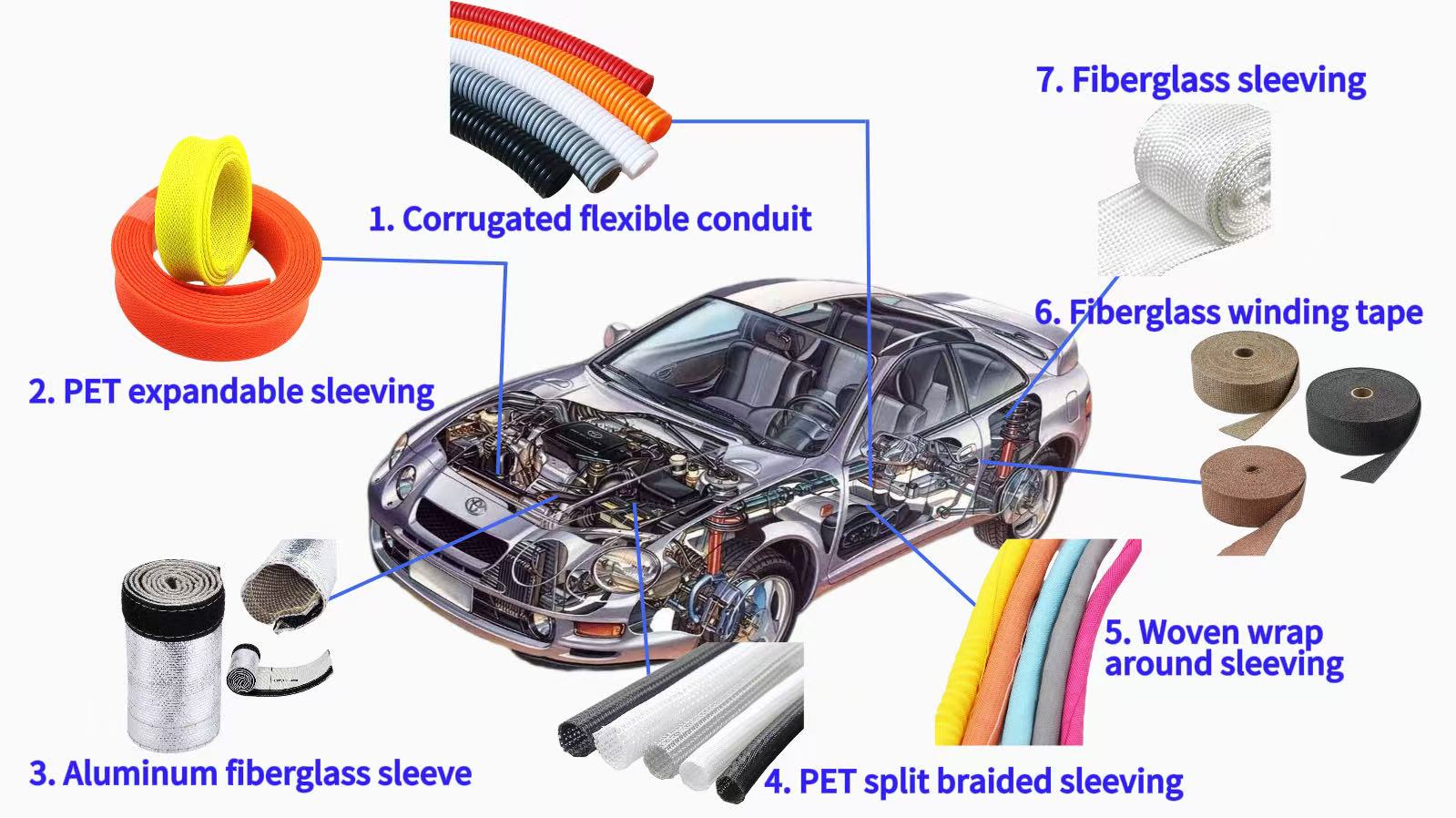
Even a freshly built automotive wire harness may appear flawless after production, but problems tend to emerge long after installation, driven by vibration, chafing, heat and repeated motion. XMQX automotive cable sleeving provides targeted protection for exposed wires in high-risk routing zones.
Automotive Wire Harness Damage and Cable Sleeving Protection
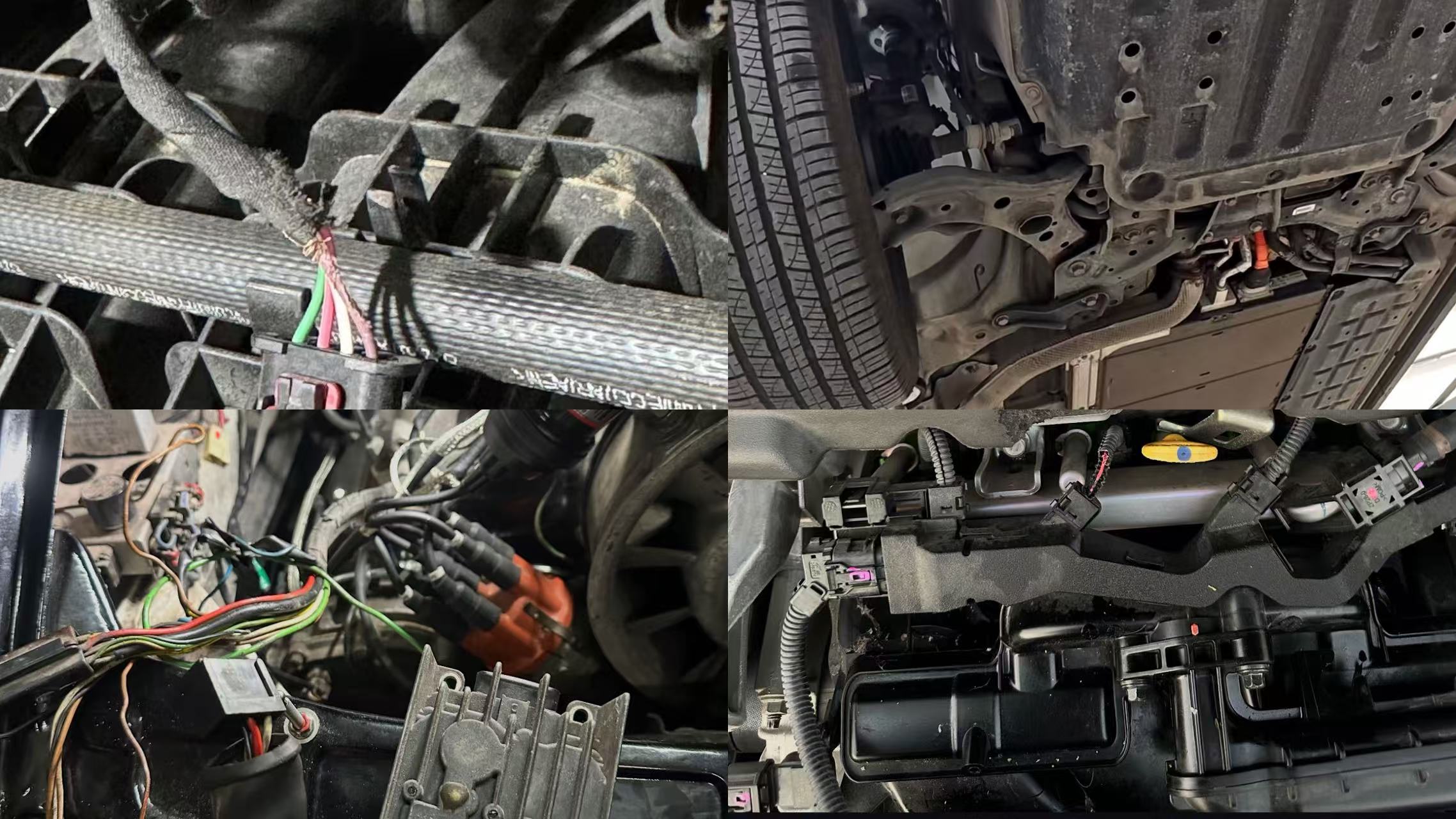
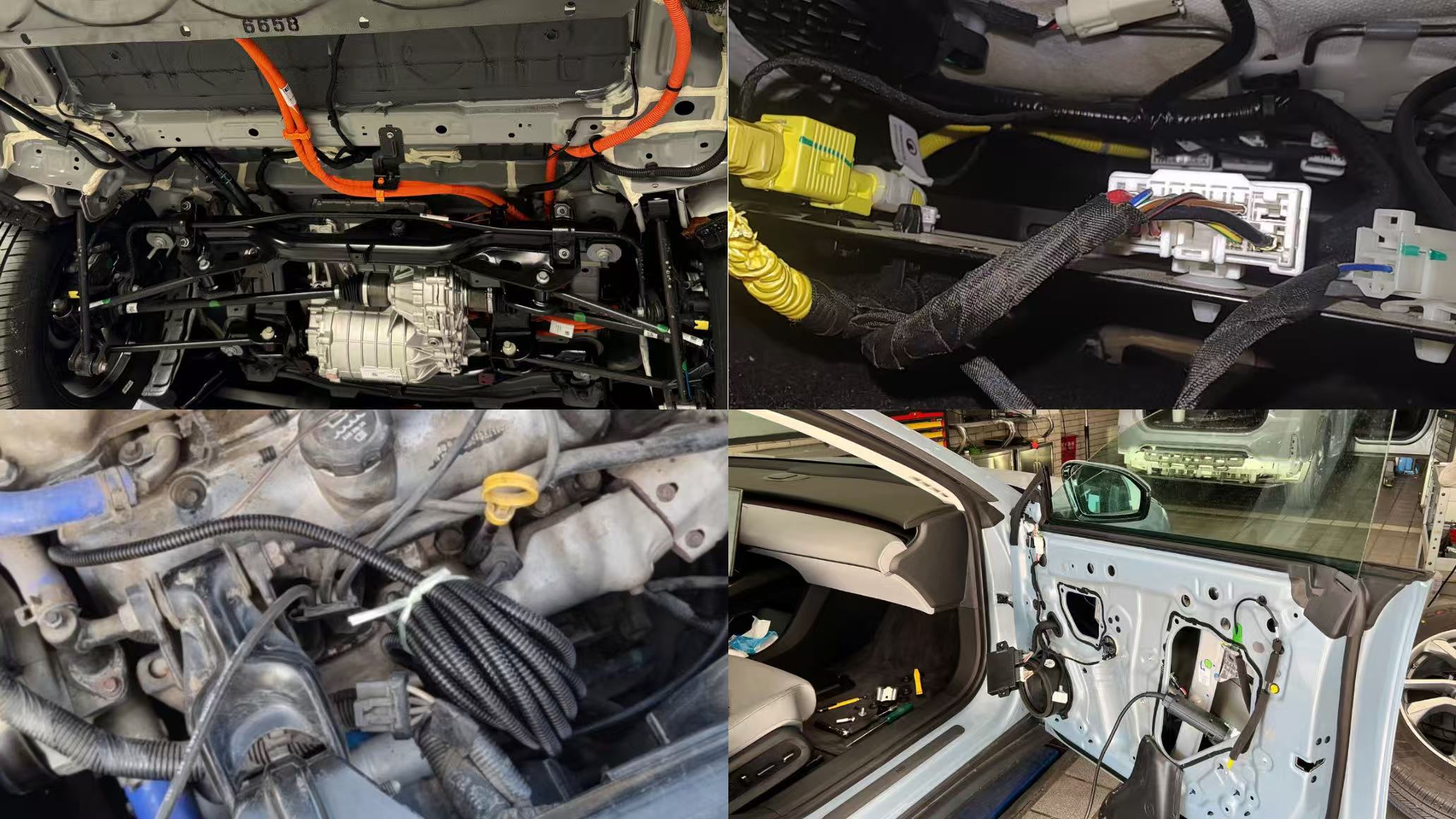
Wiring harness performance depends heavily on its mounting location. Engine-bay routing sits near hot surfaces and faces constant micro-vibration against brackets throughout the vehicle service life. Underbody harnesses endure water, salt, grit and flying stones. Harness sections in doors and tailgates bend repeatedly with every open-and-close cycle. This calls for fatigue resistance instead of a simple one-time bend test.
Wire insulation rarely fails abruptly. Slow degradation comes from repeated scuffs, minor impacts and cracking over many years. Electrical faults found during bench testing often stem from damage that built up long before. The native wire jacket alone cannot provide full protection. Fasteners, proper clearance and protective sleeving all play critical roles. Selection should account for abrasion performance, thermal limits, bending stress and actual routing conditions.
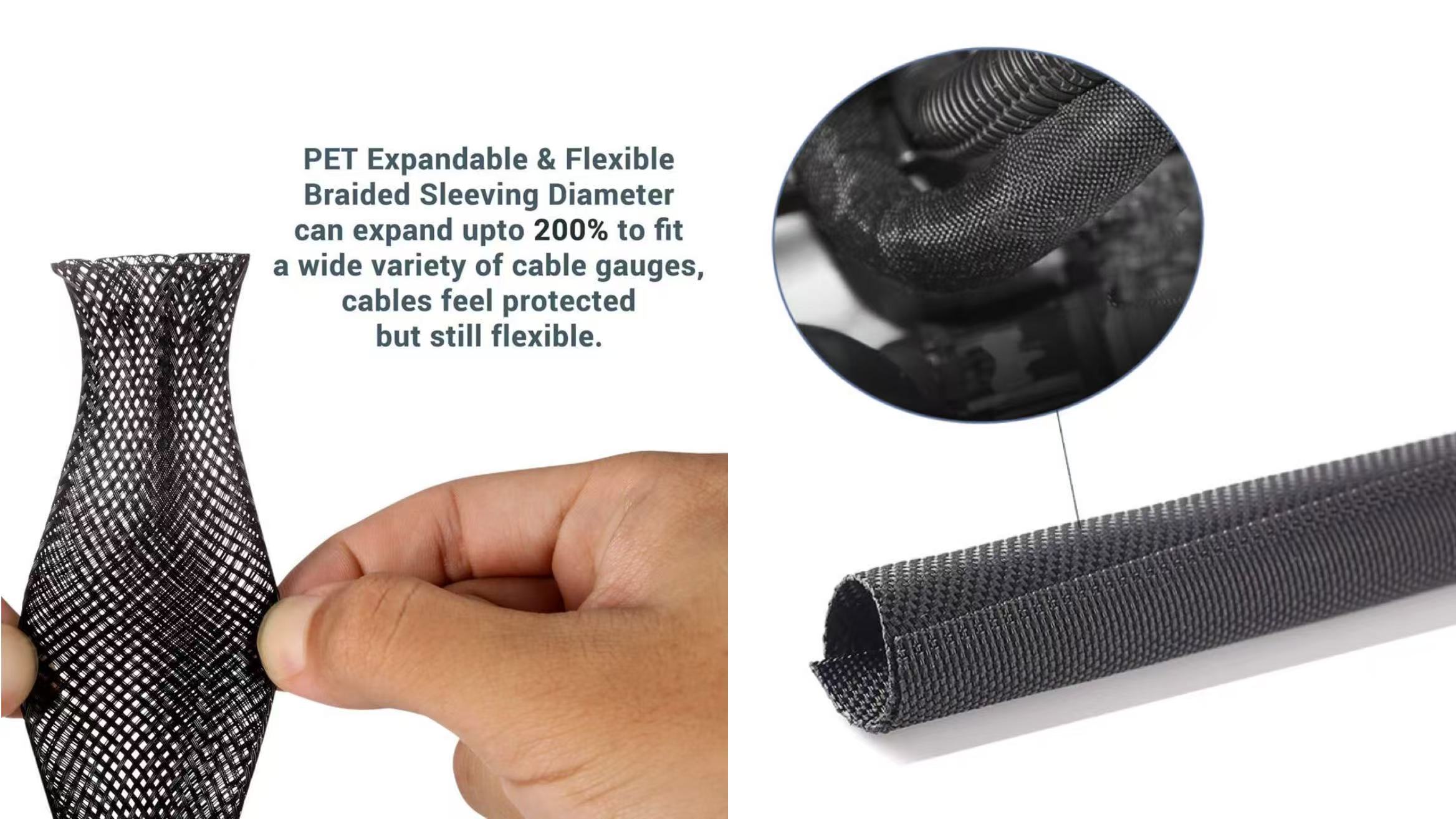
Cable sleeving adds an outer protective layer for harness bundles. It takes friction first to guard inner wire insulation. At contact points with metal brackets, the sleeve absorbs rubbing force. Braided sleeving fits narrow or moving harness routes because its woven structure bends easily without stiffening the whole bundle.
Heat protection needs separate planning. A basic cable sleeve only wraps harnesses and cannot cope with real high-heat conditions. For harnesses routed near exhaust manifolds, turbochargers or catalytic converters, choose materials suited to actual working temperatures.
Key Zones for Automotive Wire Protection
Engine Bay
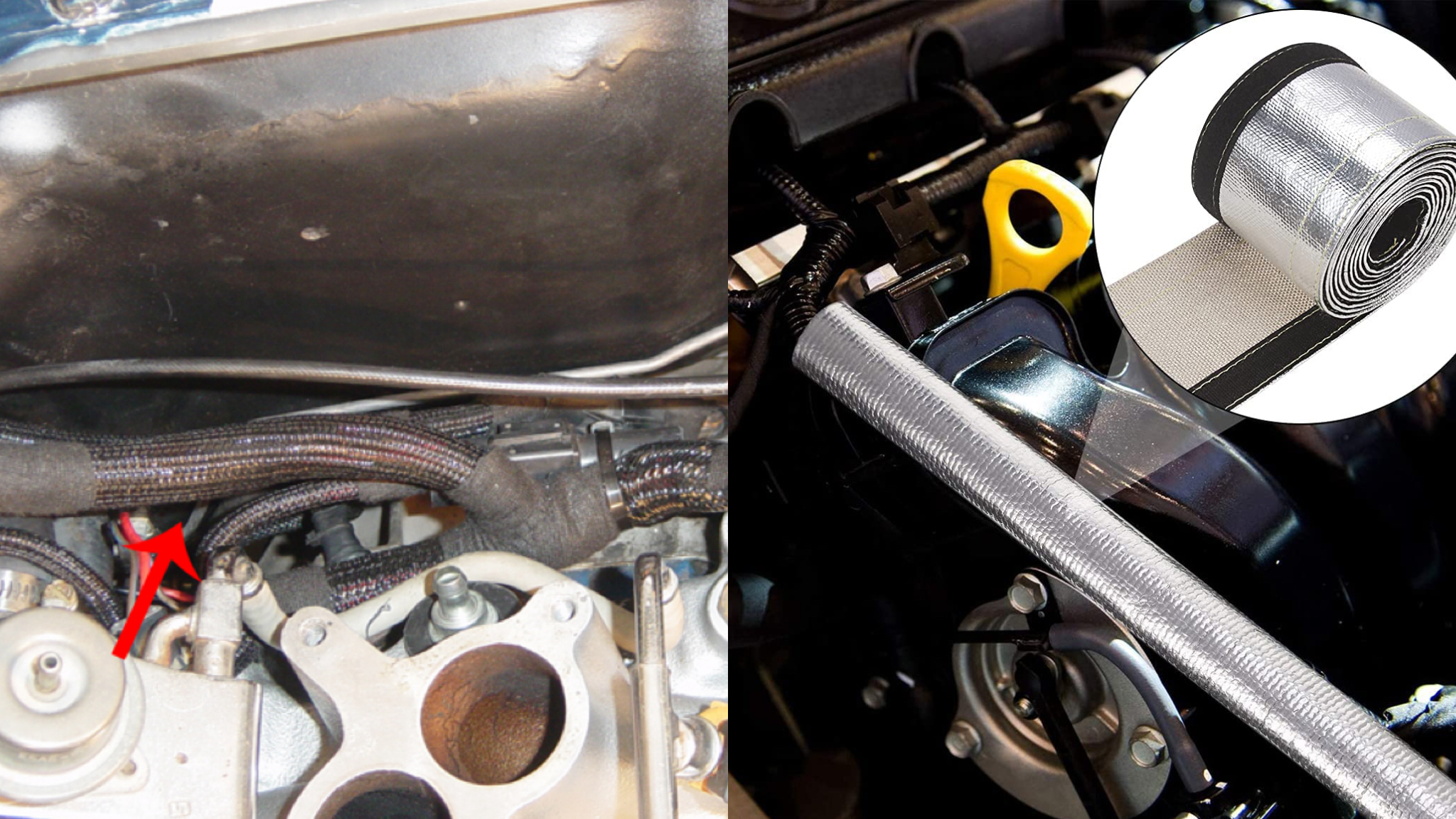
Engine-bay looms run close to stamped brackets, hoses and rigid lines. Heat amplifies repeated minor friction and damages wire jackets. Nylon braided cable sleeving delivers baseline protection, withstands vibration and operates from -60 to +160 °C. For harnesses routed near manifolds or turbo hot sides, switch to aluminium foil fiberglass sleeve. Radiant heat triggers thermal degradation rather than abrasion. Glass wrapping tape suits tight bends where sleeves cannot be fitted. Aluminium foil fiberglass sleeve handles continuous service up to roughly 540 °C.
Chassis and Underbody
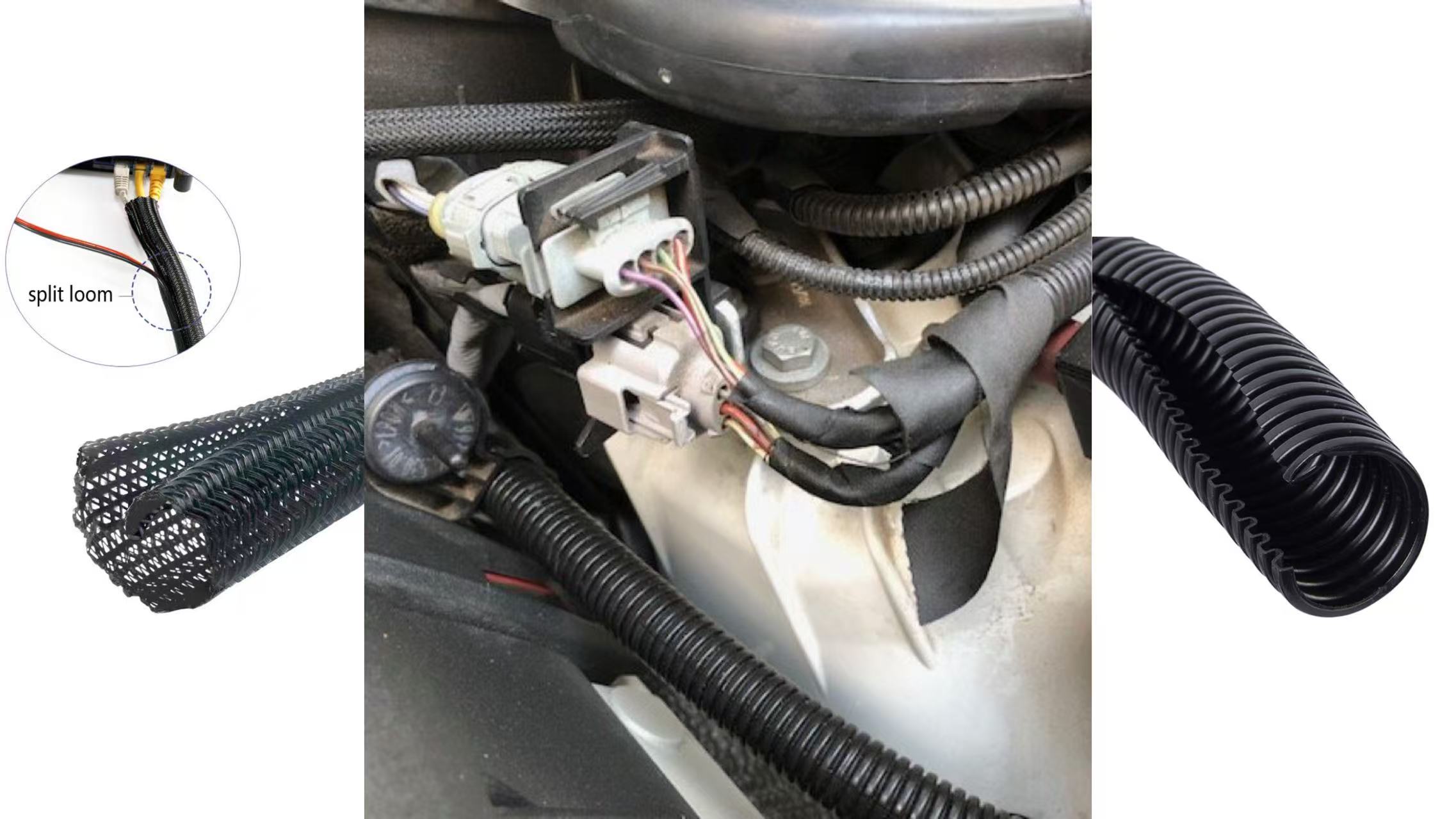
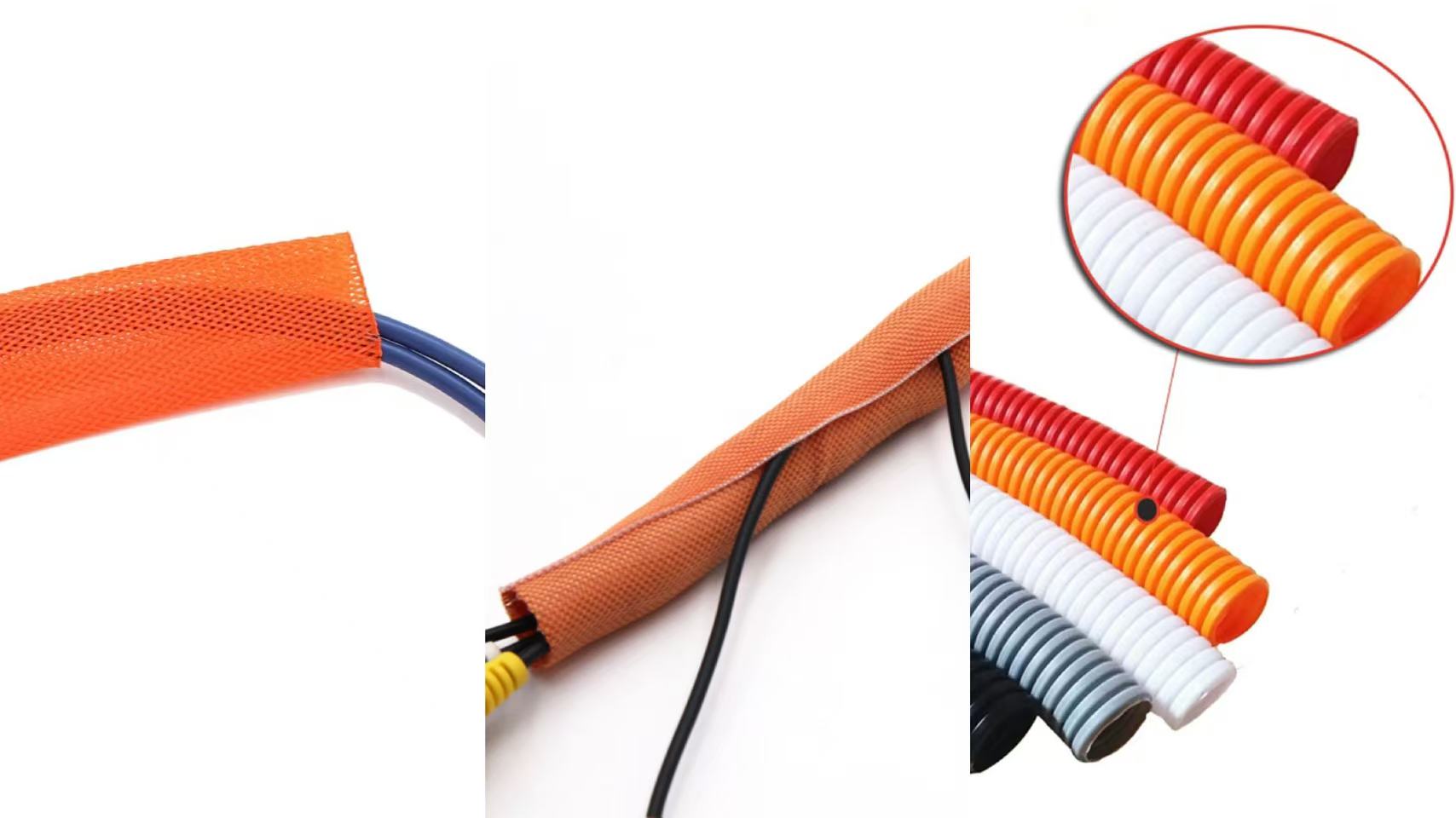
All wiring routed under a vehicle faces constant dust, moisture, loose stones and frame vibration. Corrugated flexible conduit protects looms from debris and impact damage. Split cable sleeving can be fitted directly onto pre-assembled harnesses, so no rewiring is needed to protect against stone strikes and splashing.
Moving Harnesses
Door and tailgate harnesses bend repeatedly during panel operation. Rigid protection restricts movement. Recommended expandable PET braided sleeving and self-wrapping braided sleeving deliver full coverage and flexibility for repeated-bending applications.
EV High-Voltage Wiring Protection
Global standards use orange to identify new-energy vehicle high-voltage harnesses. Recommended options include orange flame-retardant corrugated conduit, orange expandable braided sleeving and orange self-wrapping cable sleeving. XMQX products meet EV high-voltage safety requirements with wear and flame resistance, while orange identifies high-voltage circuits.
How To Choose the Right Automotive Cable Sleeving
Check Operating Temperature First
Temperature is the top priority. Refer to continuous service temperature rather than short peak heat. For engine-bay or exhaust-nearby harnesses, choose braided sleeving, fiberglass sleeving or high-temperature braided sleeves. PET braided sleeving and flexible corrugated conduit fit cabin and low-temperature areas.
Measure Bundled Harness Outer Diameter
Measure the full outer diameter after wires are bundled. Expandable braided sleeving stretches naturally to wrap the harness with proper tension. When selecting corrugated conduit, choose an inner diameter slightly larger than the harness for easy wire threading.
Assess On-Site Environmental Risks
Nylon braided cable sleeving works best with oil, fuel and coolant exposure. Avoid PET for strong automotive chemicals. Use PA corrugated flexible conduit with heat-shrink end caps in damp, dusty zones. Flame-retardant materials must meet VW, SAE and ISO standards.
Match Flexibility and Installation Requirements
Select flexible expandable braided sleeving for moving harnesses with repeated bending. Split corrugated conduit suits long fixed harness runs and simplifies later inspection. Self-wrapping cable sleeving is ideal where repeated disassembly is needed. Heat shrink tubing is used for permanent, one-time protection.
Verify Automotive Certifications
Choose products with valid automotive certifications including RoHS, REACH and ISO specifications. Non-compliant materials may melt and release harmful fumes under high heat.
Other Practical Notes
Braided sleeving reduces rattling noise caused by harness movement inside dashboards and doors. Heavy-wall grades are recommended for chassis and underbody wiring for better cut resistance. Black is standard, while alternative colours can identify different circuits.
Automotive Cable Sleeving Is Not Universal
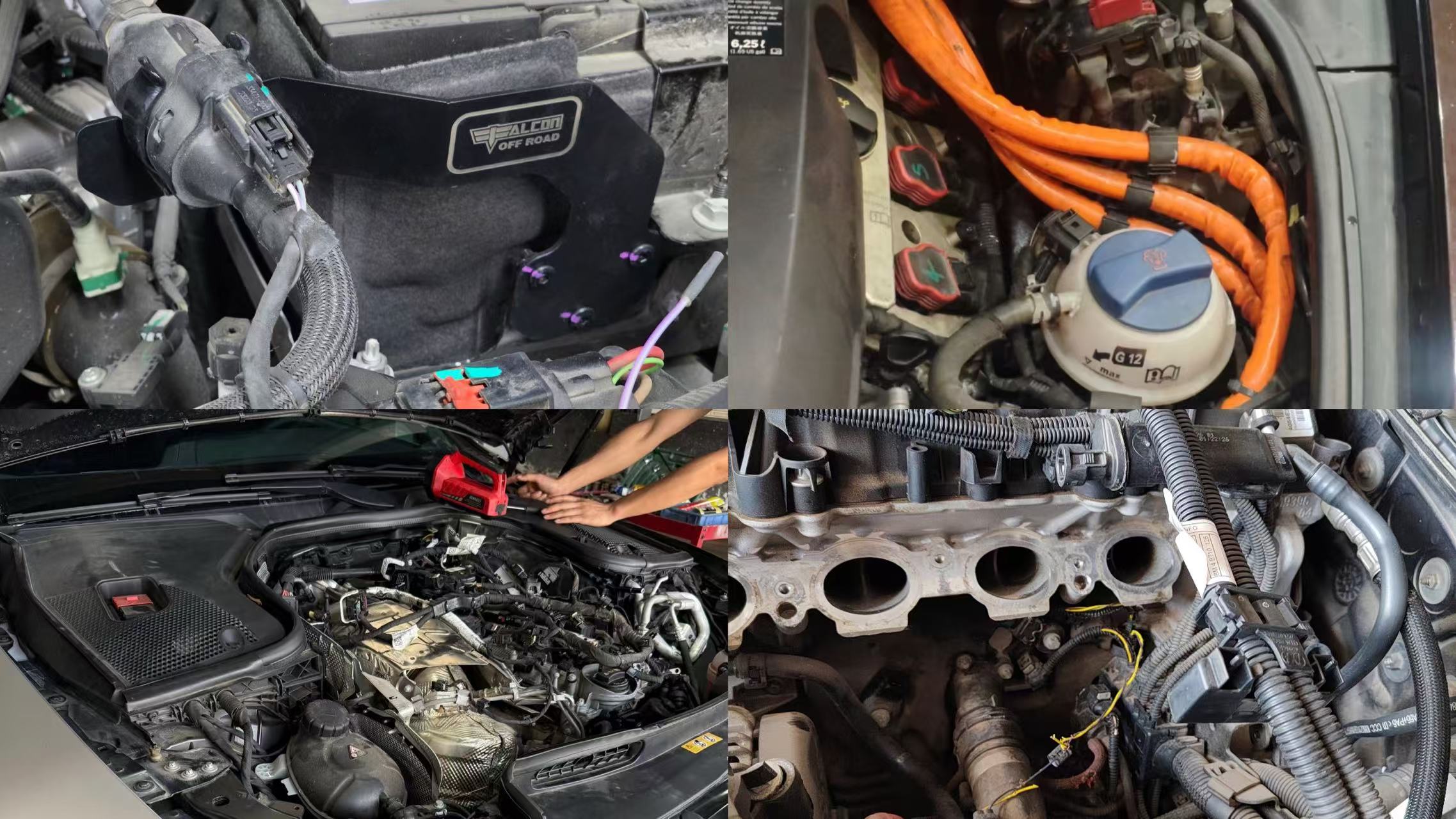
Cable sleeving is only one part of a complete automotive wire-protection system.
Braided cable sleeve performs exceptionally well for flexible wiring and wear resistance. However, its braided structure is not waterproof.
Corrugated conduit provides heavy-duty enclosed mechanical protection. Heat-shrink tubing fits fixed-coverage sections, transition joints and local sealing applications. Specialized tape works for irregular shapes or partial-segment protection.
Standard braided sleeving fails against intense radiant heat, requiring purpose-built thermal sleeves or heat barriers. Fiberglass sleeves and fiberglass wrap tapes are dedicated fire-resistant solutions for high-temperature exposure.
Common Selection Mistakes
Selecting purely by temperature rating: a high-temperature specification does not guarantee site suitability.
Performance cannot be judged solely by material. Material is only part of the evaluation; size, structure, flexibility and installation method are equally important.
Using one sleeve type everywhere: engine-bay, underbody and door harnesses operate under different stress profiles and demand tailored protection.
Ignoring connector dimensions: a sleeve may fit the harness bundle yet prove impossible to install when large connectors cannot pass through its inner bore.
Frequently Asked Questions
What is the function of the automotive wiring harness sheath?
The automotive wiring harness sleeve protects the harness from wear, friction, high temperatures and physical contact with nearby vehicle components.
Does a thicker automotive wiring sleeve necessarily mean better wear resistance?
Not necessarily. Material and weaving structure are more important than thickness.
Which sleeving types work for engine-compartment wiring harnesses?
Start by checking thermal conditions. Next assess abrasion resistance, flexibility, available installation clearance and assembly needs.
Can split braided sleeving hold up against road splash and spray on vehicle underbodies?
Split braided structures offer solid abrasion defence but are not waterproof.
Which is better for automotive wire harness protection: PET or nylon?
PET braided sleeving is suitable for most standard operating conditions. Nylon braided sleeving can be selected when higher abrasion resistance is required.
Can cable sleeve be installed on pre-assembled wire harnesses?
Yes. Split cable sleeve, self-closing sleeve or expandable cable sleeve can be installed without disassembling the harness.
Conclusion
Reliable harness protection depends on actual routing conditions. Heat, abrasion, movement and service requirements all need to be considered. The right sleeving safeguards wiring while fitting your assembly and maintenance workflows.
Hey there, I’m Mia !

Get A Quote


Related Post You May Also Like
How Data Centers Reduce Cooling Costs Through Better Cable Management
[pac_divi_table_of_contents included_headings="off|on|on|off|off|off" exclude_headings_by_class="on" active_link_highlight="on" level_markers_3="icons" title_container_padding="10px|15px|10px|15px|true|false" title_container_bg_color="#333333" body_area_height="650px"...
Ways to Hide Cables Under Your Desk
[pac_divi_table_of_contents included_headings="off|on|on|off|off|off" exclude_headings_by_class="on" active_link_highlight="on" level_markers_3="icons" title_container_padding="10px|15px|10px|15px|true|false" title_container_bg_color="#333333" body_area_height="650px"...
Spiral Wrap Sizing: 9 Mistakes That Ruin Cable Bundles
[pac_divi_table_of_contents included_headings="off|on|on|off|off|off" exclude_headings_by_class="on" active_link_highlight="on" level_markers_3="icons" title_container_padding="10px|15px|10px|15px|true|false" title_container_bg_color="#333333" body_area_height="650px"...
How to Better Protect Your EV Charging Cables
[pac_divi_table_of_contents included_headings="off|on|on|off|off|off" exclude_headings_by_class="on" active_link_highlight="on" level_markers_3="icons" title_container_padding="10px|15px|10px|15px|true|false" title_container_bg_color="#333333" body_area_height="650px"...