
How Fire Sleeve Protects Cables
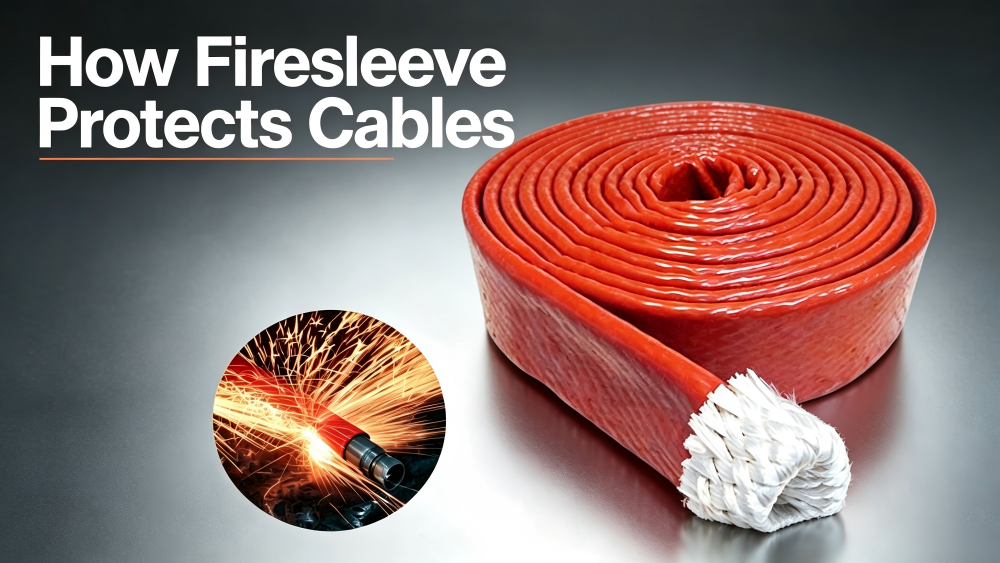
If you need cable protection in high temperature working environment, you should clear answers to three questions. How does fire sleeve protect cable? When should you use it? Is it a fit for your application?
Fire sleeve is a critical passive protection solution for cables. It is widely used in industrial, automotive, aerospace and construction fields. It helps engineers and purchasers avoid cable fire failure and equipment shutdown risks.
How Fire Sleeve Delivers Cable Protection
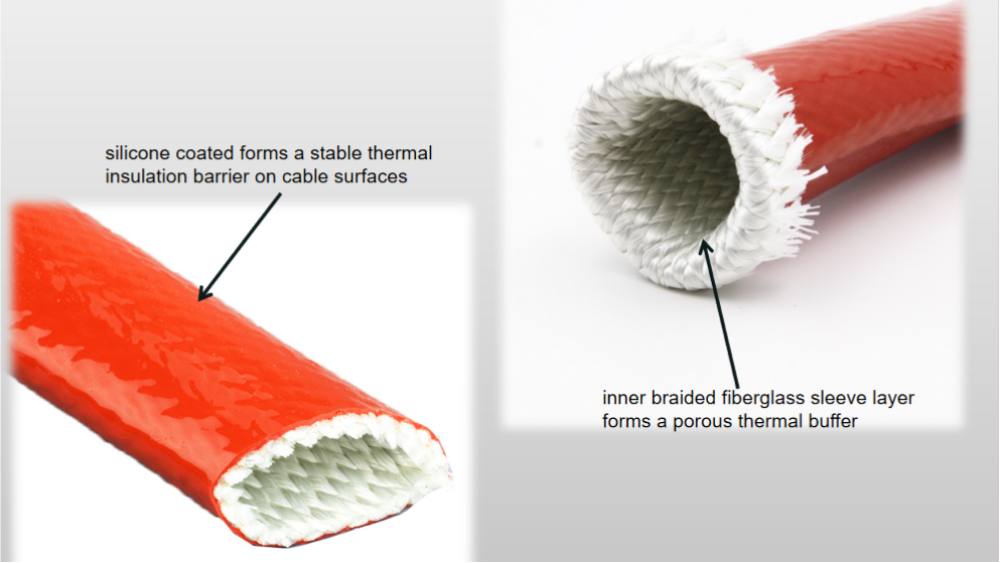
Fire sleeving relies on high-temperature resistant silicone and fiberglass sleeve composite structure. It forms a stable thermal insulation barrier on cable surfaces.
The inner braided fiberglass sleeve layer forms a porous thermal buffer. It disperses radiant heat instead of simply blocking heat. This slows heat transfer to cable cores.
The silicone coated fiberglass sleeve supports continuous working temperature 260°C and withstands molten splash at 1200°C. This prevents cable insulation melting and early aging. It is certified to UL 94 V-0 and VW-1 flame retardant grade, limiting flame spread and preventing drip ignition.
In high-temperature environments, the outer silicone layer will not melt or drip. It can resist radiant heat and direct flame erosion. The inner fiberglass layer undertakes long-term heat insulation work. It blocks external high temperature from transferring to cable inner core.
When fire occurs, the fire sleeve surface forms a dense protective carbon layer. This layer seals the cable outer sheath. It prevents cables from being ignited and burned through. It also stops flame spread along cable wiring routes.
Besides fire resistance, it provides anti-abrasion and anti-corrosion protection. It reduces cable aging damage caused by mechanical friction and chemical erosion. It extends the overall service life of cables.
When Fire Sleeve Is Necessary
You can judge demand based on working environment and safety standards.
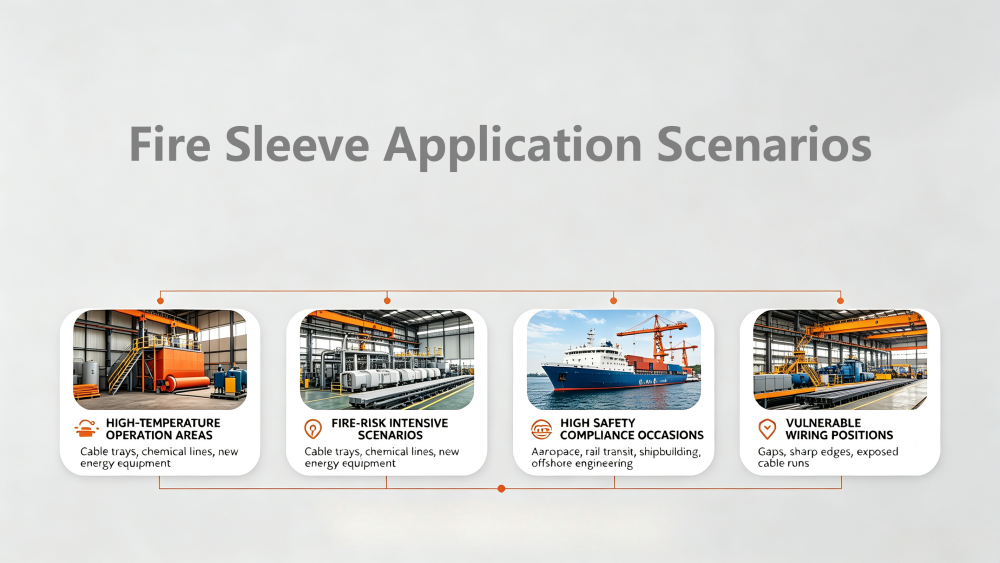
First, high-temperature operation areas need fire sleeves. These areas include industrial furnaces, boiler rooms, engine compartments and welding stations. Ambient temperature here often exceeds 200°C. Ordinary cable sheaths will age rapidly and fail.
Second, fire-risk intensive scenarios are mandatory application occasions. Cable trays in power distribution rooms, chemical production lines and new energy equipment belong to this category. These scenarios require blocking fire spread to avoid large-area circuit failure.
Third, high safety compliance occasions need it. Aerospace, rail transit, ship and offshore engineering have strict fire protection standards. Fire sleeving is a basic matching accessory for cable safety certification.
Fourth, vulnerable wiring positions need auxiliary protection. Cables passing through equipment gaps, metal sharp edges and long-distance exposed wiring are easy to wear and burn. Fire sleeves can solve hidden dangers effectively.
Judgment Standard for Application Suitability
For engineers, fire sleeve is suitable for most low-voltage and high-voltage conventional cables.
First verify the temperature resistance rating.
Standard silicone coated fiberglass fire sleeves offer continuous operating temperature -65°C to 260°C.
High-grade special sleeving (high silica sleeving) withstand continuous operating temperature 900°C to 1000°C.
Select the proper grade based on your actual ambient operating temperature.
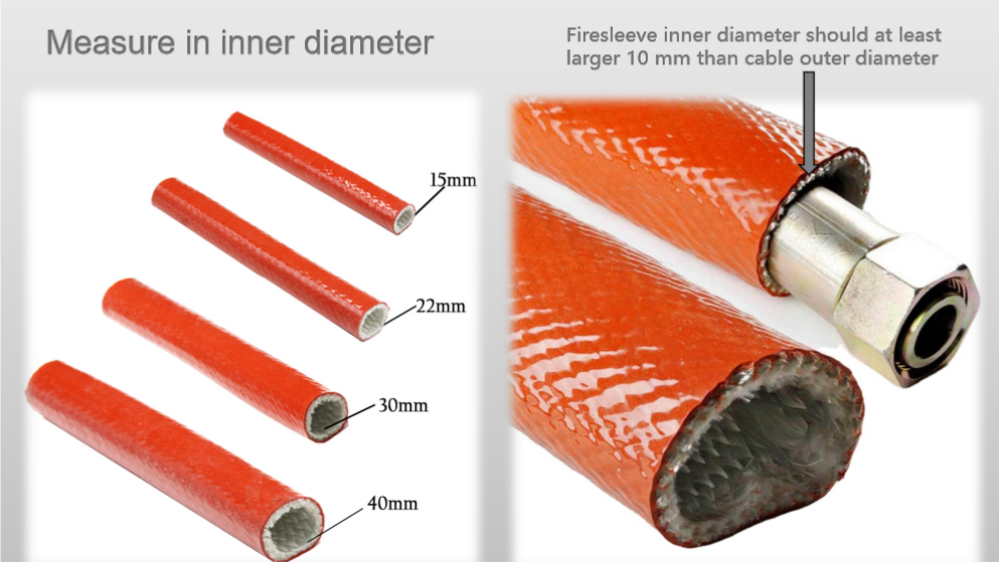
Second, check size adaptability. The fire sleeve is measured in inner diameter, and the standard diameter is from 3 mm to 200 mm. The fire sleeving inner diameter should be at least 10 mm larger than cable outer diameter. It ensures tight fitting and does not affect cable wiring and bending.
For purchasers, fire sleeves have low cost and high return. Compared with replacing burned cables and maintaining shutdown equipment, fire sleeve input cost is extremely low.
The fire sleeving supports repeated use in non-burning failure scenarios. It reduces later replacement and maintenance costs. It is a cost-effective cable protection solution.
In short-distance emergency fire protection and long-term wire protection scenarios, fire sleeve is highly applicable. It is not suitable for fully sealed buried cables. Such scenarios have no open fire and high-temperature exposure risks.
Core Value for Engineering Procurement
Fire sleeve simplifies cable safety design. It helps you meet fire protection standards quickly, control project safety risks and reduce post-operation hidden-danger costs.
Frequently Asked Questions
Q1: What temperature can a fire sleeve for cables withstand?
Firesleeve for cables can withstand continuous operating temperatures of up to 260°C and molten splash at up to 1200°C.
Q2:Is silicone rubber self-extinguishing?
Yes. Silicone rubber sleeving is self-extinguishing and will not continue to burn once removed from the fire source.
Q3: Can silicone coated firesleeve inhibit cable fire spread?
Yes. It is non-flammable and low-smoke with no toxic fumes. It blocks flame propagation paths and intercepts cascading fire risks,preventing local cable fires from spreading to the whole equipment system.
Q4: Is silicone fire sleeving suitable for complex cable wiring?
Yes. Made of flexible fiberglass and elastic silicone, it features good ductility. It fits bent and vibrating cable layouts tightly without cracking or peeling for long-term stable protection.
Q5: Is silicone fire sleeve applicable for outdoor and marine use?
Yes.It withstands harsh outdoor and marine environments, providing full-cycle protection for exposed cables.
Q6: Does silicone firesleeve require complicated daily maintenance?
No routine maintenance is needed. It has great abrasion resistance and chemical stability, resisting daily friction and corrosion.
Q7:How is silicone rubber different?
Traditional rubber is carbon based, silicone rubber is silicone based. This means it reacts differently when exposed to flames, creating a solid silica layer rather than a carbon ash.
Hey there, I’m Vicky!

Get A Quote


Related Post You May Also Like
Spiral Wrap Sizing: 9 Mistakes That Ruin Cable Bundles
[pac_divi_table_of_contents included_headings="off|on|on|off|off|off" exclude_headings_by_class="on" active_link_highlight="on" level_markers_3="icons" title_container_padding="10px|15px|10px|15px|true|false" title_container_bg_color="#333333" body_area_height="650px"...
The Hidden Hero of Electrical Safety: Why Insulation Sleeves Are Often Overlooked
[pac_divi_table_of_contents included_headings="off|on|on|off|off|off" exclude_headings_by_class="on" active_link_highlight="on" level_markers_3="icons" title_container_padding="10px|15px|10px|15px|true|false" title_container_bg_color="#333333" body_area_height="650px"...

Best Cable Sleeves for Home Office Cable Management
[pac_divi_table_of_contents included_headings="off|on|on|off|off|off" exclude_headings_by_class="on" active_link_highlight="on" level_markers_3="icons" title_container_padding="10px|15px|10px|15px|true|false" title_container_bg_color="#333333" body_area_height="650px"...
What Does the Development of Hook and Loop Tape Illustrate?
[pac_divi_table_of_contents included_headings="off|on|on|off|off|off" exclude_headings_by_class="on" active_link_highlight="on" level_markers_3="icons" title_container_padding="10px|15px|10px|15px|true|false" title_container_bg_color="#333333" body_area_height="650px"...
0 Comments