
Spiral Wrap Sizing: 9 Mistakes That Ruin Cable Bundles
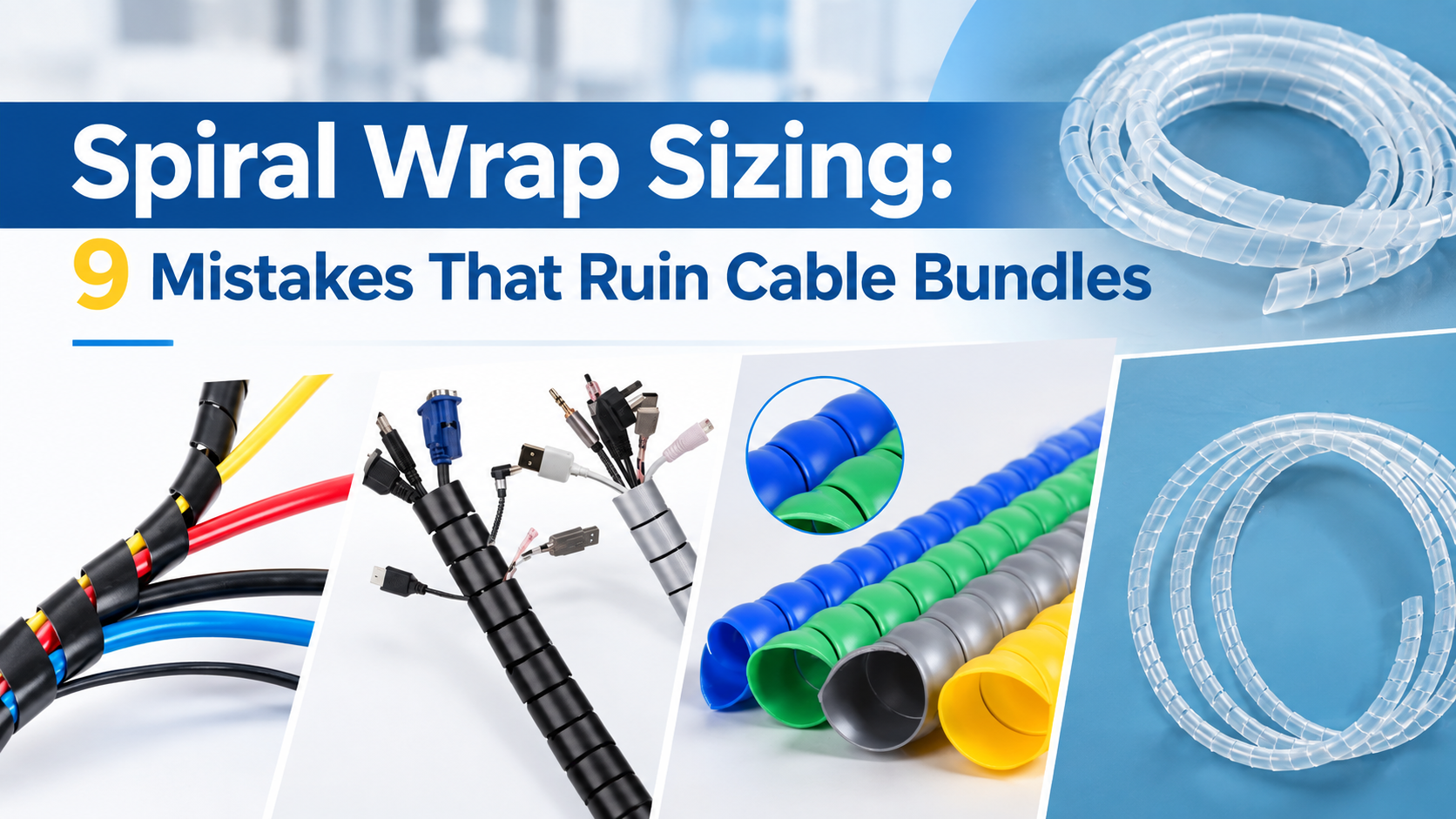
A cable bundle that fails inside a machine is rarely the cable's fault. More often it's the protection chosen for it, or the protection that got skipped.
We’re QX, based in Xiamen. We make cable protection products — braided sleeving, hook-and-loop straps, fire-resistant wraps, and spiral wrap in a wide selection of sizes. We get enquiries from factories, distributors and maintenance teams all over the globe, and one problem keeps popping up again and again. When orders don’t work out, it’s hardly ever a faulty product. More often than not, it comes down to wrong sizing, poor material selection, or missing details about the operating environment.
So this guide is not another "what is spiral wrap" article. There are plenty of those, and several are good. This one is about the choices that go wrong on real orders, and the ones that hold up in the field.
The Short Version
Measure the bundle, not the cable.
Match the material to the worst condition, not the average one.
If the cables move, buy for movement.
If the bundle needs full cover, spiral wrapping might not be your tool.
Confirm critical specs (like minimum bend radius) before you order, not after
What Spiral Wrap Is
Spiral wrap is a coiled plastic strip that you wind around a cable, wire, hose, or rod bundle, like tape. A spiral wrap for cables and wires is the most common use, but spiral wrap for hose runs—especially hydraulic hoses—and even spiral wrap for rods shows up regularly in industrial orders.
The coils stay open, so individual cables can exit anywhere along the run without cutting the wrap. That’s the feature that separates it from braided sleeving and heat shrink: you can reach in, pull one cable out, add another, and rewrap the bundle. It’s reusable and installs without tools. If your job involves frequent changes or mid-run breakouts, that’s worth a lot.
Spiral Wrap Types at a Glance
When we quote spiral cable wrap, two questions come first: what material, and light or heavy duty. Size is the easy part, and it comes last.
By Material
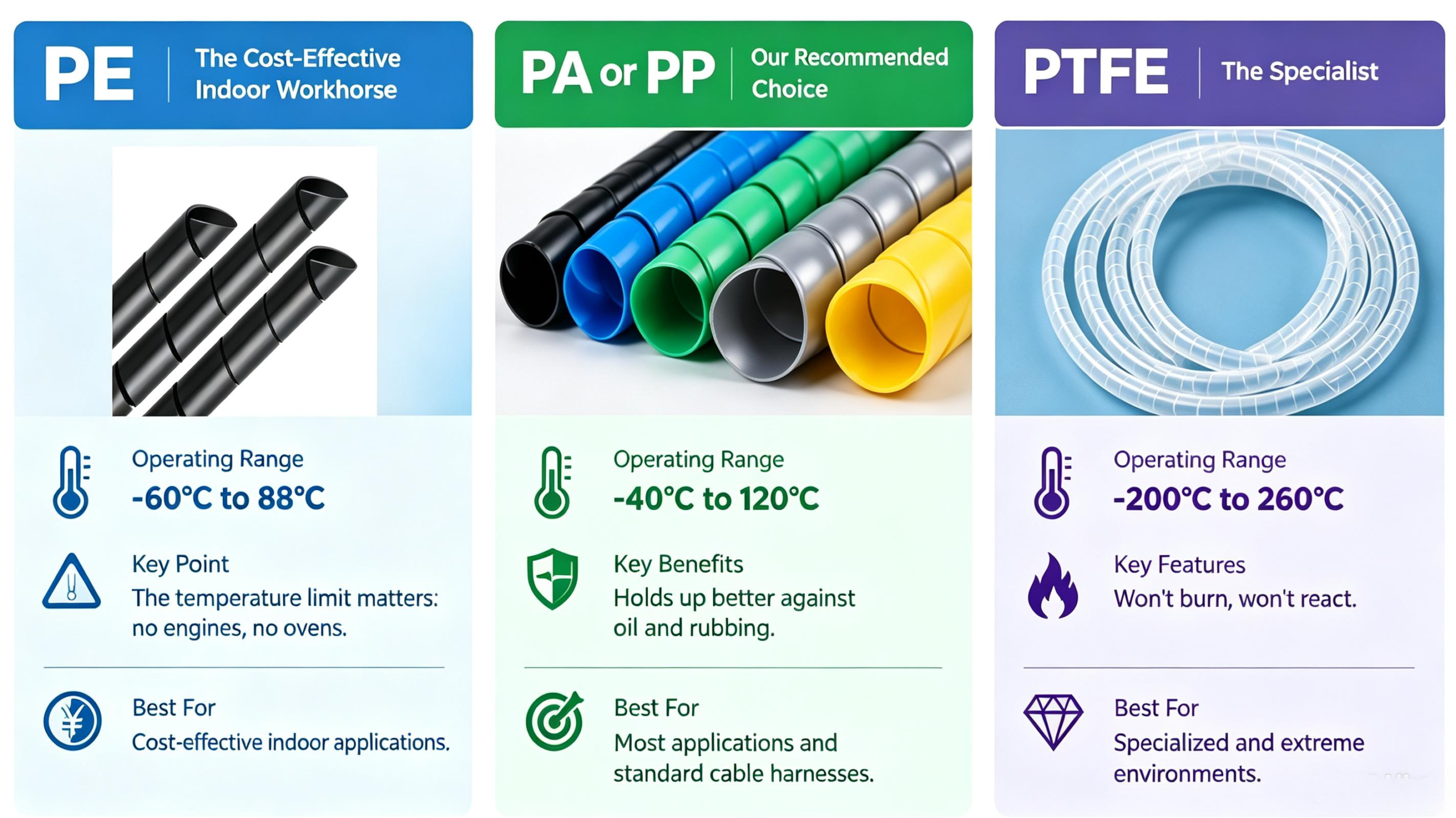
| Type | Continuous temp range | What it's good at | Typical places | Cost |
|---|---|---|---|---|
| PE (Polyethylene) | -60°C to 88°C | Cost-effective and flexible, suited for most indoor wiring jobs | Desks, racks, general wiring | Low |
| Nylon (PA) | -40°C to 120°C | With good oil and abrasion resistance, it is self-extinguishing and UV-stable | Engine bays, machine arms, outdoor runs | Medium |
| PP (Polypropylene) | -40°C to 120°C | Lightweight and chemically resistant | Control panels, light industrial | Low to medium |
| PTFE (Teflon®) | -200°C to 260°C | Won't react to chemicals, won't burn, takes extreme heat and cold | Aerospace, chemical plants, semiconductors | High |
| Flame-retardant | Depends on base | Meets UL94 V-0 and similar ratings | Transit systems, aerospace, export orders | Medium to high |
Temperature figures are typical continuous ratings from major manufacturers' published specs; always confirm the exact grade for your application.
By Duty Rating
LD (Light Duty) Features a soft, thin wall design. It’s simple to wrap manually by hand. Typical applications include desktop wiring, cable racks and indoor cable paths with minimal mechanical stress.
HD (Heavy Duty) features thicker walls to stand up to oil, abrasion and mechanical impact. Choose this grade for bundles that rub against metal frames, including mining cables and construction machinery hose assemblies.
A spec quote from our team will list material, duty grade, dimension and color together. A typical example: “nylon HD, 20 mm, black.”
The 9 Mistakes
1. Sizing by cable diameter instead of bundle diameter
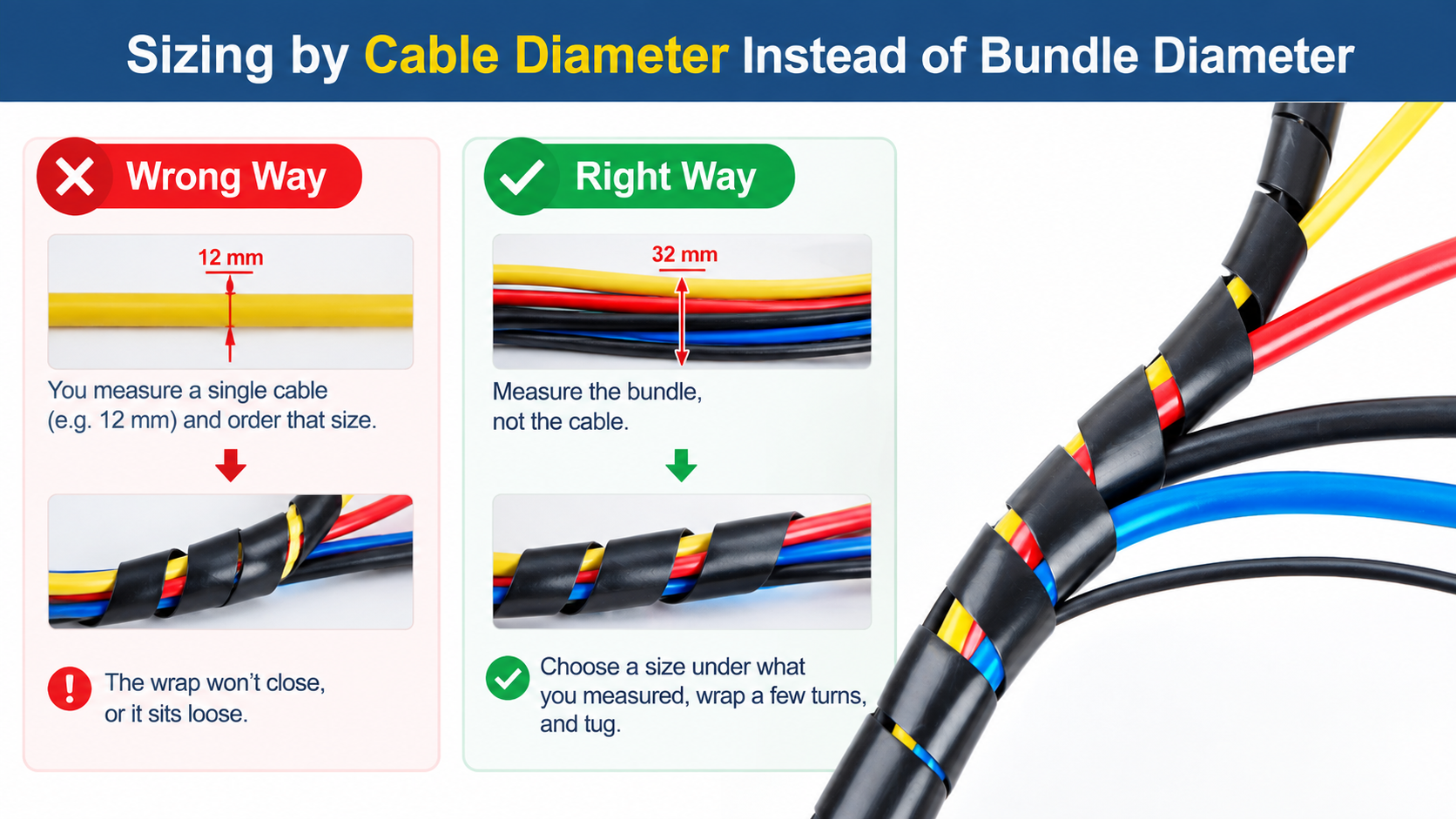
The most common one. A buyer tells us they have "12 mm cable" and orders a wrap sized for a single 12 mm cable. But the wrap goes around the whole bundle, and the bundle is usually much larger. Result: the wrap won't close, or it sits loose enough to slide and do nothing.
Measure the bundle, not the cable. Then go a size under what you measured, wrap a few turns, and tug. If it holds, you're done. If it slides, go smaller. If it won't wind on, go bigger. You'll feel it.
2. Choosing the cheapest material for a hot environment
The price difference between materials is small per meter. The cost of a melted bundle is not.
Polyethylene (PE) is our default option. This cost-effective material works well for indoor wiring.
Nylon (PA) is our go-to for most jobs. It resists oil and abrasion well.
Polypropylene (PP) is lightweight and stands up to chemicals well for light industrial use.
PTFE is a premium specialty material. It’s chemically inert, won’t burn, but costs significantly more.
Rule: Decide the worst temperature the bundle will actually see, then pick the material after that, not before.
3. Treating light duty like heavy duty
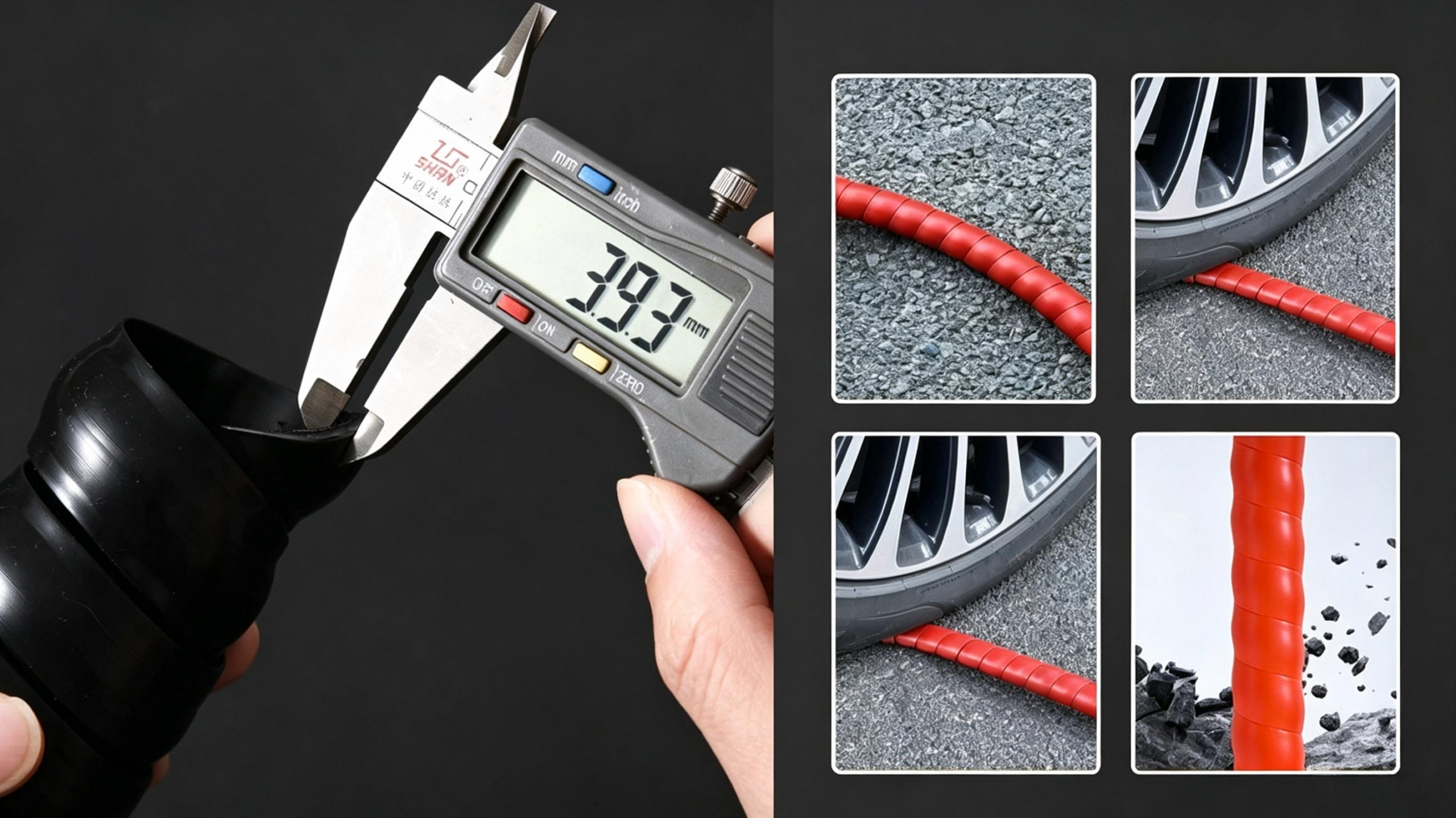
LD is soft and bends easily, fine for a desk or a rack. HD is the thicker-walled grade, for bundles that rub on machine parts or live around oil. A light-duty wrap in a factory wears out fast, which is a waste of money either way. Using LD on a hydraulic hose in a factory is how you get a wrap that looks worn out fast. If there’s any chance of mechanical contact, go HD.
4. Forgetting about UV
Sunlight turns plain polyethylene brittle. Then it cracks, and then it stops protecting anything.
Outdoor runs, marine use, and anything in direct sun need a UV-stabilized grade or black material, which holds up much better. That’s a five-second decision at order time and a whole rewrap later.
5. Buying for a static bundle in a moving machine
Robotic arms, CNC spindles, and anything with travel put constant flex on the cable run. A stiff, thick-wall wrap fights that motion and rubs on the cables. For dynamic applications, pick a more flexible grade, wrap with even tension, and secure the ends without locking the whole run down. The wrap should move with the bundle, not resist it.
6. Wrapping too tight or too loose
Too loose and it slips, and dust works its way in at the ends. Keep the tension even as you wind. If the machine vibrates, tie or clamp both ends, or the wrap creeps off the bundle over time.
7. Missing the breakout requirement
Do your cables need to leave the bundle halfway along the run? If yes, spiral wrap is often the best tool you can buy, because the coils let you pull a cable out anywhere. But if you need breakout and full coverage, you're asking for two different products. Decide which matters more before you buy.
8. Assuming spiral wrap fits every bundle
Spiral wrap is excellent at what it does, and it doesn’t do everything.
Full abrasion and cut protection over the whole run: braided nylon sleeving is usually the better call. It’s a continuous cover and it takes abuse well.
Sealing out moisture: that’s heat shrink‘s job, not a coiled wrap’s.
Bundles you open and close all the time: a hook-and-loop strap is faster than rewinding wrap.
Mid-run access and reconfiguration: spiral tube wins.
Full disclosure: we sell both. So take the next lines as a plain comparison, not a pitch. A cheaper wrap that doesn’t fit the job ends up costing more than the right one would have.
9. Ignoring minimum bend radius
Many buyers check temperature and abrasion performance but overlook the minimum bend radius for spiral protector. This oversight creates big risks on moving cable assemblies. If you route bundled cables around tight corners below the rated bend radius, the wrap will kink, pinch internal wires and wear quickly. Always confirm bend specifications before locking in your selection, especially for robotic and continuously moving cable harnesses.
Size It in 60 Seconds
Rule of thumb: the wrap's internal diameter goes slightly under the bundle's outer diameter. Tight enough to grip, open enough to flex.
A Quick Install Checklist
Measure the bundle OD first.
Cut the wrap to length, plus a little spare.
Start at one end and wind, like tape.
Wind it snug. If the gaps between coils start opening up, you're pulling too hard.
Fix both ends in vibrating environments.
For a step-by-step walkthrough, see how a spiral wrap should be applied.
FAQ
Is spiral wrap reusable?
Yes. That's one of its main advantages over tape and heat shrink. Remove, reapply, reconfigure.
Spiral cable sleeve or braided sleeving?
If cables need to come out halfway along the run, use spiral wrap. If the whole run takes abrasion, sleeving. Send a photo of the bundle and we'll tell you which fits.
What temperature can spiral wrap handle?
Depends on the material. Polyethylene is good to about 88°C, nylon to about 121°C, PTFE to about 260°C. Plan for the hottest condition it'll actually see; the average is where people get burned.
How do I measure for spiral wrap?
Measure the outer diameter of the complete bundle, not a single cable. Pick a wrap ID slightly smaller than that.
Does outdoor use need special material?
If it'll sit in the sun, get black or UV-stabilized. Plain PE won't last outside.
Can I get a sample before ordering?
Yes. Samples are the normal way to start. If a supplier hesitates on samples or performance data, that's information.
7. Does spiral wrap work for rods and linear shafts?
It can. Spiral wrap for rods protects threaded rods, lead screws, and linear shafts from chips and dust in machine tools. Measure the rod OD the same way you would a cable bundle, and expect a looser fit than on wires because rods don't compress.
The Bottom Line
Spiral cable wrap is one of the most forgiving cable protection products on the market. It installs without tools, survives being rewound, and lets you change your mind later. The mistakes above are all cheap to avoid at order time and expensive to fix after the fact: measure the bundle, match the material to the worst condition, and verify key performance specs before you specify.
Hey there, I’m Cheney!

If you have any questions about cable management sleeve protection, feel free to contact me.
Get A Quote


Related Post You May Also Like
The Hidden Hero of Electrical Safety: Why Insulation Sleeves Are Often Overlooked
[pac_divi_table_of_contents included_headings="off|on|on|off|off|off" exclude_headings_by_class="on" active_link_highlight="on" level_markers_3="icons" title_container_padding="10px|15px|10px|15px|true|false" title_container_bg_color="#333333" body_area_height="650px"...
Best Cable Sleeves for Home Office Cable Management
[pac_divi_table_of_contents included_headings="off|on|on|off|off|off" exclude_headings_by_class="on" active_link_highlight="on" level_markers_3="icons" title_container_padding="10px|15px|10px|15px|true|false" title_container_bg_color="#333333" body_area_height="650px"...
What Does the Development of Hook and Loop Tape Illustrate?
[pac_divi_table_of_contents included_headings="off|on|on|off|off|off" exclude_headings_by_class="on" active_link_highlight="on" level_markers_3="icons" title_container_padding="10px|15px|10px|15px|true|false" title_container_bg_color="#333333" body_area_height="650px"...
Wire Harness Protection in EV Applications
[pac_divi_table_of_contents included_headings="off|on|on|off|off|off" exclude_headings_by_class="on" active_link_highlight="on" level_markers_3="icons" title_container_padding="10px|15px|10px|15px|true|false" title_container_bg_color="#333333" body_area_height="650px"...
0 Comments