
Is It Possible to Use a Hair Dryer for Heat Shrink Tubing?
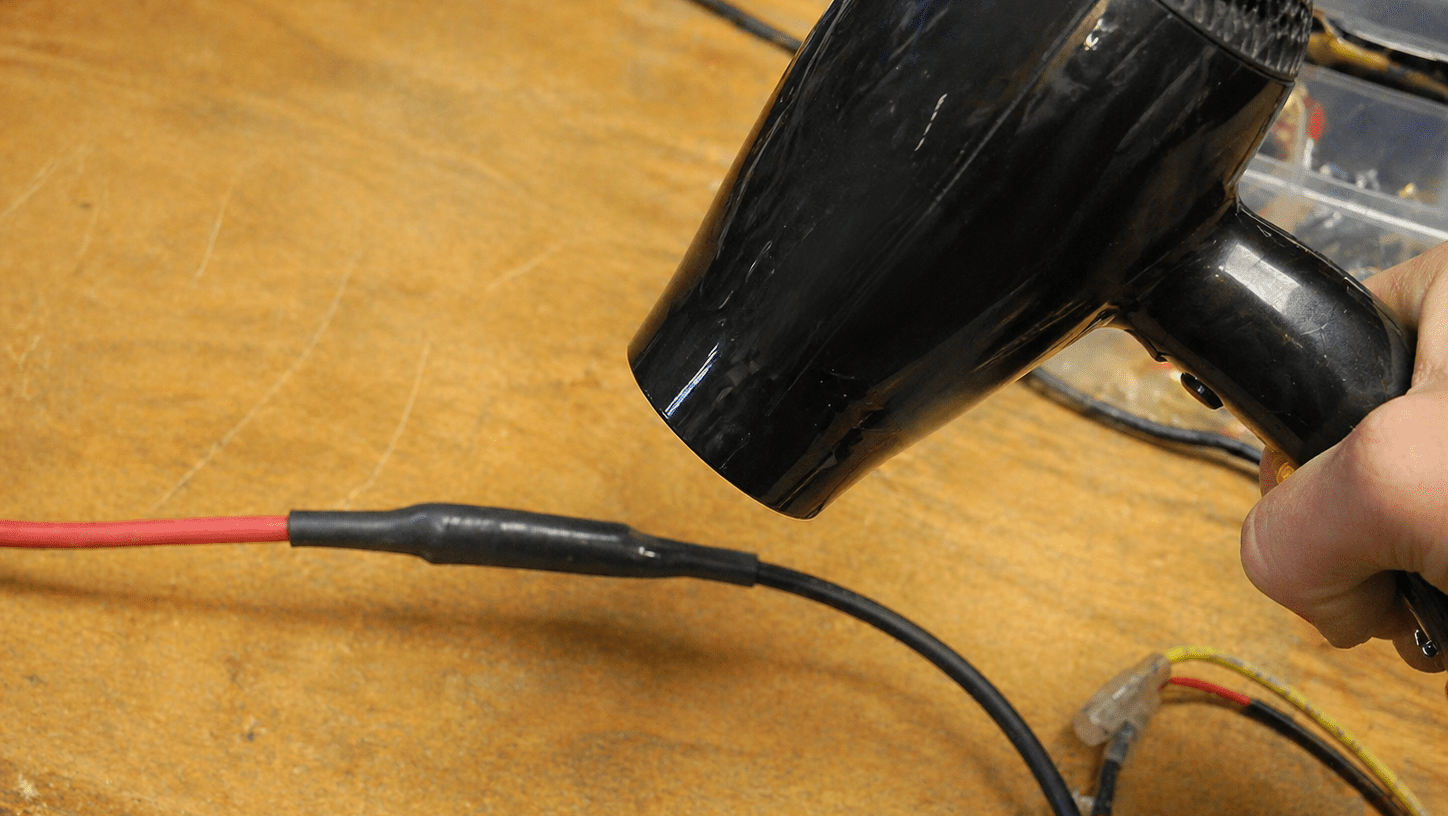
The answer is yes. Heat shrink tubing will shrink when heated, the hot air function of a hair dryer can shrink it.
The Household Pick: Regular Hair Dryer
A household hair dryer is super easy to get, almost every family has one on hand.
- No extra budget
- No complicated operation.
It is the most convenient alternative for casual home use. Its heat is milder and the overall using process is much safer, greatly reducing the risk of scalding or accidental damage to small home appliances.
But hair dryers have obvious limits.
- The temperature is not high enough, and cannot be adjusted.
- The hot air is scattered
- The tube cannot fully shrink, resulting in loose fitting or wrinkled surfaces.
Moreover, it is not applicable to all types of heat shrink tubes.
The Professional Choice: Heat Gun & Oven
Heat guns, even an oven are the standard tool for heat shrink work. They warm up quickly, with steady hot airflow, the tubing shrinks evenly and fits wires tightly in a short time. The finished seal is firm, waterproof and long lasting, which is ideal for thick tubing, large size sleeves and daily electrical maintenance.
However, heat guns and ovens are not commonly found in homes.Unnecessary if you only do occasional small repairs.
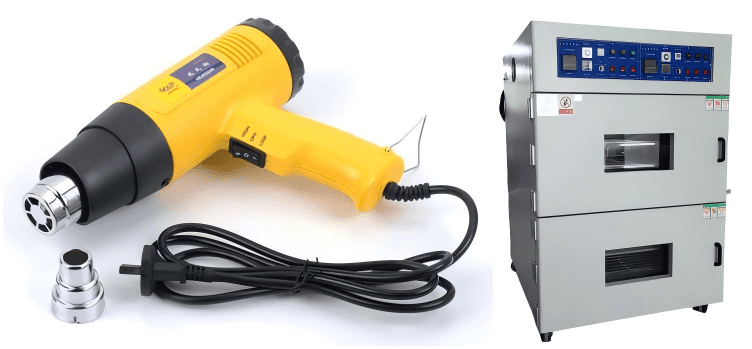
Quick Comparison: Heat Gun vs. Hair Dryer
| Item | Heat Gun (Professional) | Hair Dryer (Household) |
|---|---|---|
| Cost & Availability | Needs extra purchase (Not common at home) | Free (Most families already have one) |
| Heating Speed & Temperature | Fast High Concentrated heat Temperature controllable | Slow Low Scattered heat Temperature uncontrollable |
| Shrink Effect | Even, tight seal, waterproof and durable | Uneven sometimes, may be loose/wrinkled |
| Best For | Thick tubing Professional repairs Frequent use | Thin tubing Home DIY Occasional small fixes |
How to use Hair Dryer shinking heat shrink tube
It is so simple!
First, you need to prepare the he hair dryer and heat shrink tube, and the wire you want to repair
Second, thread the wire through the heat shrink tubing.
Third, Set the hair dryer to “its hot” mode.
Finally, Keep the air outlet 1-1.5 inches away from the heat shrink tubing, rotate the heat shrink tubing at a constant speed to ensure uniform heating.
That is all, so easy.
Simple Tricks for Better Shrink Effect.
When you use the hair dryer, blow back and forth slowly, and rotate the heat shrink tube while heating. In this way, every side can get heated evenly. Stop blowing once the tube fits closely, and let it cool down naturally to get a better wrapping effect.
Conclusion
If you are an electrician,repair shops or often repair circuits, you need stable waterproof and insulation effects, a heat gun is worth having. It brings high efficiency and reliable protection for long term use.
For most household users, things are much simpler. If you just need to fix broken cables, connect small wires or do casual DIY with thin ordinary heat shrink tubing, a hair dryer is completely enough.
FAQ
Q1. Besides hair dryers, are there other household heat shrink methods?
Yes, you can use a lighter or boiling water. Both are only suitable for thin, small-size tubing and less convenient than a hair dryer.
Q2. Can all types of heat shrink tubing be shrunk with a hair dryer?
No. Hair dryers only work for thin, ordinary tubing; thick, high-temperature resistant or large-size ones need a heat gun or oven.
Q3. What should I do if the heat shrink tube is loose or wrinkled after using a hair dryer?
Heat evenly by moving and rotating the hair dryer. If it still fails, the tubing is too thick—use a heat gun instead.
Q4. Is it safe to use a heat gun at home, and what precautions should I take?
Yes, if operated properly. Keep it away from flammables, don’t touch the hot nozzle, cool it down before storing, and keep children away.
Q5. Can I use an ordinary household oven to shrink heat shrink tubing?
Yes. Preheat the oven to 120-150℃, place the tubing on a baking tray, and bake for 2-5 minutes until evenly shrunk. Do not put flammables in the oven.
Hey there, I’m Tracy!

Get A Quote


Related Post You May Also Like
How Fire Sleeve Protects Cables
[pac_divi_table_of_contents included_headings="off|on|on|off|off|off" exclude_headings_by_class="on" active_link_highlight="on" level_markers_3="icons" title_container_padding="10px|15px|10px|15px|true|false" title_container_bg_color="#333333" body_area_height="650px"...
Spiral Wrap Sizing: 9 Mistakes That Ruin Cable Bundles
[pac_divi_table_of_contents included_headings="off|on|on|off|off|off" exclude_headings_by_class="on" active_link_highlight="on" level_markers_3="icons" title_container_padding="10px|15px|10px|15px|true|false" title_container_bg_color="#333333" body_area_height="650px"...
The Hidden Hero of Electrical Safety: Why Insulation Sleeves Are Often Overlooked
[pac_divi_table_of_contents included_headings="off|on|on|off|off|off" exclude_headings_by_class="on" active_link_highlight="on" level_markers_3="icons" title_container_padding="10px|15px|10px|15px|true|false" title_container_bg_color="#333333" body_area_height="650px"...
Best Cable Sleeves for Home Office Cable Management
[pac_divi_table_of_contents included_headings="off|on|on|off|off|off" exclude_headings_by_class="on" active_link_highlight="on" level_markers_3="icons" title_container_padding="10px|15px|10px|15px|true|false" title_container_bg_color="#333333" body_area_height="650px"...
0 Comments