
How Fire Sleeves Protect Cables in Extreme Heat Environments
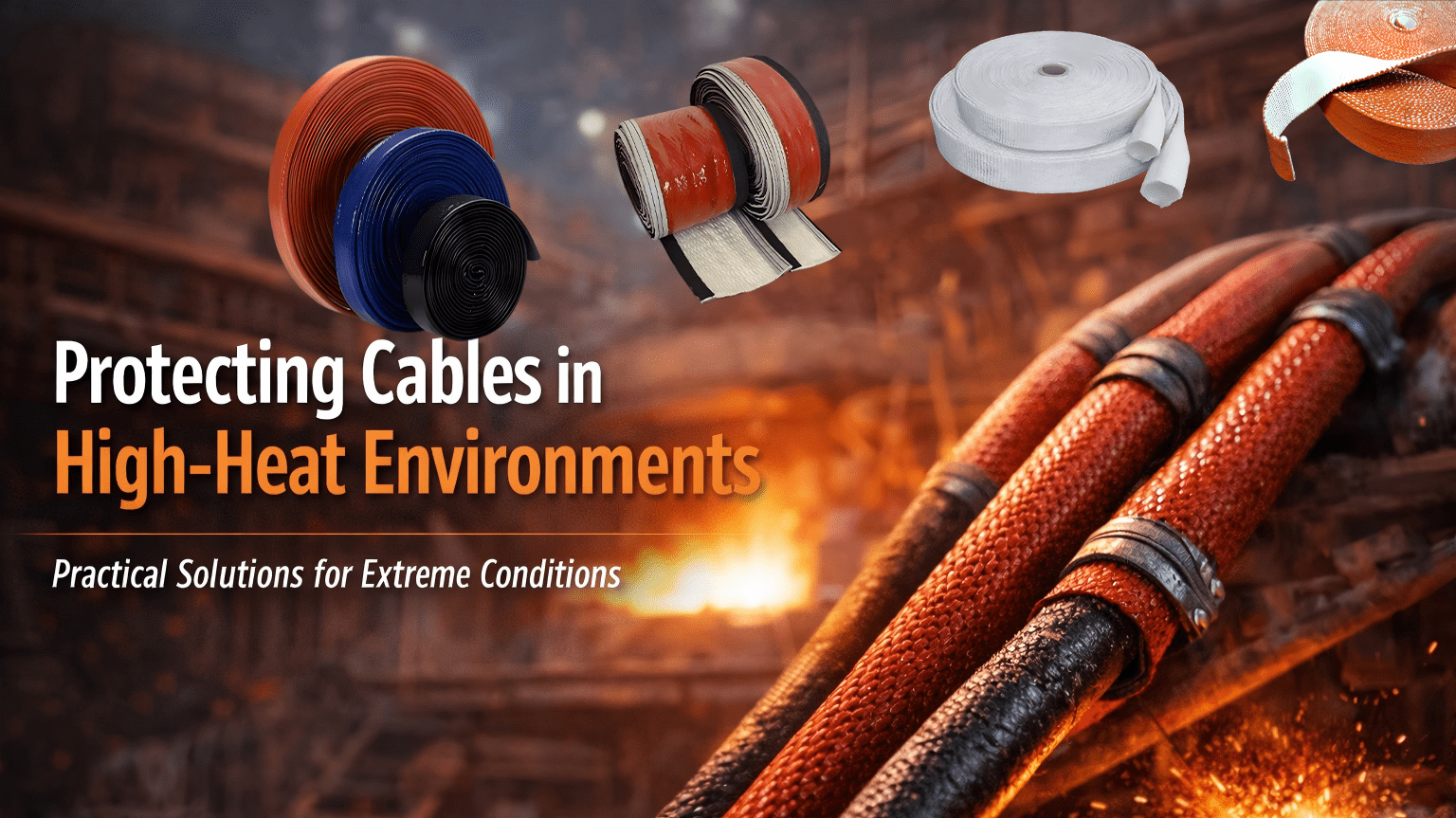
They run along steel structures, around kilns, behind boilers, above production lines. As long as machines are operating, those cables are sitting in warm air—sometimes very warm air. Not for a few hours, but for years.
What causes trouble in these situations is not a sudden spike in temperature. It is the steady exposure.
Most power cables are designed around a continuous operating temperature near 70°C. In controlled environments, that is fine. But in real production areas, especially near thermal equipment, temperatures easily move beyond 100°C. Closer to furnaces, the numbers climb much higher
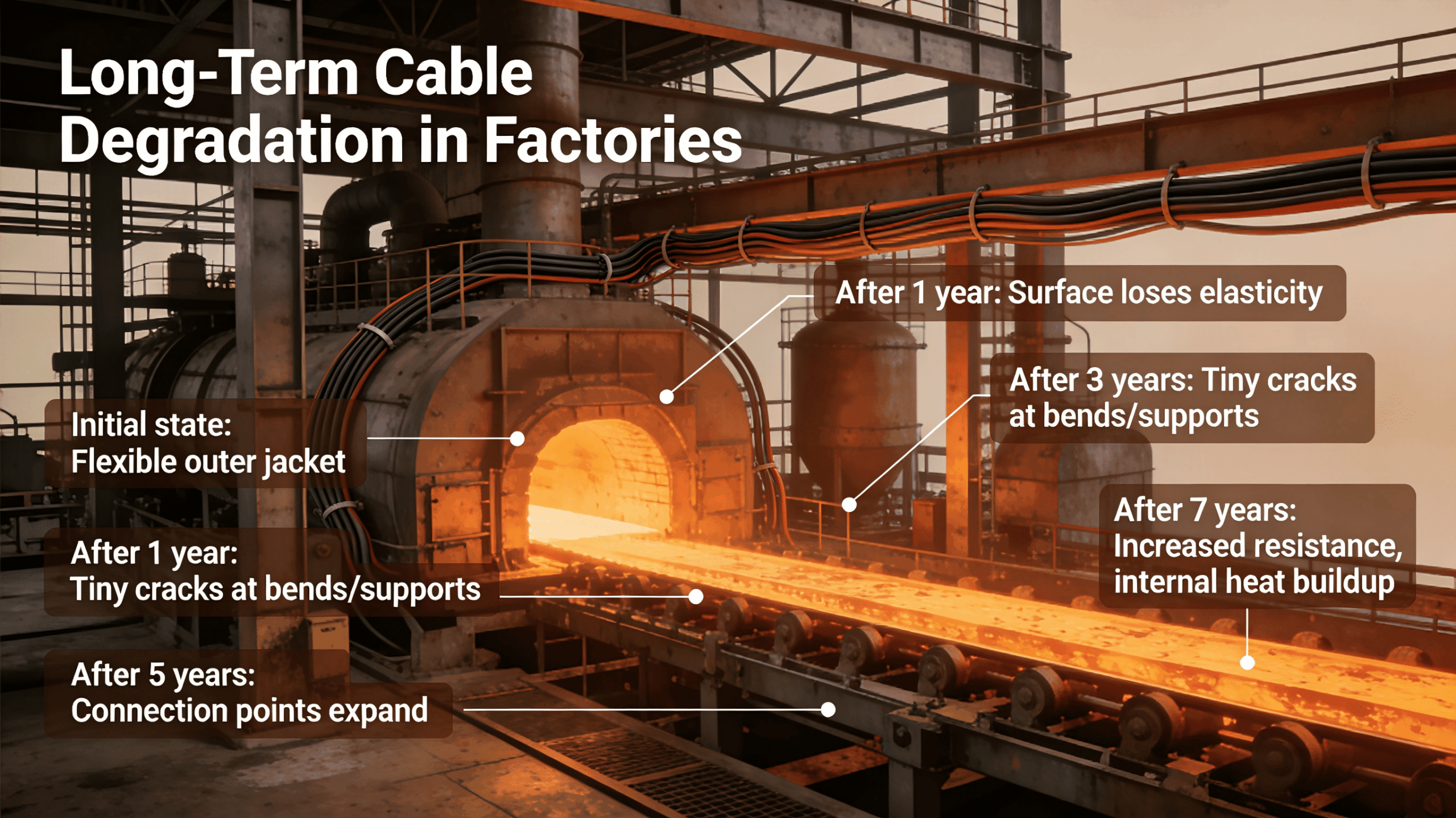
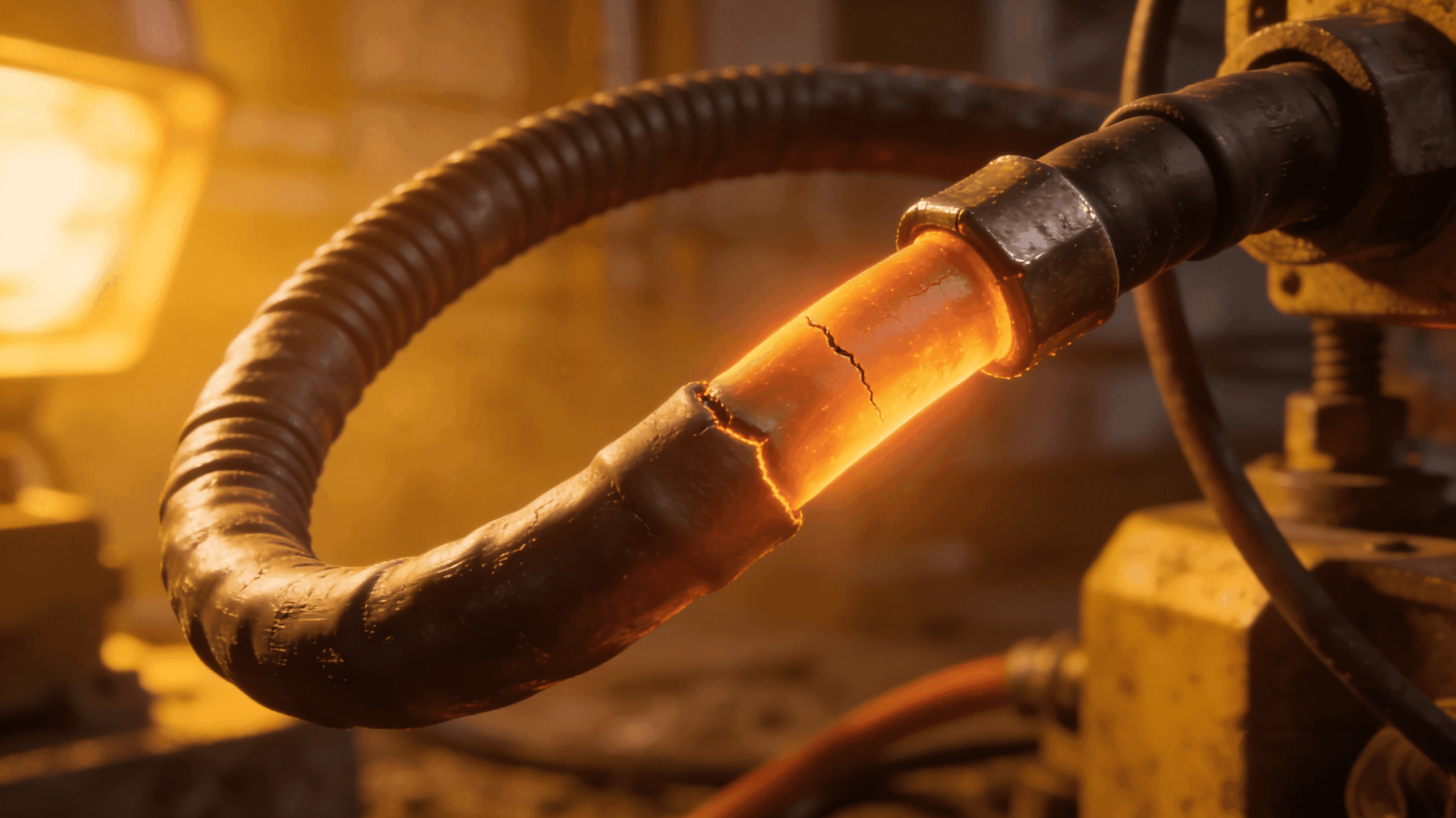
The outer jacket stiffens. The surface loses elasticity. Tiny cracks appear where the cable bends or rests against supports. Connection points expand slightly under repeated heating and cooling cycles. Resistance increases. Heat builds internally.
It is rarely one single failure. It is accumulation.
Why Additional Protection Is Often Necessary
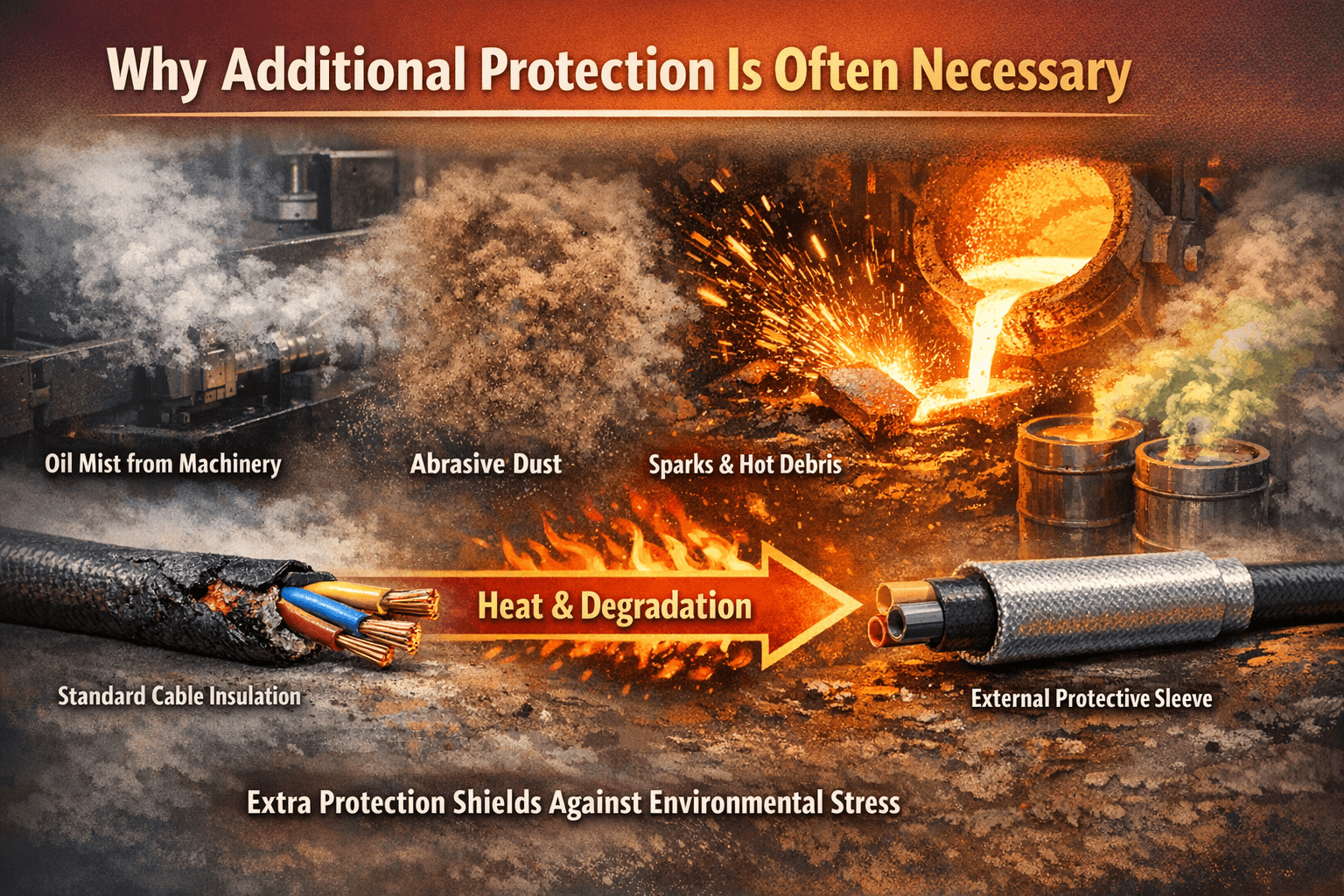
Standard cable insulation was never designed to sit next to molten metal splash or continuous radiant heat from process equipment.
In casting workshops or smelting lines, there are usually other stress factors present:
- Oil mist from machinery
- Fine abrasive dust
- Occasional sparks or hot particles
- Chemical vapors in processing areas
Heat alone weakens materials. Combined with these factors, degradation accelerates.
This is where an external protective layer becomes useful—not to replace the cable’s own insulation, but to shield it from environmental stress.
What a Fire Sleeve Actually Does in Daily Operation
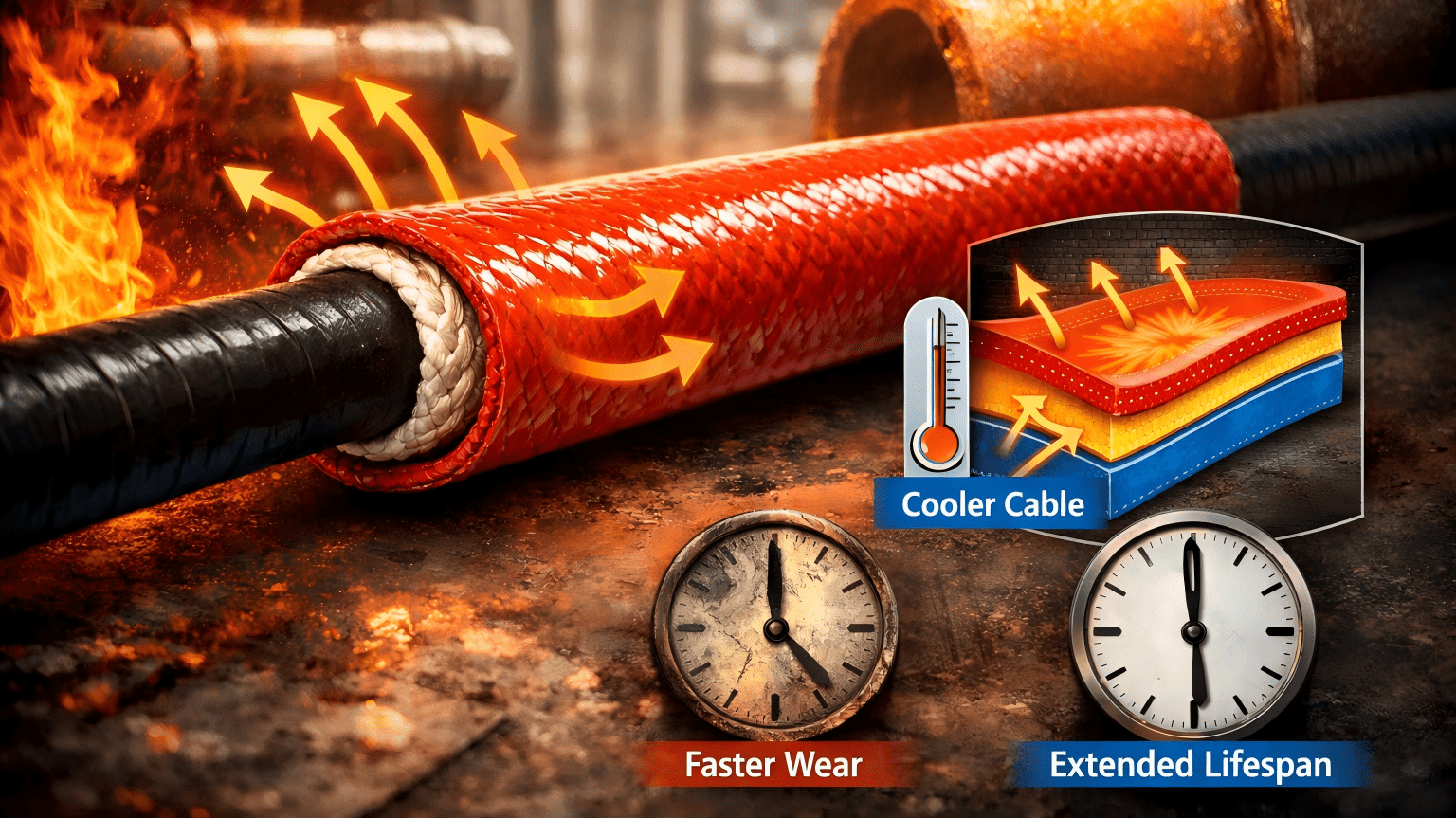
A fire sleeve is often described as “fireproof.” In practice, its day-to-day role is more about temperature buffering.
Most industrial versions use a woven fiberglass base with a silicone coating. That combination tolerates high ambient heat while remaining flexible enough for installation.
When installed over a cable in a high-temperature zone, the fire sleeve does not make the cable cold. What it does is slow down heat transfer. Radiant energy from nearby equipment is partially reflected. Direct contact heat is reduced. Sudden temperature fluctuations become less aggressive.
Over months of operation, that reduction matters.
Insulation ages more slowly. The surface does not become brittle as quickly. Maintenance intervals may extend.
What Happens During Flame Exposure
Although daily heat management is important, extreme events must also be considered.
If a cable experiences overload or insulation breakdown and ignition occurs, the fire sleeve forms a temporary barrier. The outer silicone layer chars when exposed to direct flame. The fiberglass structure underneath remains stable and does not easily collapse.
This behavior helps slow flame movement along a cable run. It does not make the installation immune to fire, but it reduces the speed at which fire spreads across adjacent lines.
In industrial environments where multiple cables share the same tray, slowing that spread can make a practical difference.
Installation and Maintenance Considerations
One advantage often overlooked is installation flexibility.
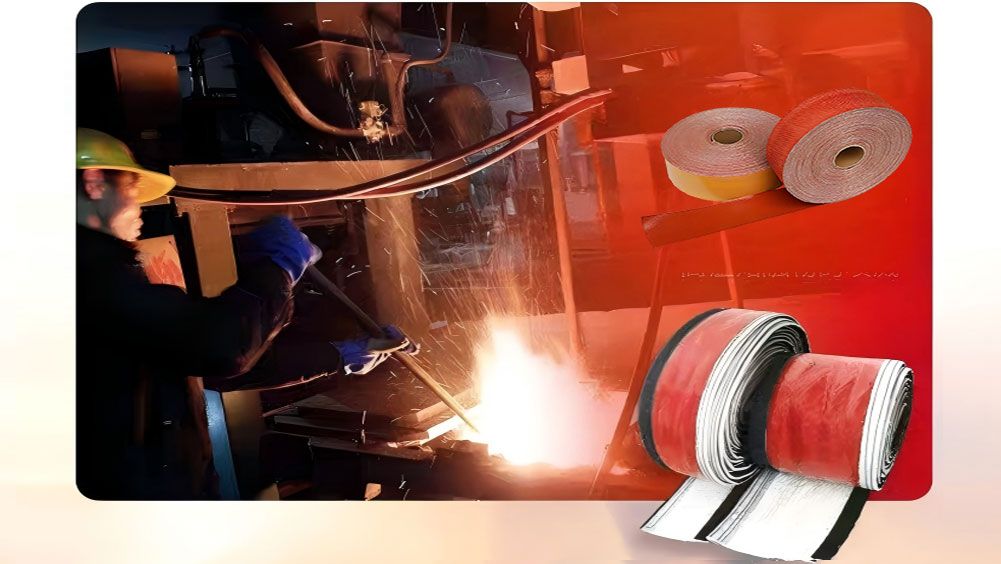
Many fire sleeves are available in wrap-around or hook-and-loop format, like as wrap-around fiberglass tape, hook and loop fire sleeve. That allows them to be fitted over existing cable runs without removing connectors or shutting down equipment.
In facilities where stopping production is costly, this detail is not minor.
Routine inspection is still necessary. Sleeves exposed to constant molten splash or mechanical wear should be checked periodically. Protection only works when the material remains intact.
Choose Protection Based on Real Conditions — Not Just Temperature Ratings
The temperature rating listed on a datasheet is only one reference point. It does not fully represent how a material performs in real working environments.
In areas near smelting furnaces, protection must withstand not only continuous radiant heat, but also occasional contact with molten metal splash.
Outdoor installations require resistance to UV exposure, rain, and humidity.
Chemical processing zones demand materials that can tolerate corrosive vapors and airborne contaminants.
In practice, selecting a protective sleeve should start with an evaluation of the actual operating conditions — thermal load, environmental exposure, and mechanical risk — rather than simply choosing the product with the highest temperature number.
The highest rating on paper does not always equal the most suitable solution in the field.
A Practical Observation
In many cases, cable-related shutdowns in high-temperature facilities are not caused by dramatic accidents. They are the result of gradual insulation breakdown that went unnoticed.
Adding a thermal protective sleeve is not a complex upgrade. It is a preventive step. The cost is modest compared with the expense of replacing damaged cable runs or halting production unexpectedly.
In environments where heat is constant, reducing long-term stress on cables is often more effective than reacting after failure.
FAQ
1.When should a fire sleeve be considered?
When cables operate close to or above their rated temperature for extended periods, or when installed near consistent heat sources.
2.Is a fire sleeve a substitute for proper cable specification?
No. The base cable must still meet electrical and safety standards. The sleeve acts as environmental protection.
3.Can sleeves be added to existing systems?
Yes. Many products are designed for retrofit installation without disconnecting cables, though safety procedures must be followed.
4.How long can a fire sleeve last?
Service life depends on environmental severity. In stable high-heat zones without heavy mechanical damage, sleeves can remain effective for several years.
Hey there, I’m Tracy!

Get A Quote
Related Product You May Also Like


Hook and Loop Cable Tie


Related Post You May Also Like
Spiral Wrap Sizing: 9 Mistakes That Ruin Cable Bundles
[pac_divi_table_of_contents included_headings="off|on|on|off|off|off" exclude_headings_by_class="on" active_link_highlight="on" level_markers_3="icons" title_container_padding="10px|15px|10px|15px|true|false" title_container_bg_color="#333333" body_area_height="650px"...
The Hidden Hero of Electrical Safety: Why Insulation Sleeves Are Often Overlooked
[pac_divi_table_of_contents included_headings="off|on|on|off|off|off" exclude_headings_by_class="on" active_link_highlight="on" level_markers_3="icons" title_container_padding="10px|15px|10px|15px|true|false" title_container_bg_color="#333333" body_area_height="650px"...

Best Cable Sleeves for Home Office Cable Management
[pac_divi_table_of_contents included_headings="off|on|on|off|off|off" exclude_headings_by_class="on" active_link_highlight="on" level_markers_3="icons" title_container_padding="10px|15px|10px|15px|true|false" title_container_bg_color="#333333" body_area_height="650px"...
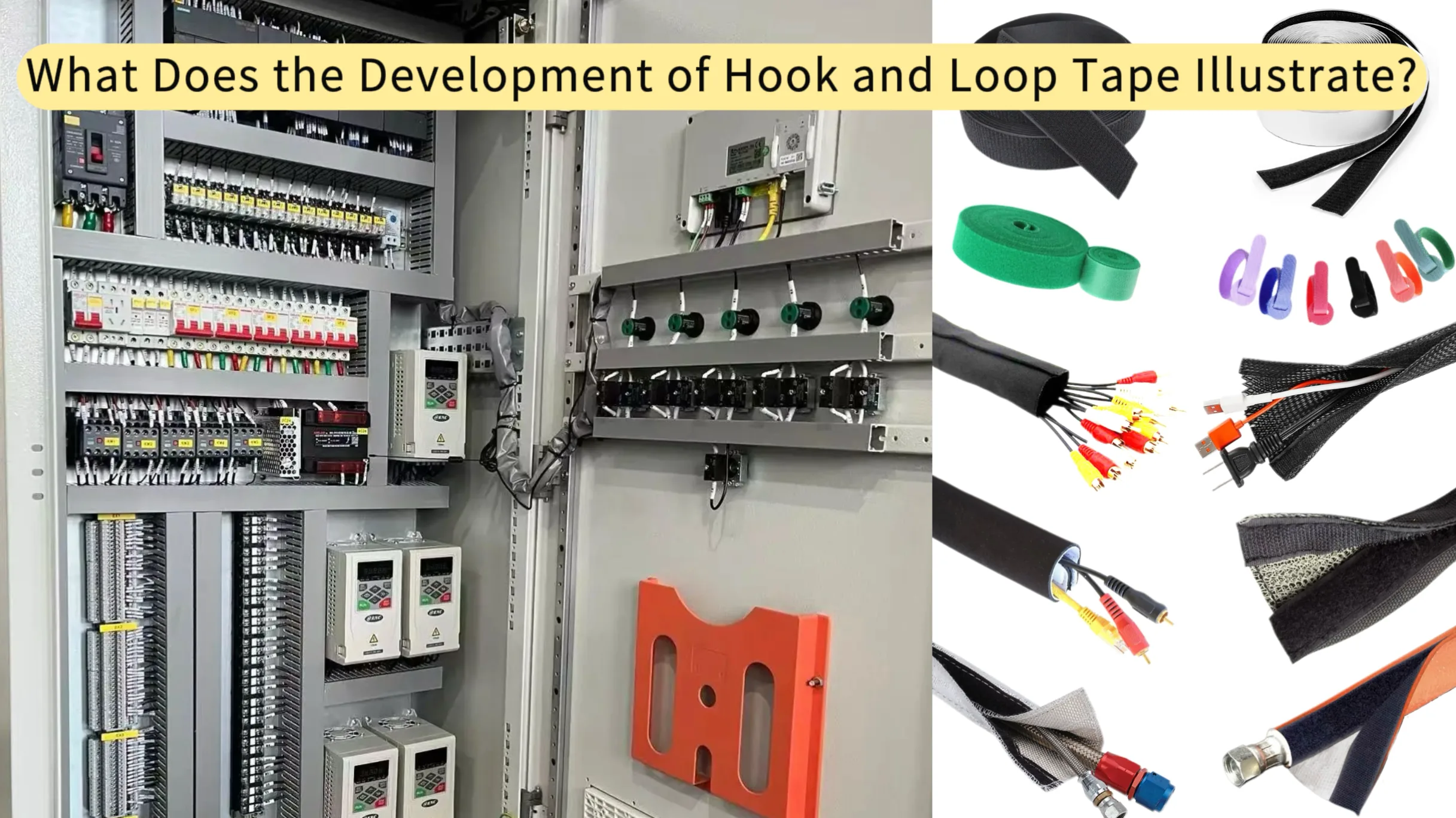
What Does the Development of Hook and Loop Tape Illustrate?
[pac_divi_table_of_contents included_headings="off|on|on|off|off|off" exclude_headings_by_class="on" active_link_highlight="on" level_markers_3="icons" title_container_padding="10px|15px|10px|15px|true|false" title_container_bg_color="#333333" body_area_height="650px"...
0 Comments