
How to Better Protect Your EV Charging Cables
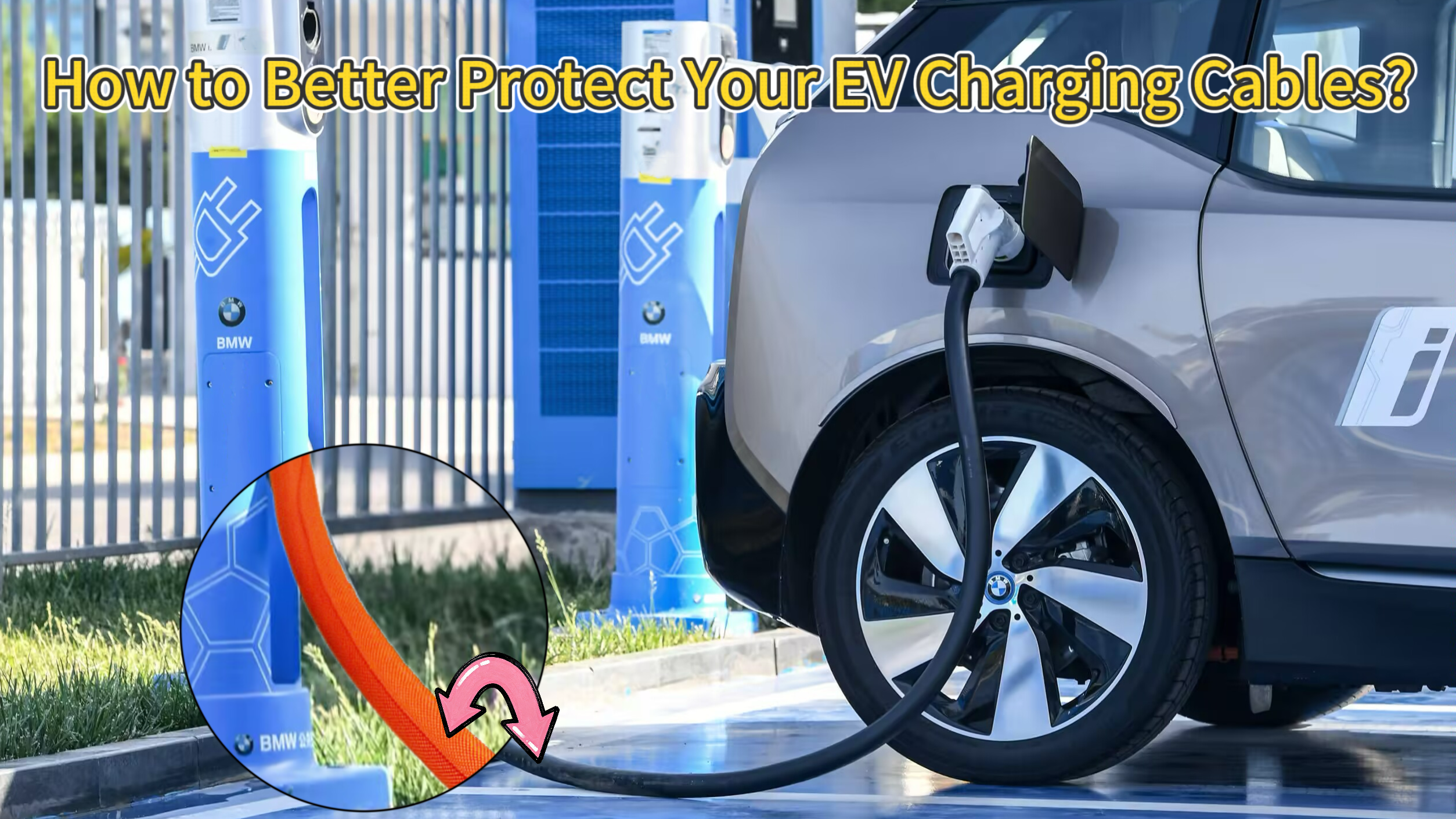
At present, in the industry, most finished EV charging cables leave the factory without special external protective accessories. After installation, the original outer sheath alone must resist friction, dragging and other conditions, making wear and aging likely and creating ongoing maintenance and replacement costs.
Including compatible protective components as part of the standard factory package can address cable degradation and reduce the operational and maintenance burden caused by field failures. So, how can you effectively protect EV charging cables?
Cable’s No.1 Enemy: The Ground
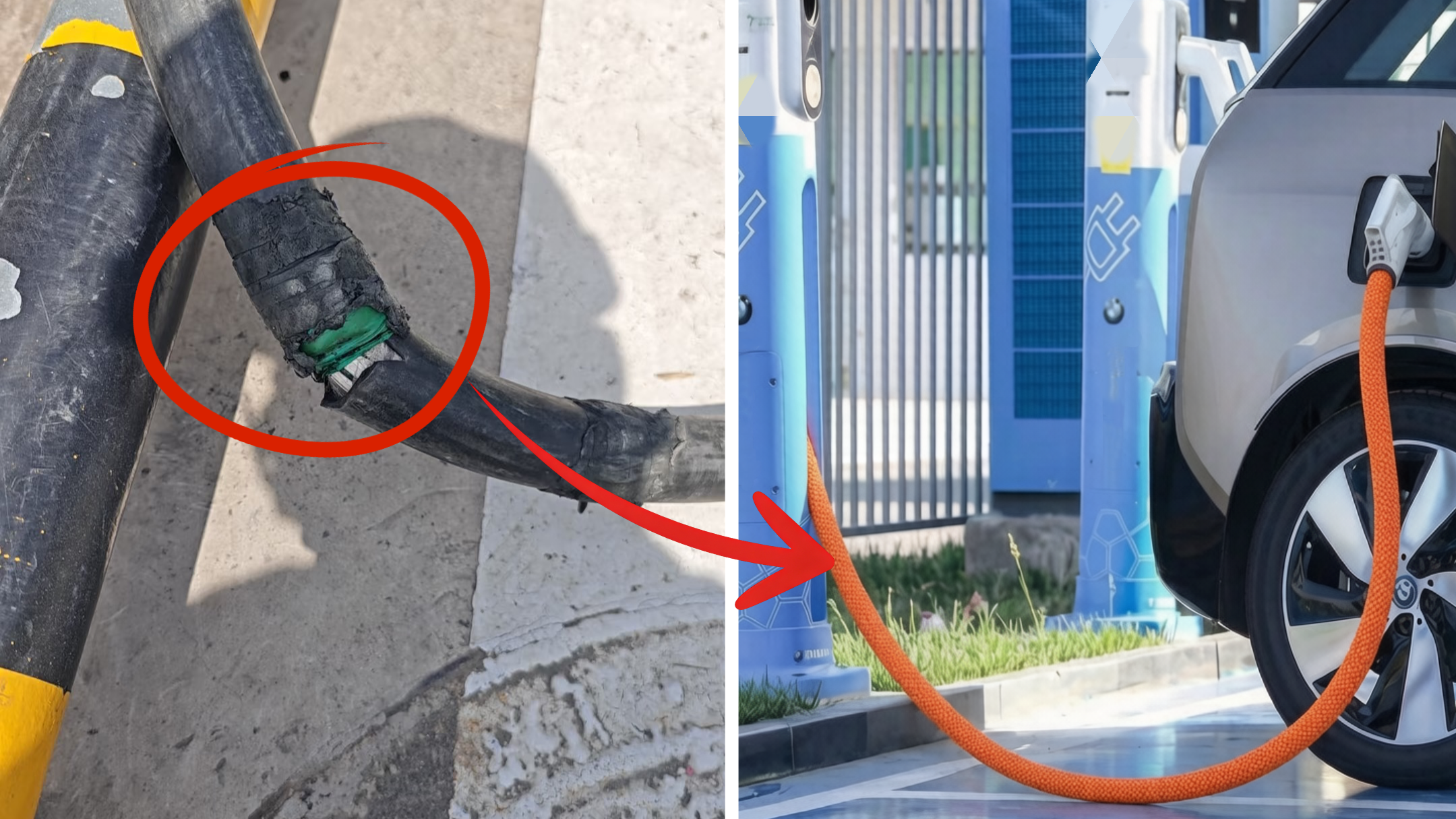
Think about the most common state of a charging cable: one end plugs into the car, the other connects to the charging pile, and a long middle section lies exposed on the ground. It suffers ground friction and wheel crushing, while also creating a tripping hazard. Over time, the outer sheath can wear and crack, internal insulation can age, and the result may be poor contact or complete failure.
The solution is simple: prevent the cable from coming into direct contact with the ground.
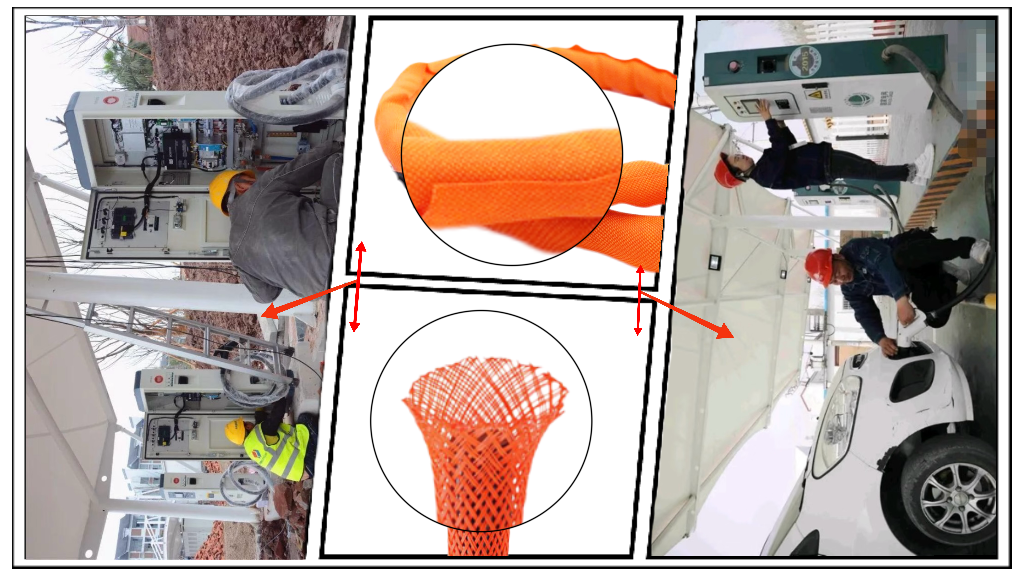
For public charging stations with heavy foot traffic, we recommend orange self wrapping split braided sleeving. Its orange finish meets EV high-voltage identification requirements, helping identify high-voltage cables and improving visibility to reduce pedestrian and vehicle trip hazards. This orange self closing cable sleeve has an open design, so it can be wrapped without removing the charging connector and makes later cable repair more convenient.
Protect Cable from Extreme Temperature
Extreme temperatures are not friendly to EV charging cables:
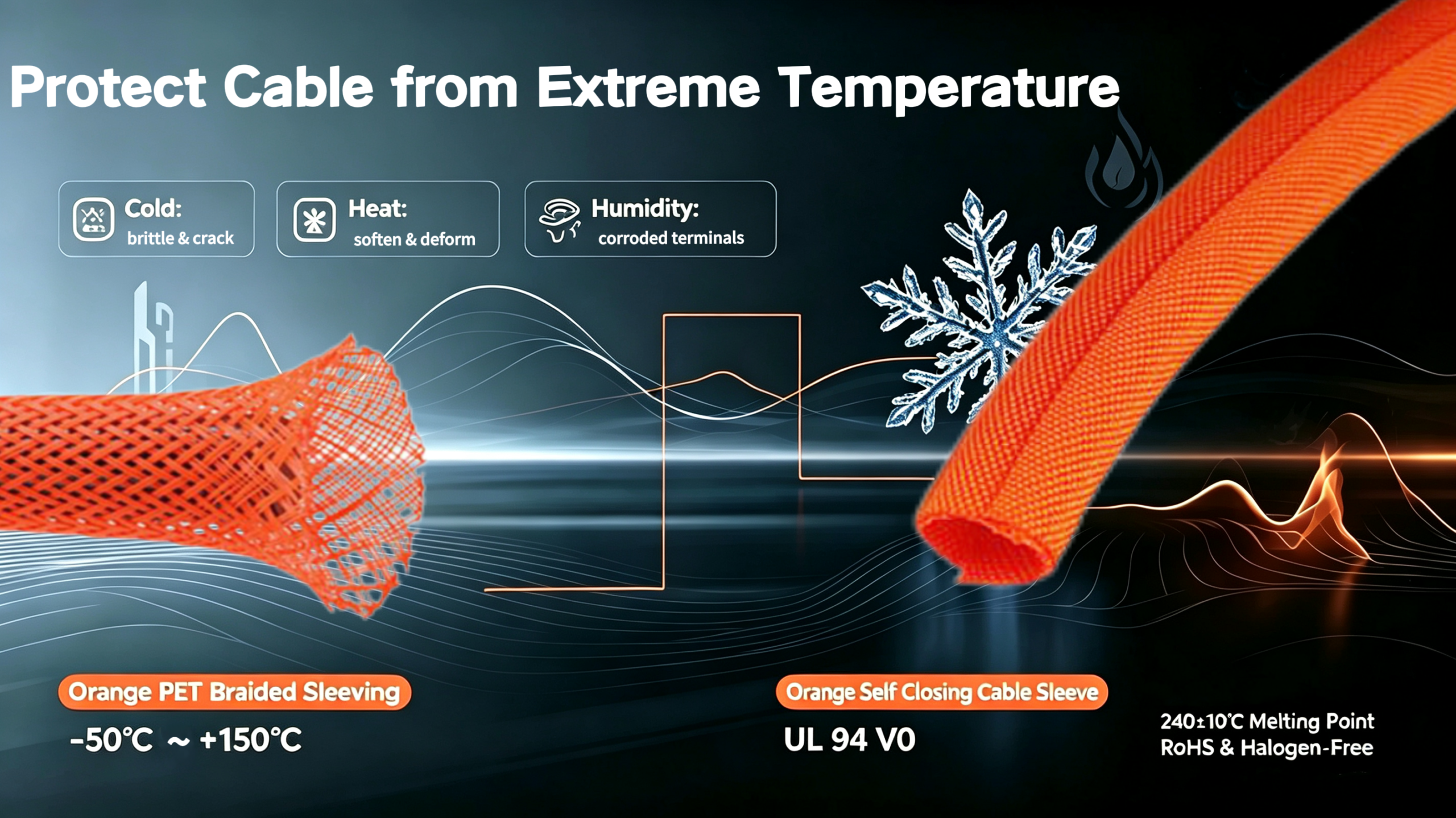
If it is too cold in winter, the outer sheath can become brittle and crack easily after bending.
If it is too hot in summer, the outer sheath can soften and deform, then lose elasticity over time.
Humid environments are also troublesome. Once water vapour enters a joint, it can corrode the metal terminal and increase contact resistance, reducing charging efficiency and creating safety hazards.
In complex temperature and humidity conditions, store the cable in a dry, light-free position when it is idle.
If the charging cable must remain outdoors for a long time, consider orange PET braided sleeving, which operates from -50°C to +150°C and is suitable for freezing winters and hot summers. Orange self closing cable sleeve offers the same operating range and can withstand heat generated during charging, helping prevent premature material aging caused by thermal stress. With a 240±10°C melting point, UL 94 V-0 flame-retardant rating, RoHS compliance and a halogen-free construction, it adds safety redundancy for high-voltage charging.
Cable Damage from Repeated Bending
During use, EV charging cables constantly stretch and twist. Repeated bending eventually creates small cracks in the outer sheath. As the cracks expand, the outer layer can fail. This is physical damage caused by long-term repeated bending.
Orange self-closing cable sleeve and orange PET expandable braided sleeving have smooth inner and outer surfaces. They do not damage the cable surface during installation, can buffer wear caused by repeated bending, slow outer-layer cracking and allow the cable to move normally.
Regular Inspection and Source Protection Save Trouble
Damage to an EV charging cable does not occur suddenly; it accumulates over time. If a cable is manufactured without external protective accessories such as orange self-wrapping split braided sleeving, friction, bending and environmental exposure act directly on its original outer sheath. Minor scratches and cracks can gradually grow, allowing moisture to enter and corrode internal components over a period of months.
Arrange regular inspections so cable damage can be found early. Check whether the outer sheath is cracked, scratched or crushed by heavy objects, and check for loose joints. Timely action helps prevent batch failures and lowers later maintenance and replacement pressure. Regular maintenance is only post-event detection, however. Providing protective cable sleeves as factory accessories reduces outer-sheath wear at the source and further lowers failure probability.
Conclusion
EV charging cables continuously withstand external influences in different usage scenarios. Relying only on the cable’s original outer sheath makes long-term stability and integrity difficult. Orange self closing braided sleeving and orange PET braided sleeving add a reliable external barrier that reduces cable damage and lowers later maintenance and troubleshooting costs.
If you are not sure which cable sleeve suits your project or have special protection requirements, please contact us. We can provide an adapted solution based on local protection needs.
Frequently Asked Questions
Why is it recommended to use orange self wrapping split braided sleeving and orange PET braided sleeving as a component for the entire cable set?
Most charging cables lack factory-fitted protective sleeves. Orange self wrapping split braided sleeving and orange PET braided sleeving protect against friction, bending and temperature fluctuations. They reduce field failures and maintenance costs, while the orange finish meets EV high-voltage identification requirements.
How do you protect EV charging cables from daily wear and tear?
Pair the cable with orange self closing braided sleeving and orange PET expandable braided sleeving. This reduces damage caused by friction, bending and environmental conditions at the source.
What is the temperature range of orange PET braided sleeving?
Its working temperature range is -50°C to 150°C, which is higher than that of common external EV charging cables and suitable for both cold and hot conditions.
Is it necessary to remove the charging connector when using orange self closing cable sleeve?
No. Its open design allows direct covering, making later cable maintenance more convenient.
Can orange self wrapping split braided sleeving and orange PET expandable braided sleeving both reduce repeated-bending damage?
Yes. Both have smooth surfaces and can buffer bending damage after installation without restricting normal cable movement.
Hey there, I’m Celia!

Get A Quote


Related Post You May Also Like
Ways to Hide Cables Under Your Desk
[pac_divi_table_of_contents included_headings="off|on|on|off|off|off" exclude_headings_by_class="on" active_link_highlight="on" level_markers_3="icons" title_container_padding="10px|15px|10px|15px|true|false" title_container_bg_color="#333333" body_area_height="650px"...
Spiral Wrap Sizing: 9 Mistakes That Ruin Cable Bundles
[pac_divi_table_of_contents included_headings="off|on|on|off|off|off" exclude_headings_by_class="on" active_link_highlight="on" level_markers_3="icons" title_container_padding="10px|15px|10px|15px|true|false" title_container_bg_color="#333333" body_area_height="650px"...
How to Find Reliable Cable Sleeve Manufacturers in China
[pac_divi_table_of_contents included_headings="off|on|on|off|off|off" exclude_headings_by_class="on" active_link_highlight="on" level_markers_3="icons" title_container_padding="10px|15px|10px|15px|true|false" title_container_bg_color="#333333" body_area_height="650px"...
How to Use Spiral Wrap: Installation and Material Selection
[pac_divi_table_of_contents included_headings="off|on|on|off|off|off" exclude_headings_by_class="on" active_link_highlight="on" level_markers_3="icons" title_container_padding="10px|15px|10px|15px|true|false" title_container_bg_color="#333333" body_area_height="650px"...