
How to Install Braided Hose Sleeves: A Complete Guide
What Is the Braided Hose Sleeve?
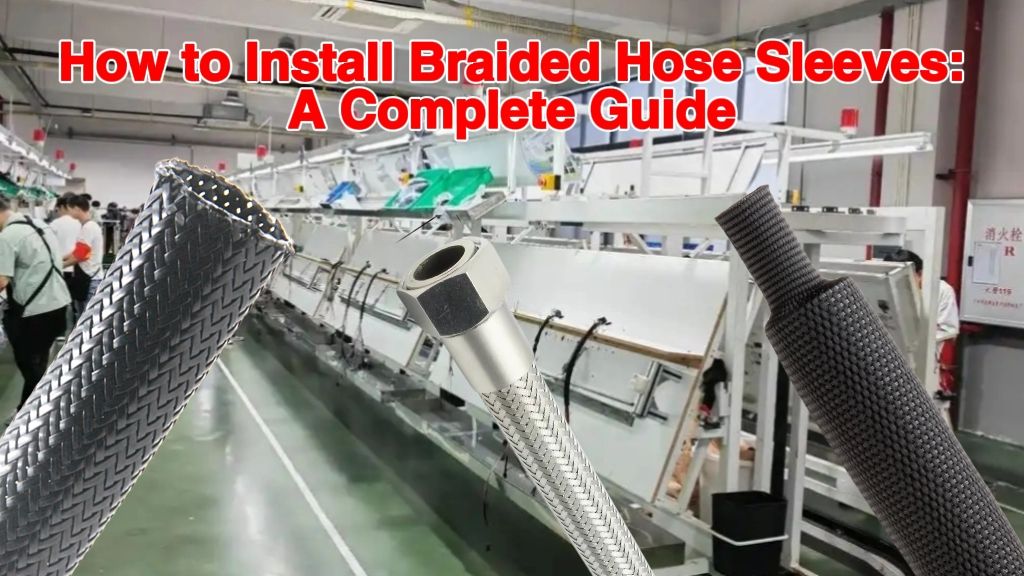
Braided hose sleeve is a general term referring to a category of products that are used to protect wires and hoses. The most common ones on the market include the following three types, each with different structures.
1.Nylon flat filament braided sleeving
It features an expandable braided structure. It can be stretched to increase the diameter, and after being inserted, it naturally retracts to cover the wires or hoses.
2.Braided heat shrink tubing
It has a braided structure. After heating, it permanently shrinks and conforms tightly to the wires or hoses.
3. Stainless steel braided hose
It adopts a reverse-knitted structure of stainless steel wires. The interior is smooth, and it combines flexibility and tensile strength.
Non-destructive Tools for Covering Wall Electrical Wires
How to Choose the Right Braided Hose Sleeve?
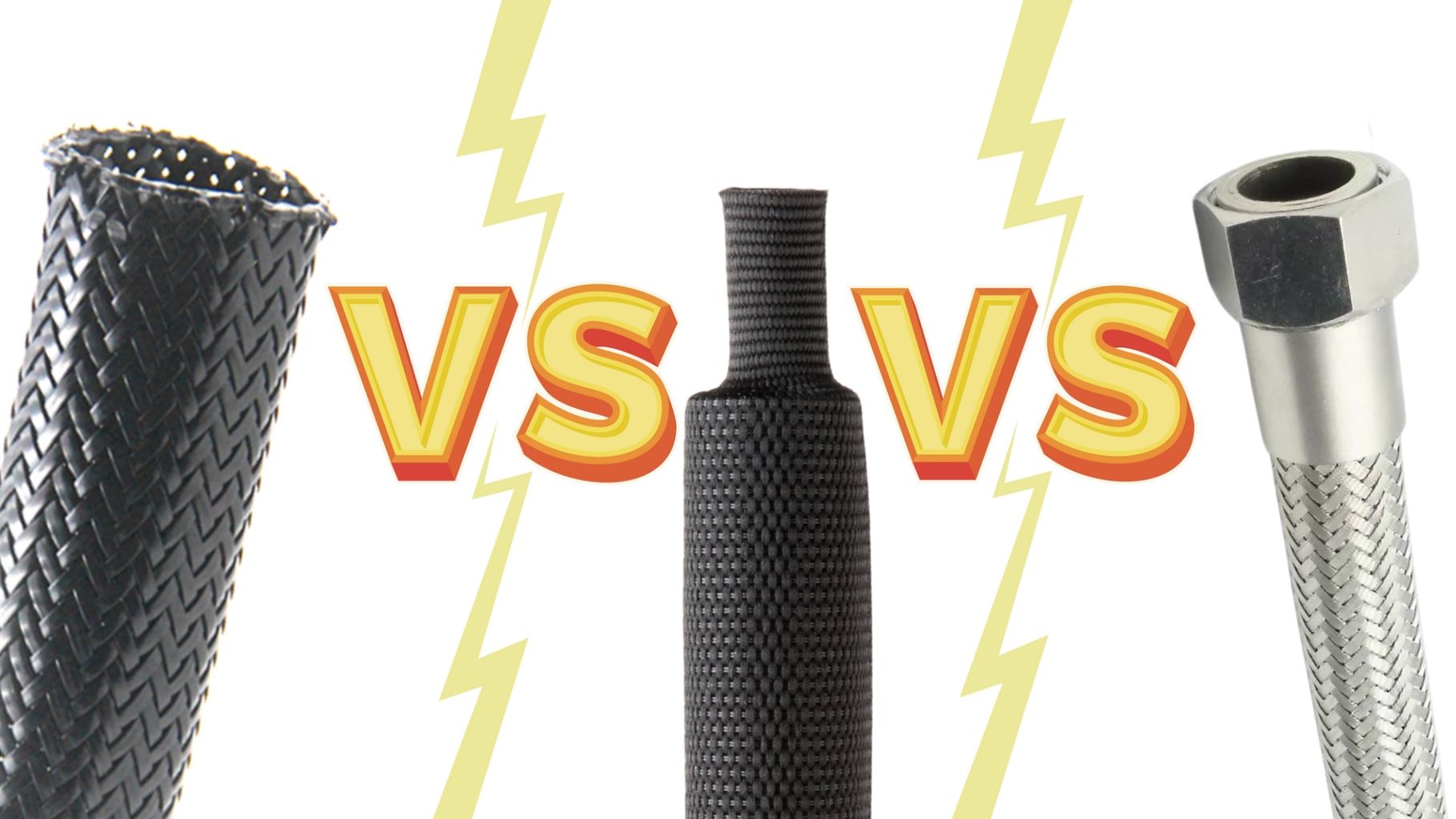
When selecting a model, you can evaluate it from four dimensions: material, installation, performance, and application. Refer to the table below for details.
Filament
Braided
Sleeving
Heat
Shrink
Tubing
Steel
Braided
Hose
Polyester
self-retighten
after release
heat to shrink
tightly
/ threaded
connection
Anti-Abrasion/Corrosion
Wrapping
Pipeline
Choosing the right type is the first step toward proper installation. Once the type is confirmed, proceed to the specific installation steps.
How to Install Nylon Flat Filament Braided Sleeving?
Preparation: Measure the Length of the Cable.
Measure the total length of the cables that need to be protected, and leave a 5% to 10% length margin during cutting to accommodate the bending requirements of the lines.
Operating Steps:
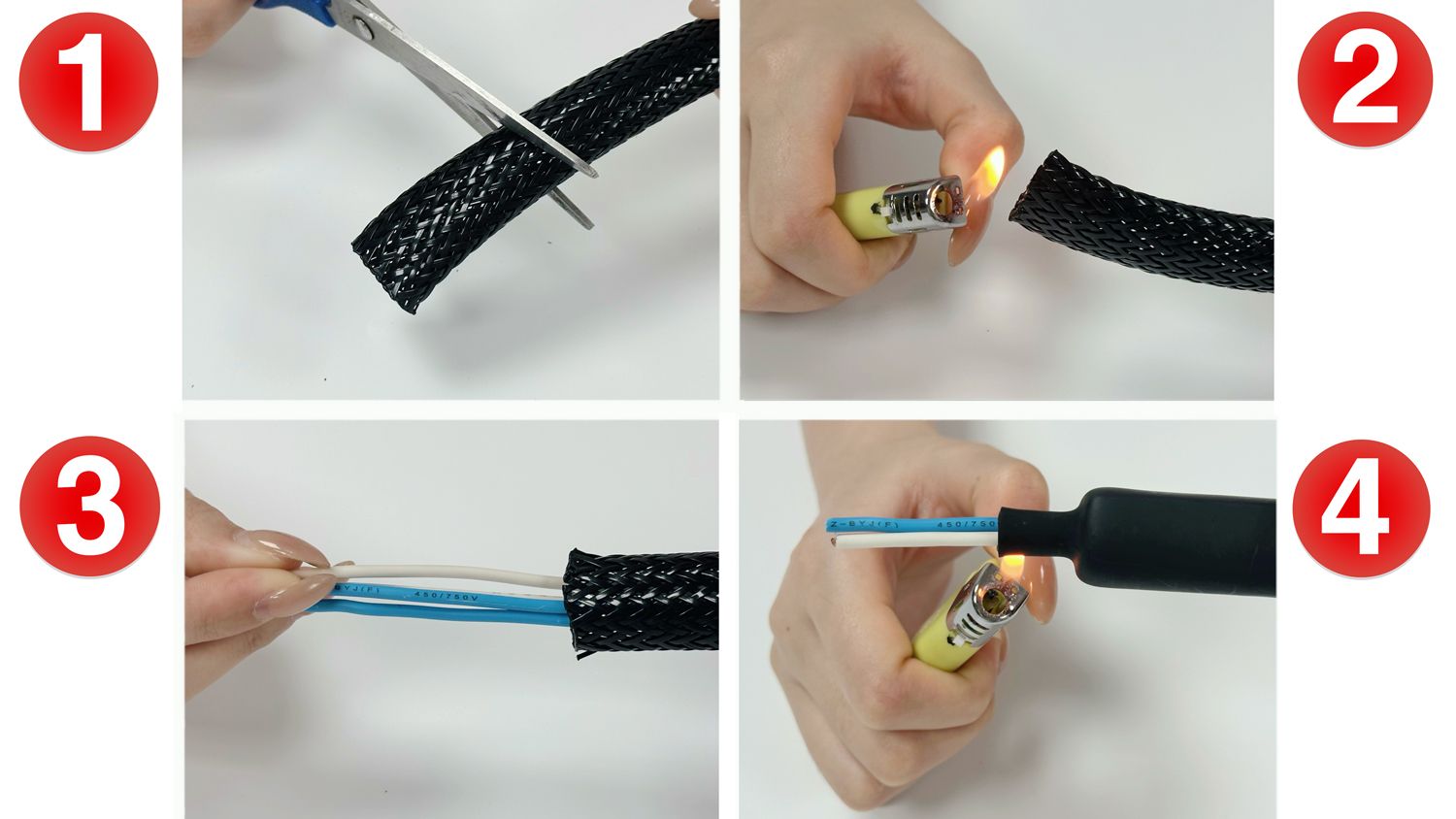
1.Cut the sleeve (Step 1)
According to the measured dimensions, use scissors to cut the corresponding length of the nylon flat filament braided sleeving.
2.Seal the cut edges to prevent loose threads (Step 2)
After cutting, use a lighter to gently heat the cut edges of the nylon flat filament braided sleeving to lock the edges and prevent loose threads during use.
3.Insert the wire harness (Step 3)
Stretch and expand the nylon flat filament braided sleeving completely insert the wire harness, gently push it in place, do not pull forcefully.
4.Reinforce the end (Step 4)
After the nylon flat filament braided sleeving completely covers the wire harness, take a heat shrink tube and wrap its ends, heat and tighten to fix, to avoid it displacement or loosening.
How to Install Braided Heat Shrink Tubing?
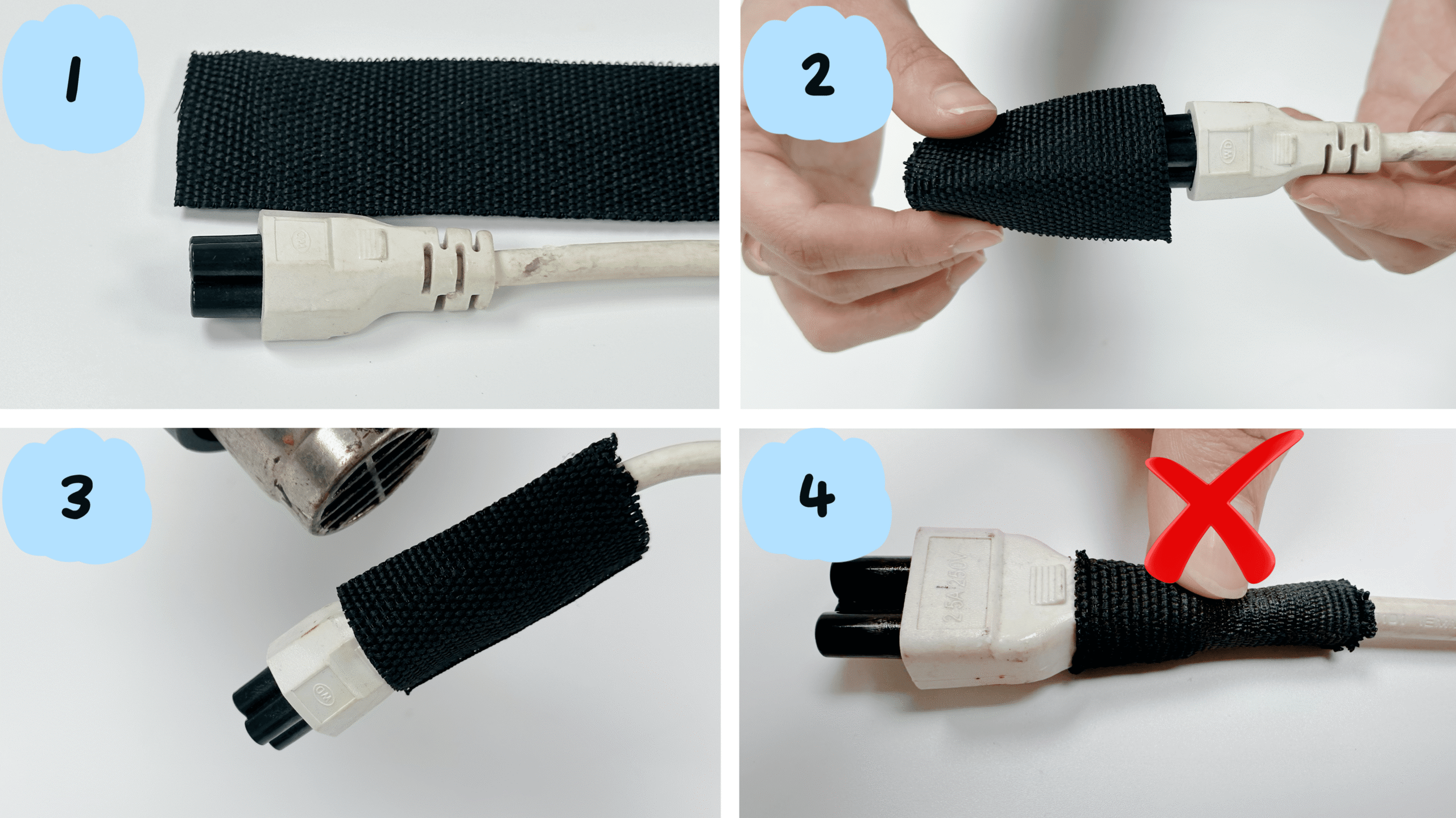
1. Type Confirmation (Step 1)
Confirm that the diameter of the braided heat shrink tubing can be smoothly inserted into the wiring harness or hose, and that it can fully contract and cover after heating.
2. Insertion Positioning (Step 2)
Insert the braided heat shrink tubing into the wiring harness or hose and adjust it to the desired covering position.
3. Heating and Shrinkage (Step 3)
Use a heat gun to evenly heat the surface of the braided heat shrink tubing. Keep the heat gun moving at a constant speed and do not stay in the same position for a long time. Observe it gradually contracting and closely adhering to the wiring harness or hose.
4. Natural Cooling (Step 4)
Stop heating after the braided heat shrink tubing is fully contracted and let it cool naturally. Don’t touch or pull the tube before cooling.
Tips: The installation effect is shown in the picture. The braided heat shrink tubing is completely adhered to the surface of the wiring harness or hose.
How to Install Stainless Steel Braided Hose?
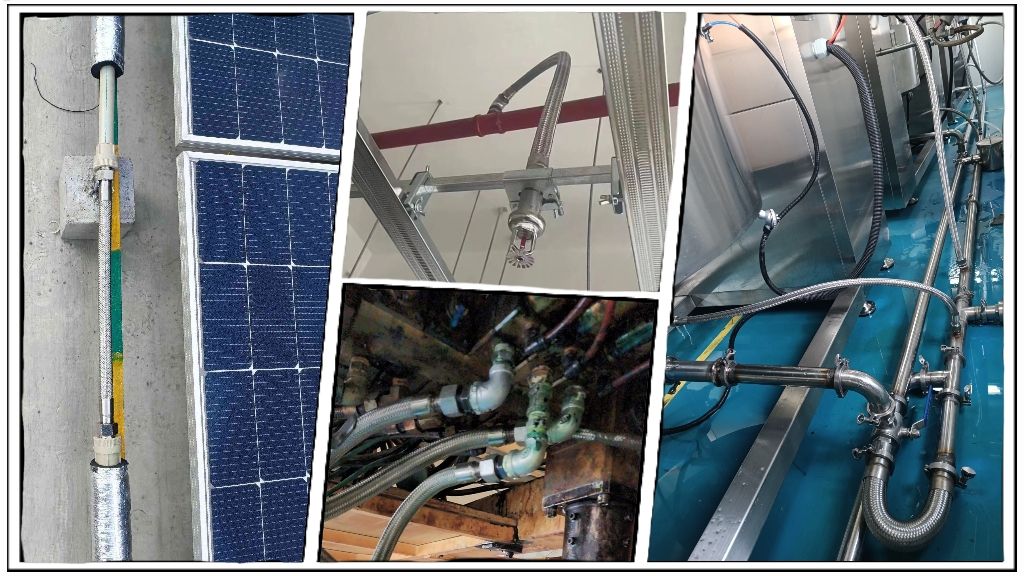
The core process of installing the stainless steel braided hose is the assembly of the joints. First, smooth out the ends of the stainless steel braided hose and insert it into the core of the joint to ensure that the stainless steel braided layer completely covers the root of the core.
Then, tighten the fixing nut. After installation, check the bending position of the stainless steel braided hose. The bending radius must comply with the product specification standards to avoid excessive bending.
After the assembly is completed, it is recommended to check each point as follows:
· Check if the locking nut is tightened properly.
· Check if there is excessive dead bending at the pipe bend.
· Check if the outer braided layer is damaged or loose threads are scattered.
· Check if there is any leakage of liquid at the joint connection.
Tips: The following picture shows the completed installation state of the stainless steel braided hose in a typical equipment, which can be used as a reference.
Common Installation Mistakes
Avoiding the following common mistakes will significantly improve the installation effect.
Maintenance Tips
For the installed braided sleeves, it is recommended to conduct the following checks regularly.
- Nylon flat filament braided sleeving: Check if the sealing at both ends is loose and if the surface is worn.
- Braided heat shrink tubing: Check for any cracks or worn.
- Stainless steel braided hose: Check if there are broken wires or corrosion in the braided layer, and if the joints are loose.
- All products: If any obvious aging or damage is found, replace it promptly.
Conclusion
Whether it is nylon flat filament braided sleeving, braided heat shrink tubing or stainless steel braided hose, choosing the right type and installing them according to the correct procedures is essential to ensure that the braided hose sleeves can truly protect your wiring harnesses or hose, and prevent repeated rework.
FAQ
Q: Can the braided heat shrink tubing be heated with a lighter?
A: It is not recommended. The heating is uneven and it is prone to burning the surface of the tube or causing incomplete contraction. It is recommended to use a heat gun instead
Q: Do both ends of the nylon flat filament braided sleeving need to be sealed?
A: It is recommended to seal. If the cut ends are not sealed, the threads may come loose, and over time the loosening will expand, affecting the protective effect.
Q: How high can the stainless steel braided hose withstand?
A: The stainless steel material itself has good heat resistance properties, but the specific upper limit of the temperature resistance depends on the internal material of the hose and the sealing material of the joint. Please refer to the product specification sheet when purchasing.
Q: What to do if the nylon flat filament braided sleeving loosens after installation?
A: Check if the selected size is too large or if both ends are not fixed properly. If the size is not suitable, a corresponding-sized nylon flat filament braided sleeving needs to be replaced.
Q: Can the three types of tubes be used interchangeably?
A: No, they cannot be used interchangeably. The three products have different materials, structures, installation methods, and applications and protection requirements.
Hey there, I’m Celia!

Get A Quote


Related Post You May Also Like
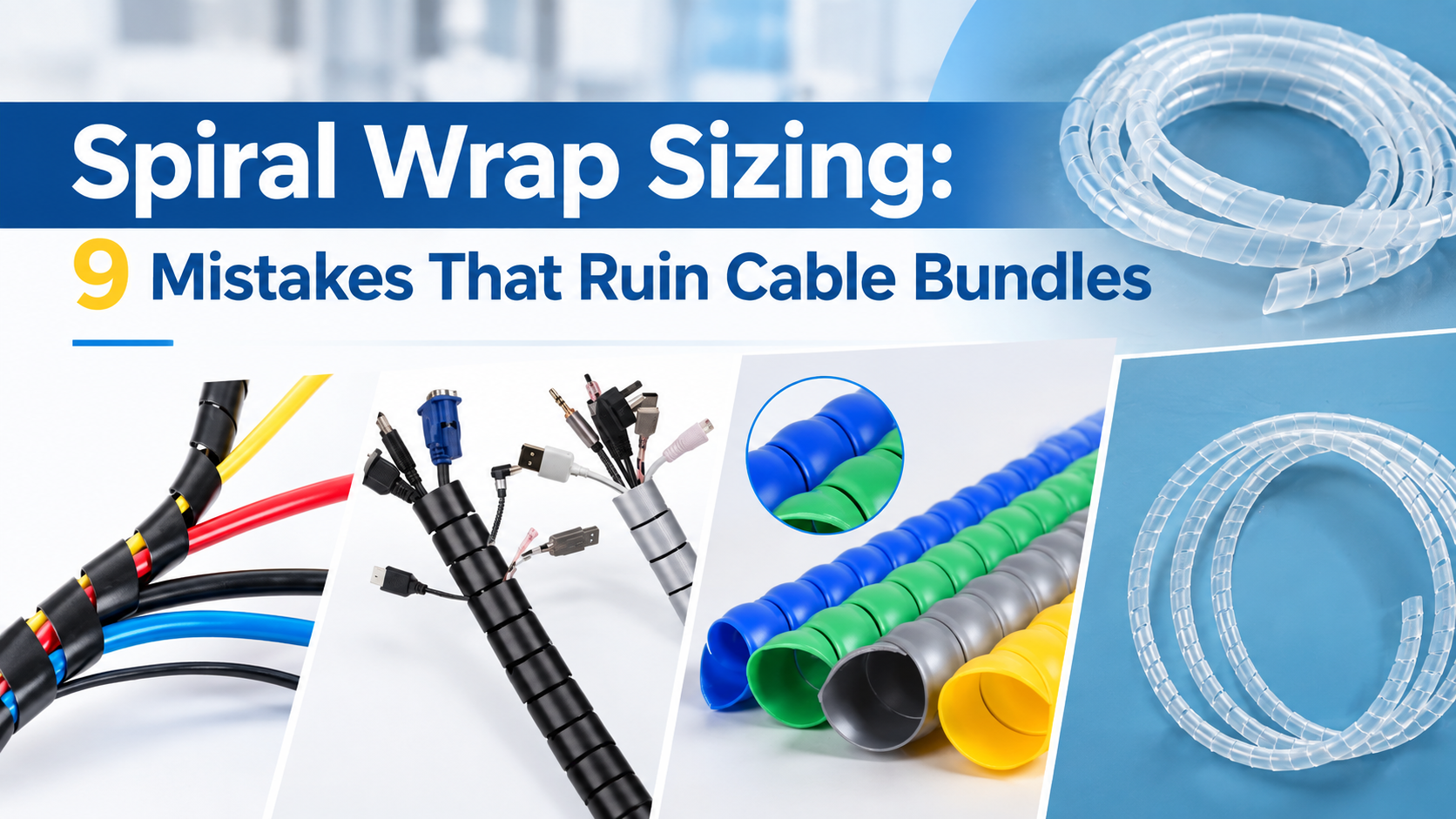
Spiral Wrap Sizing: 9 Mistakes That Ruin Cable Bundles
[pac_divi_table_of_contents included_headings="off|on|on|off|off|off" exclude_headings_by_class="on" active_link_highlight="on" level_markers_3="icons" title_container_padding="10px|15px|10px|15px|true|false" title_container_bg_color="#333333" body_area_height="650px"...
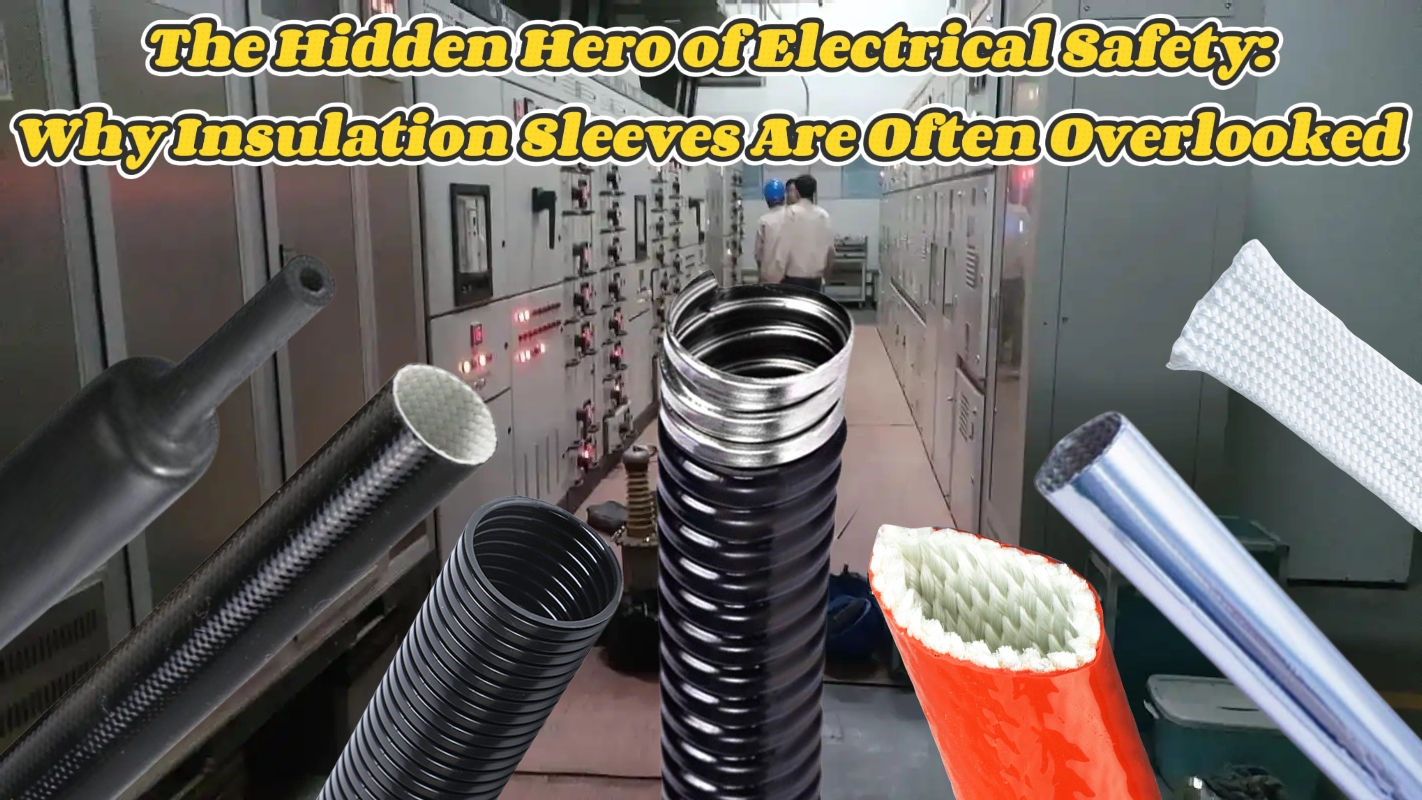
The Hidden Hero of Electrical Safety: Why Insulation Sleeves Are Often Overlooked
[pac_divi_table_of_contents included_headings="off|on|on|off|off|off" exclude_headings_by_class="on" active_link_highlight="on" level_markers_3="icons" title_container_padding="10px|15px|10px|15px|true|false" title_container_bg_color="#333333" body_area_height="650px"...

Best Cable Sleeves for Home Office Cable Management
[pac_divi_table_of_contents included_headings="off|on|on|off|off|off" exclude_headings_by_class="on" active_link_highlight="on" level_markers_3="icons" title_container_padding="10px|15px|10px|15px|true|false" title_container_bg_color="#333333" body_area_height="650px"...

What Does the Development of Hook and Loop Tape Illustrate?
[pac_divi_table_of_contents included_headings="off|on|on|off|off|off" exclude_headings_by_class="on" active_link_highlight="on" level_markers_3="icons" title_container_padding="10px|15px|10px|15px|true|false" title_container_bg_color="#333333" body_area_height="650px"...
0 Comments