
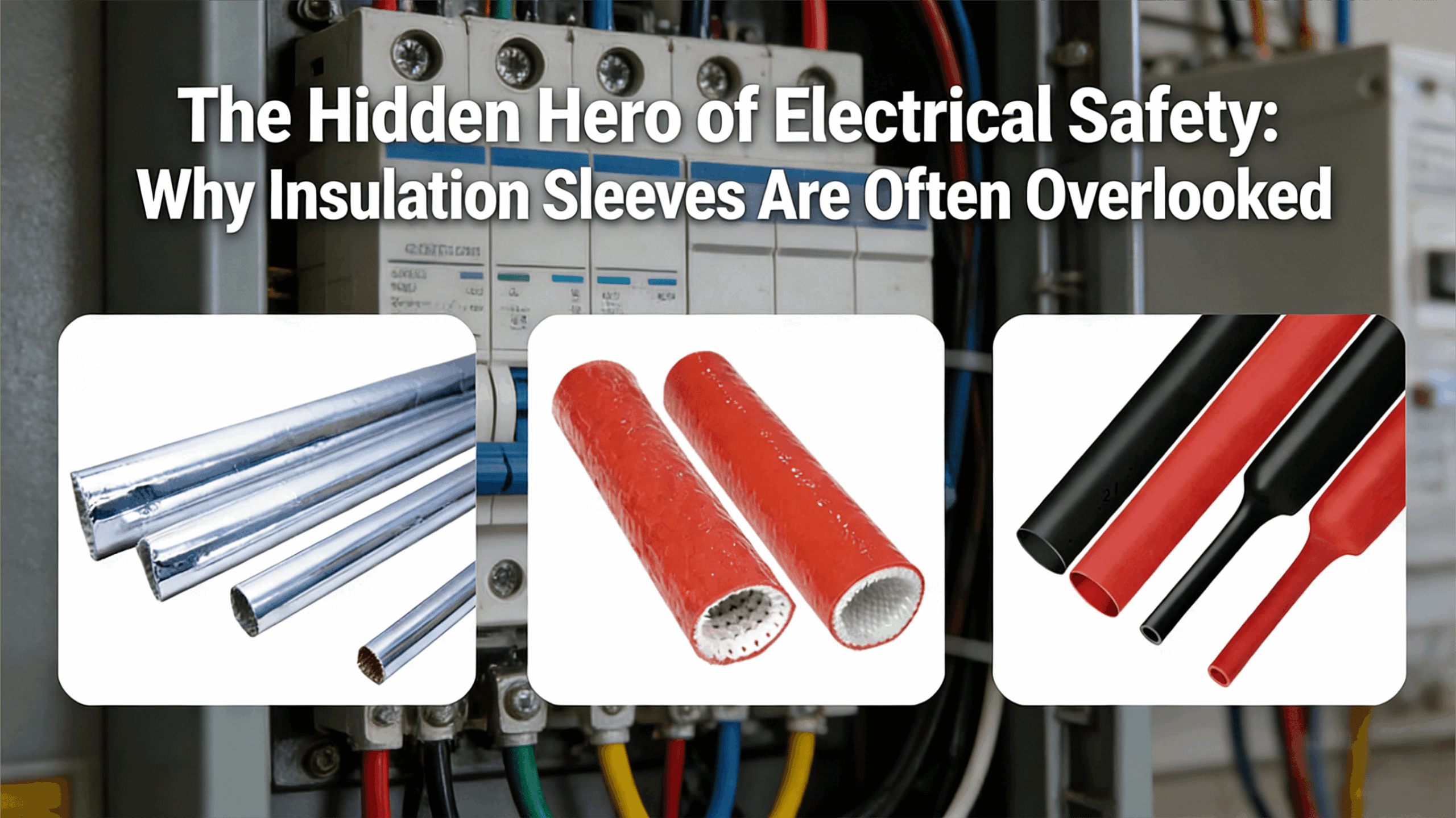
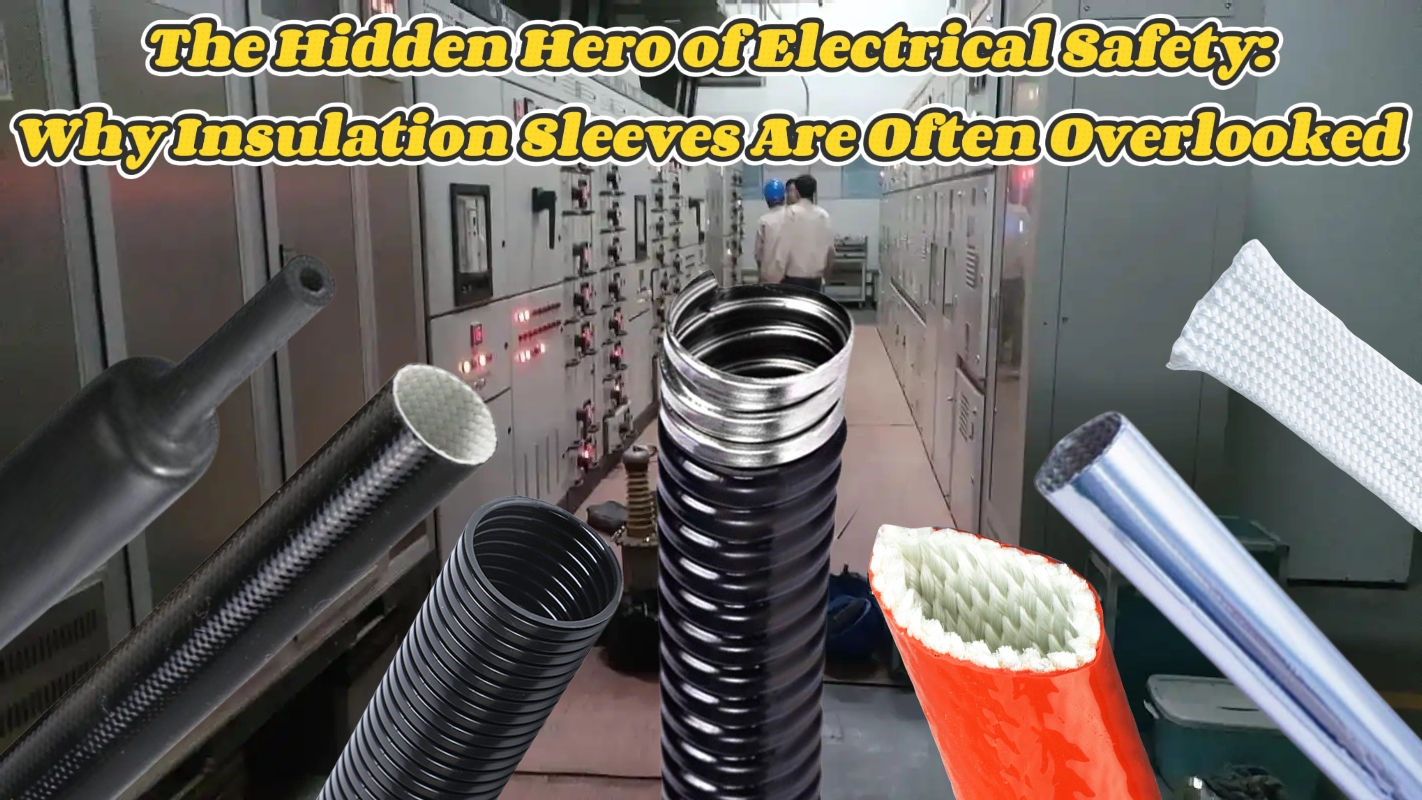
The Hidden Hero of Electrical Safety: Why Insulation Sleeves Are Often Overlooked
Failures Usually Start Small
Very few cables fail because they were badly made.
They fail because something kept rubbing.
Because heat stayed trapped too long.
Because a sharp edge was ignored.
Without insulation sleeves, these small issues don’t look serious at first. But time has a way of turning small damage into expensive problems.
What Insulation Sleeves Actually Do on Site
On paper, insulation sleeves sound simple. In real installations, they solve very practical problems.
They protect cables where space is tight.
They prevent direct contact with metal parts.
They reduce heat stress near motors and power units.
Most technicians don’t talk about insulation sleeves unless something goes wrong. That’s usually because when they are used properly, nothing goes wrong.
Lessons From Real Installations
In factories and workshops, cables don’t sit still. They vibrate. They bend. They move slightly every time a machine runs.
Over time, this movement wears down insulation. Adding insulation sleeving at critical points—entry holes, joints, high-temperature areas—often doubles the service life of a cable.This is why insulation sleeves are one of the highest ROI safety components in electrical systems.
It’s not theory. It’s experience.
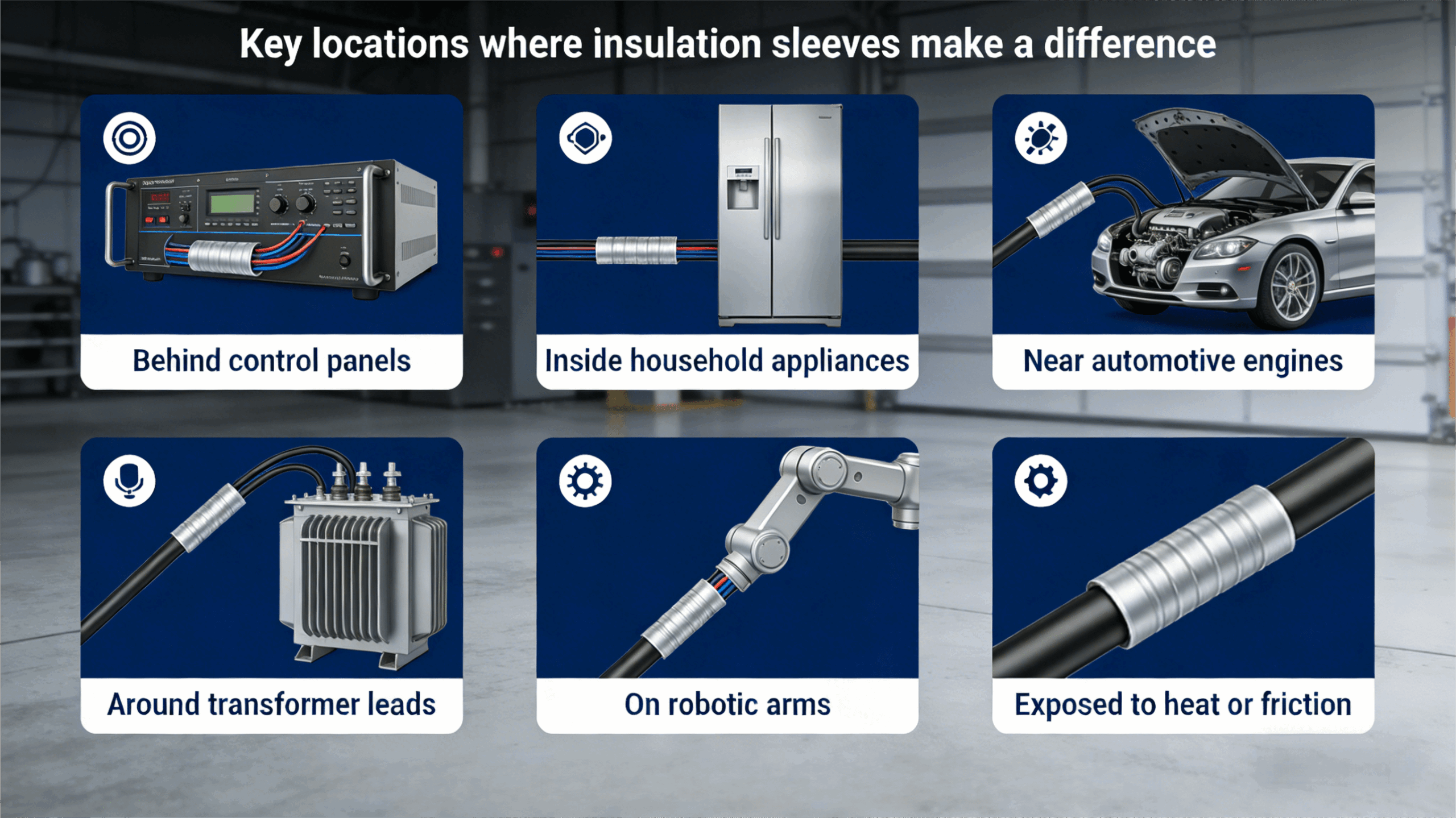
Where Insulation Sleeves Make the Biggest Difference
You’ll find insulation sleeves in places people rarely notice:
- Behind control panels
- Inside household appliances
- Near automotive engines
- Around transformer leads
- On robotic arms
Anywhere a cable is exposed to heat or friction, insulation sleeves quietly take the stress instead of the wire.
Why Material Choice Matters More Than Many Expect
The Biggest Risk is not Using Insulation Sleeves—But Using the Wrong One. Not all insulation sleeves behave the same.
Using the wrong material often doesn’t fail immediately—it fails later, when replacement is difficult and costly.
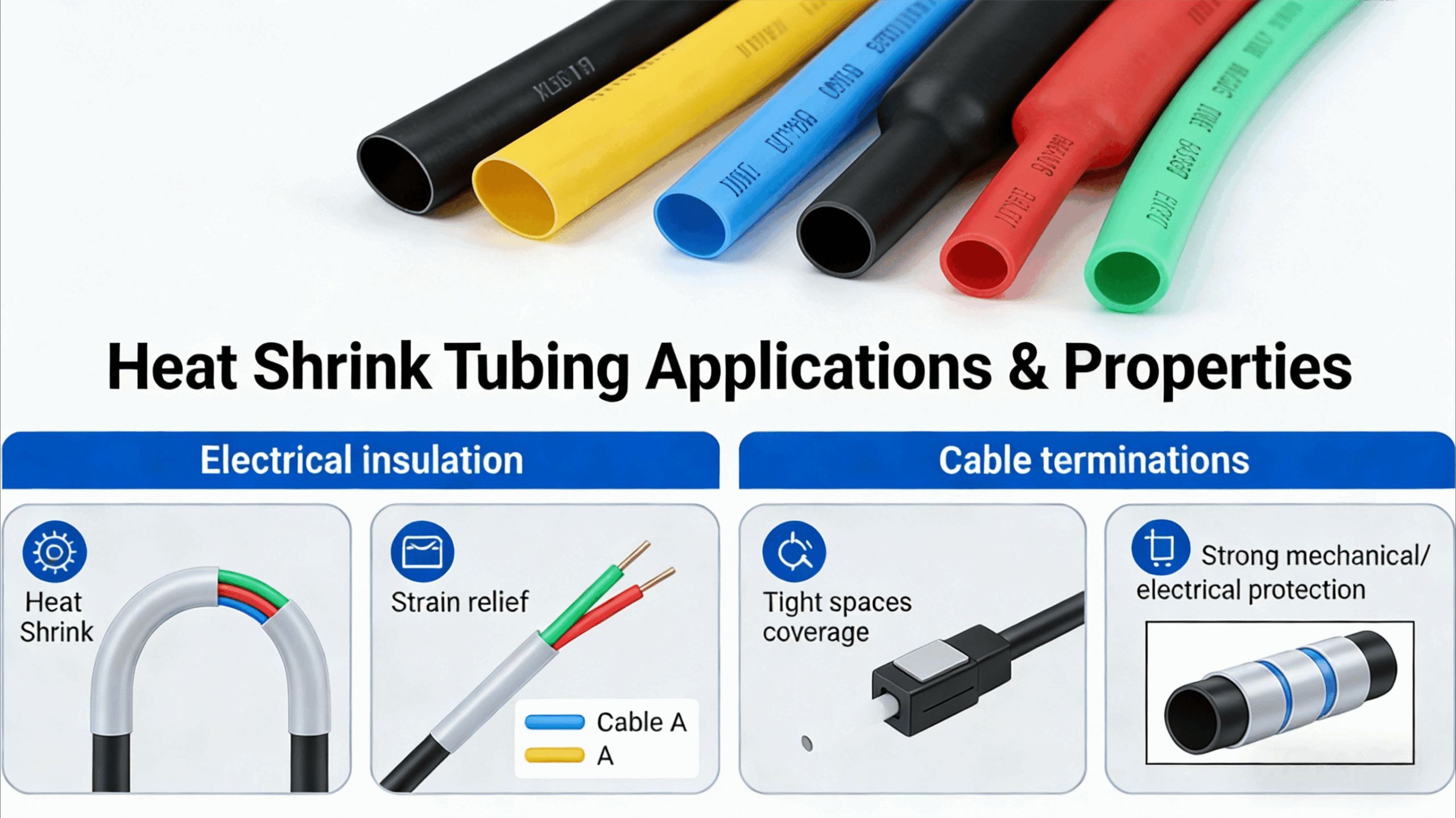
Heat Shrink tubing
① Single Wall Heat Shrink Tube
② 2:1 Ultra Thin Wall Heat Shrink Tube
③ 3:1 Dual Wall Adhesive Lined Heat Shrink Tubing
④ 4:1 Waterproof Dual Wall Heat Shrink Tubing With Clue
⑤ 2:1 Abrasion resistant woven fabric heat shrink tubing
⑥ 2:1 Textured Non Slip Grip Heat Shrink Tubing
⑦ Flexible 2:1 Polyolefin Stand Wall
⑧ Heat Silicone Rubber Heat Shrink Tubing
⑨ 175°C Pvdf Heat Shrinkable Tube Shrink Tubing
⑩ 1.7X PTFE heat shrink tubing
⑪ High Temperature Flexible Silicone Rubber Tubing
Heat shrink tubing are commonly used in Electrical insulation, sealing, strain relief, and identification. They perform well in Cable terminations and connectors,waterproof or moisture-proof protectio,tight spaces requiring secure, permanent coverage. Shrinks tightly for strong mechanical and electrical protection
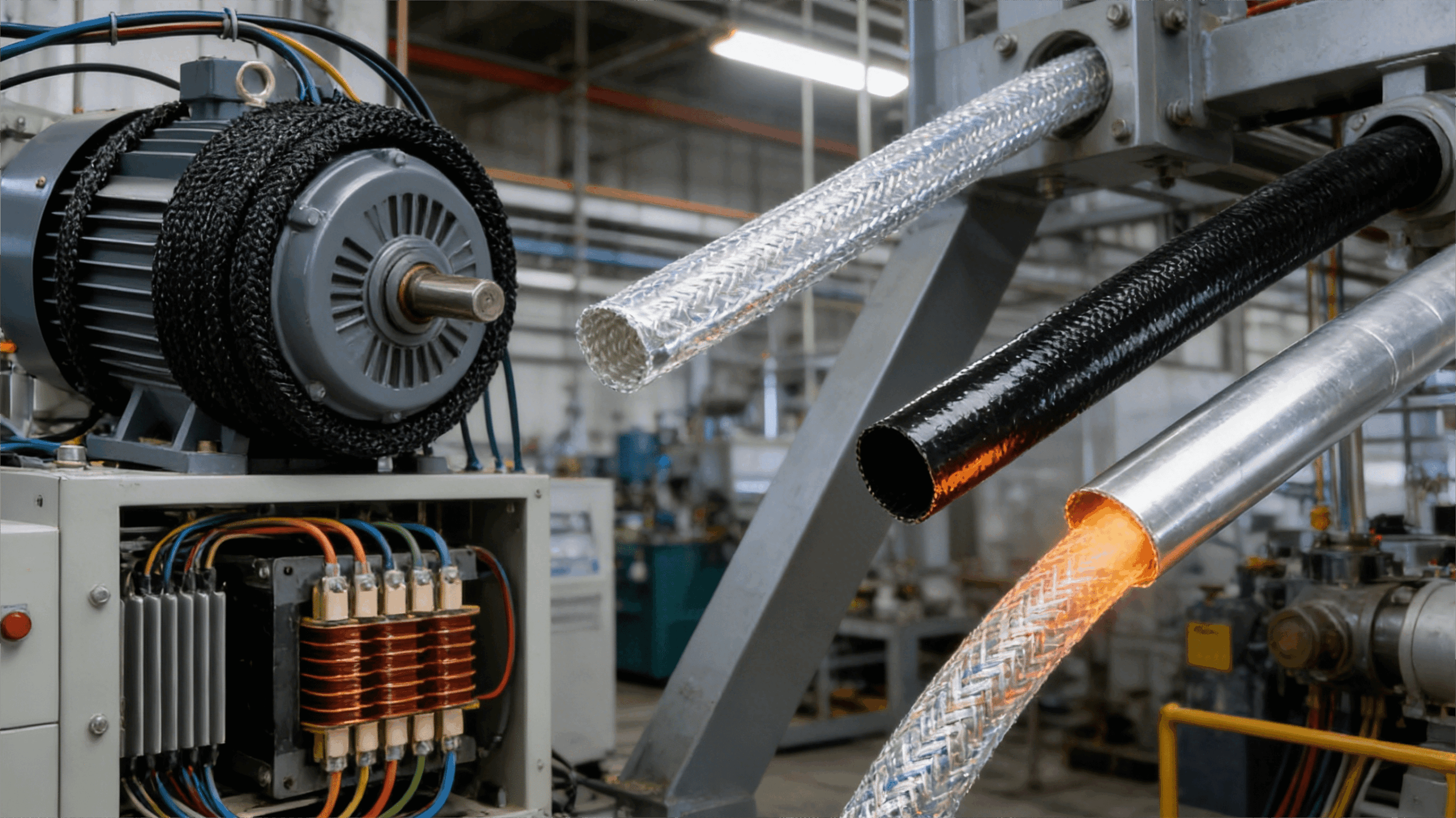
Fiberglass Sleeves
① High Temperature Heat Treated Fiberglass Braided Sleeve
② Enhanced High Temperature Resistant Fiberglass
③ Acrylic Coated Fiberglass Insulation Sleeving
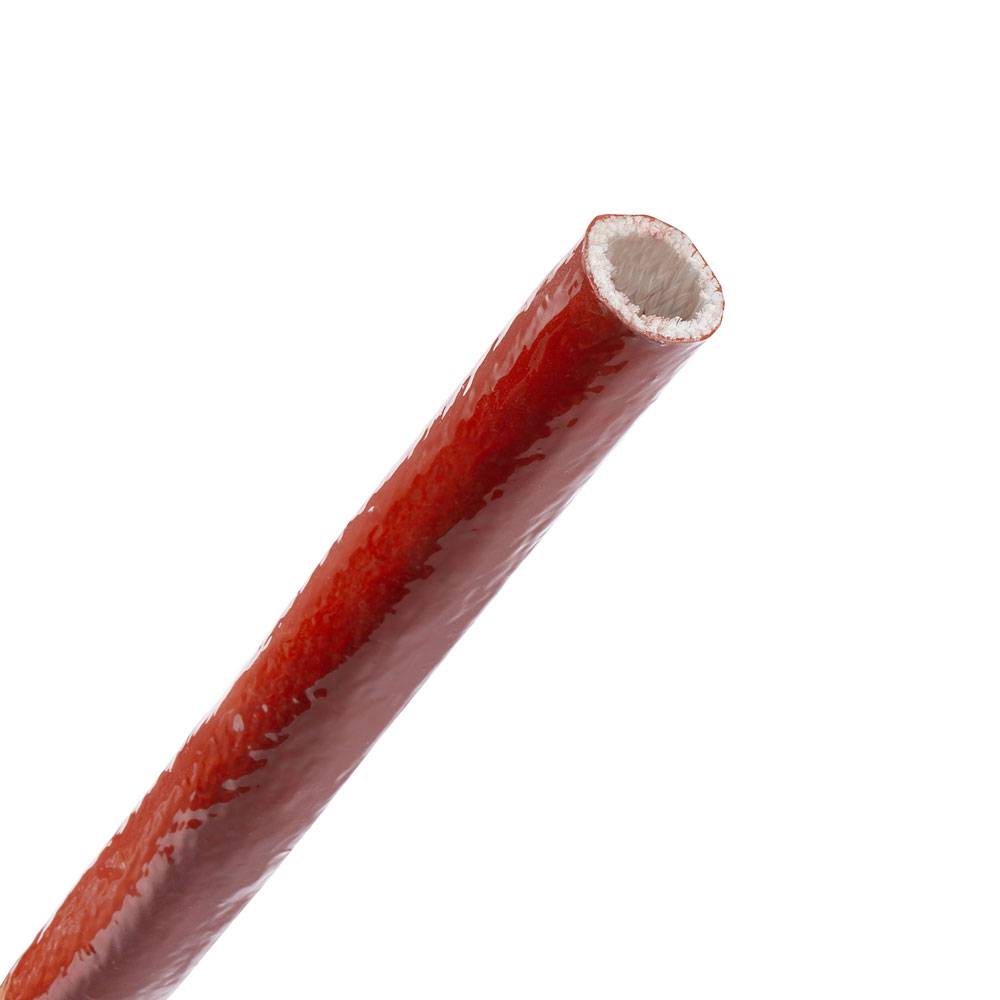
④ Silicone Rubber Coated Fiberglass Sleeving
⑤ Aluminum Coated Fiberglass Self-Closing Wrap Sleeving
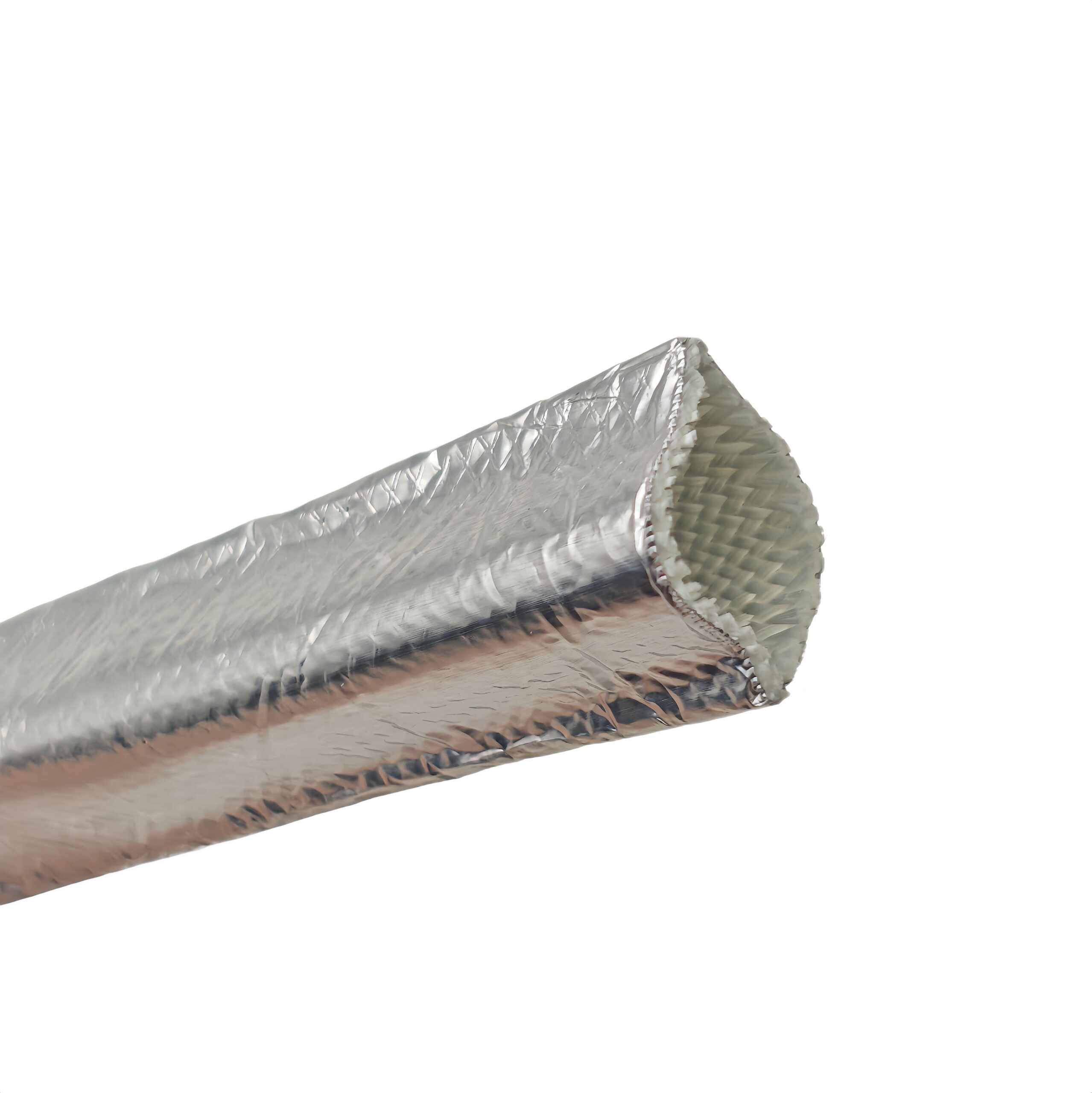
⑥ Heat Reflective Aluminum Foil Coated Fiberglass Sleeve
⑦ Aluminum fiberglass Sleeve with hook and loop
⑧ Aluminum Fiberglass Sleeve
⑨ Aluminum fiberglass Sleeve with hook and loop
Fiberglass sleeves are commonly used in Continuous high-temperature and abrasion protection. They perform well in typical environment. Such as motors, transformers, heaters Industrial machinery and appliances, areas with radiant heat exposure.Especially excellent thermal resistance with long service life
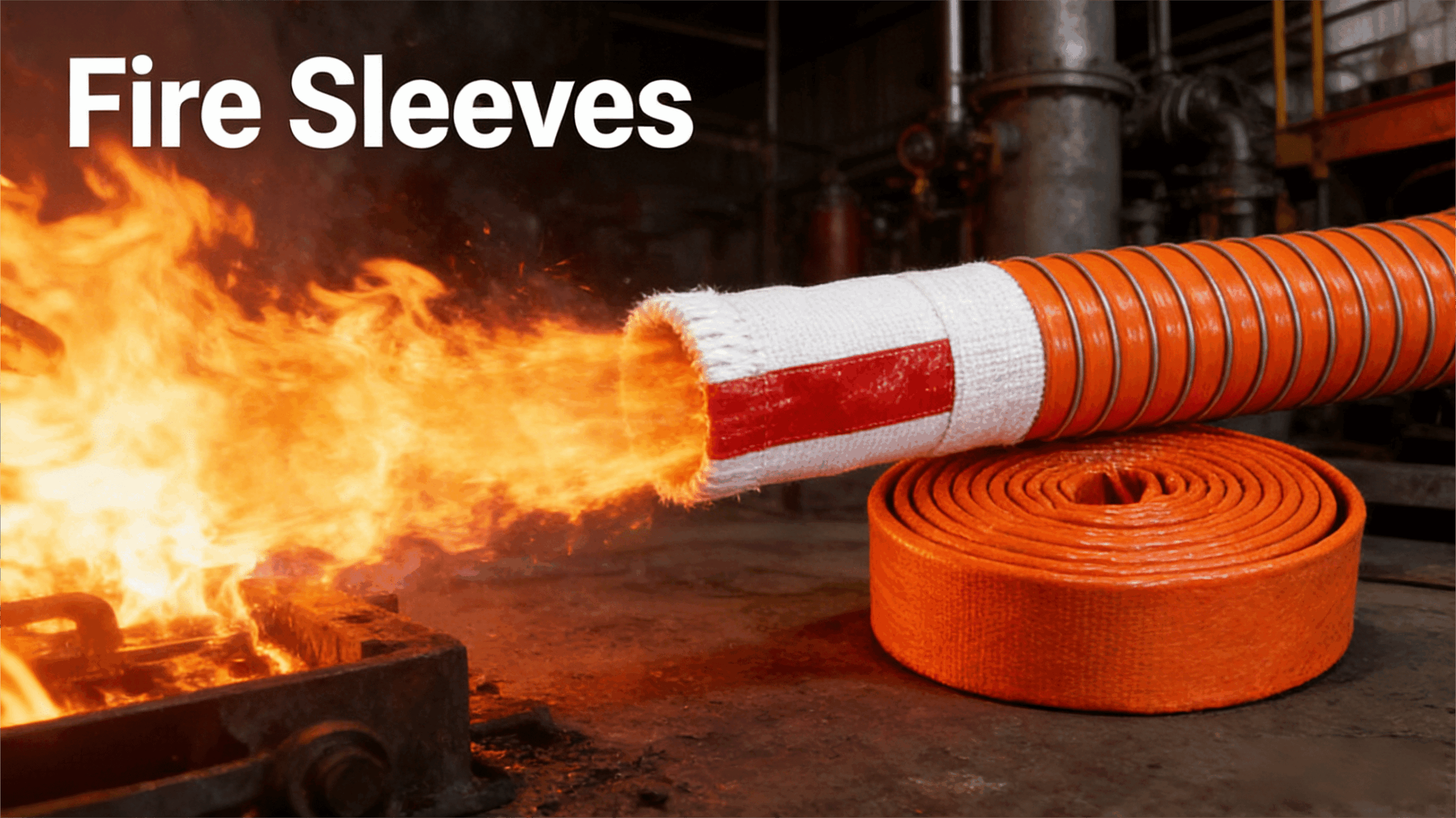
Fire sleeve
① Silicone Coated Fiberglass Heat Shielded Fire Sleeve
② High Temperature Fiberglass Fireproof Sleeve For Cables
③ Hook & Loop Fire sleeve
④ Fiberglass Sleeve
⑤ High Silica Sleeving
Fire sleeves are commonly used in extreme heat, flame, and molten splash protection.They perform well in Hydraulic hoses and fuel lines, Engines, exhaust systems, aerospace and metallurgy,Fire-critical safety zones. Especially for maintains protection even under direct flame exposure
How Experienced Engineers Choose Insulation Sleeves
Engineers who have dealt with failures tend to be cautious. They don’t choose insulation sleeves by habit—they choose them based on conditions.
Temperature Comes First
If heat is present, material selection becomes critical. Fiberglass-based insulation sleeves outperform plastic options in continuous high-temperature zones.
Movement and Vibration
In moving systems, heat shrink tubing can attach tightly to the cable line to reduce long-term stress. Stiff materials may crack or wear unevenly over time.
Installation Reality
Some insulation sleeves save time during assembly. In production environments, easier installation often matters as much as performance.
The Cost Question Everyone Eventually Asks
Yes, insulation sleeves cost money.But replacing a failed cable inside a finished product costs far more.
This is why many companies begin using insulation sleeves only after their first failure. Those who learn early rarely make the same mistake twice.
Invisible, but Always Doing Something
Once installed, insulation sleeves disappear from sight. No one notices them during normal operation.
But they are always there—absorbing heat, reducing friction, and preventing contact. Their success is measured by the absence of problems.
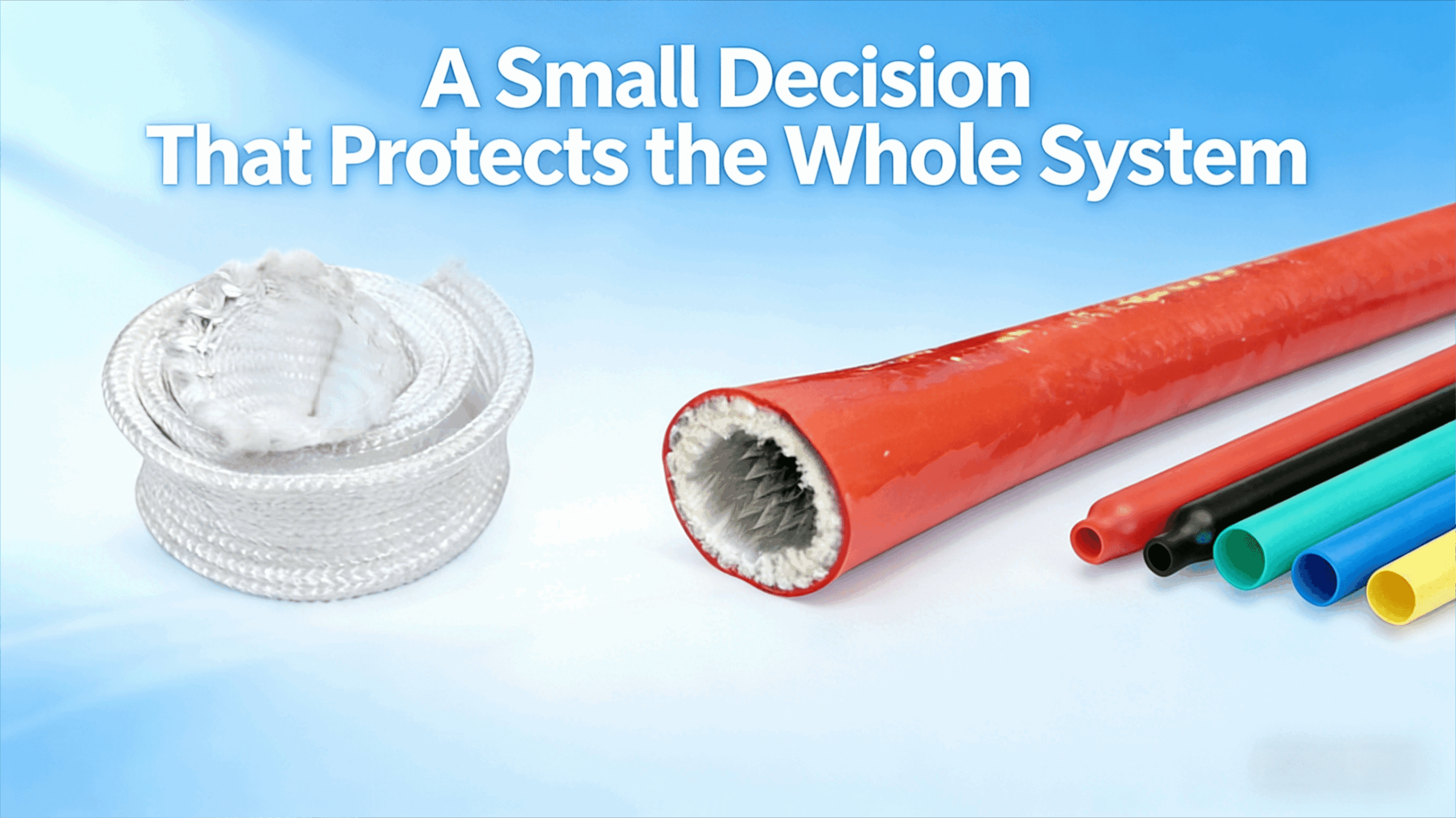
Final Thought: A Small Decision That Protects the Whole System
Electrical safety is rarely about one big decision. It’s about many small ones made early. Insulation sleeves are one of those decisions.
They don’t attract attention.
They don’t change how a system looks.
But they quietly protect everything that matters.
What to Do If You’re Choosing Insulation Sleeves
If you are selecting insulation sleeves for a new project or upgrading an existing system, start by answering three simple questions:
1.Where does heat build up?
2.Where does the cable move or touch metal?
3.How difficult will replacement be later?
Clear answers lead to better material choices—and fewer problems down the line. Choosing the right insulation sleeve is not an accessory decision.
It is a system-level safety decision.
Hey there, I’m Cheney!

If you have any questions about cable management sleeve protection, feel free to contact me.
Get A Quote
Related Product You May Also Like




Related Post You May Also Like
Spiral Wrap Sizing: 9 Mistakes That Ruin Cable Bundles
[pac_divi_table_of_contents included_headings="off|on|on|off|off|off" exclude_headings_by_class="on" active_link_highlight="on" level_markers_3="icons" title_container_padding="10px|15px|10px|15px|true|false" title_container_bg_color="#333333" body_area_height="650px"...
The Hidden Hero of Electrical Safety: Why Insulation Sleeves Are Often Overlooked
[pac_divi_table_of_contents included_headings="off|on|on|off|off|off" exclude_headings_by_class="on" active_link_highlight="on" level_markers_3="icons" title_container_padding="10px|15px|10px|15px|true|false" title_container_bg_color="#333333" body_area_height="650px"...

Best Cable Sleeves for Home Office Cable Management
[pac_divi_table_of_contents included_headings="off|on|on|off|off|off" exclude_headings_by_class="on" active_link_highlight="on" level_markers_3="icons" title_container_padding="10px|15px|10px|15px|true|false" title_container_bg_color="#333333" body_area_height="650px"...
What Does the Development of Hook and Loop Tape Illustrate?
[pac_divi_table_of_contents included_headings="off|on|on|off|off|off" exclude_headings_by_class="on" active_link_highlight="on" level_markers_3="icons" title_container_padding="10px|15px|10px|15px|true|false" title_container_bg_color="#333333" body_area_height="650px"...
0 Comments