
Corrugated Conduit Selection Guide: Specs, Standards, and Performance Tips

Imagine this: A construction project delayed for weeks because the corrugated conduit you chose cracks under underground pressure. Or an electrical system fails because the pipe can’t withstand high temperatures in industrial settings.
Choosing the right corrugated conduit isn’t just about picking a “pipe”—it’s about matching specs to your application, complying with global standards, and avoiding costly mistakes. This guide breaks down the critical factors you need to consider, from diameter to certifications, plus key market trends shaping your choices.

1.Core Specs to Master: Start with the Basics
Every reliable corrugated conduit starts with three non-negotiable specs: diameter, bending radius, and temperature resistance. These metrics directly determine performance, installation efficiency, and lifespan.
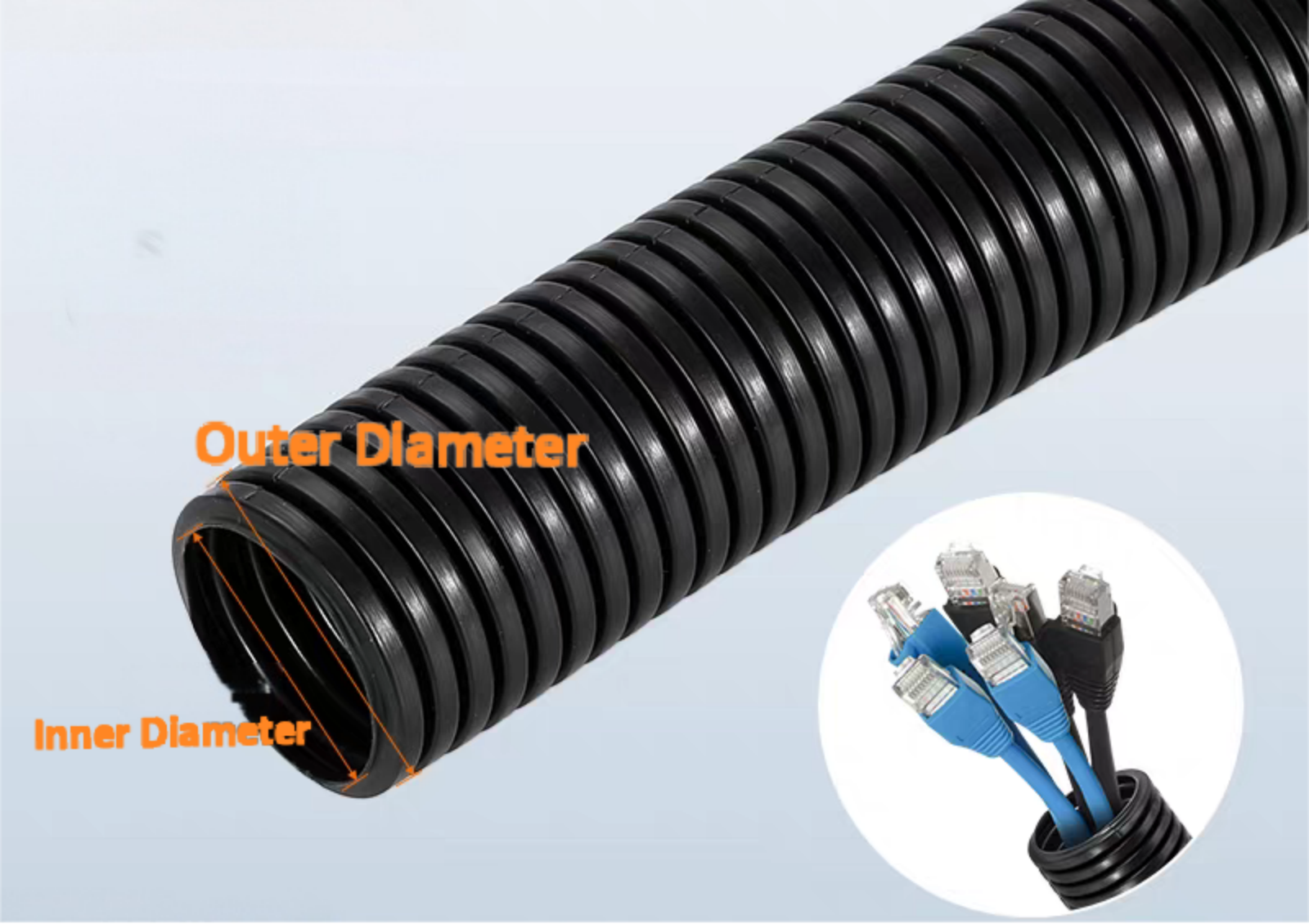
Diameter: Don’t Mix Up Inside and Outside
Picking the right conduit diameter is trickier than most people think. The inner diameter (ID) is what really matters for how much cable it can hold—or how well fluid flows through it. The outer diameter (OD), on the other hand, is all about fit: will this piece squeeze into the space we’ve got for installation?
Based on our many years of industry experience, many customers usually only provide us with the outer diameters. That’s a quick way to end up with a mismatch. For electrical work, the ID needs 20–30% extra space—non-negotiable. That room lets heat escape and leaves space if we need to add more wiring later.
Piping or drainage is a different game, though. There, OD is just as critical because it determines if the conduit can fit through walls, trenches, or the existing channels in a structure. Get both measurements right from the start, and you’ll save yourself endless on-site headaches and expensive do-overs.
Bending Radius: Flexibility That Works, Not Wrecks
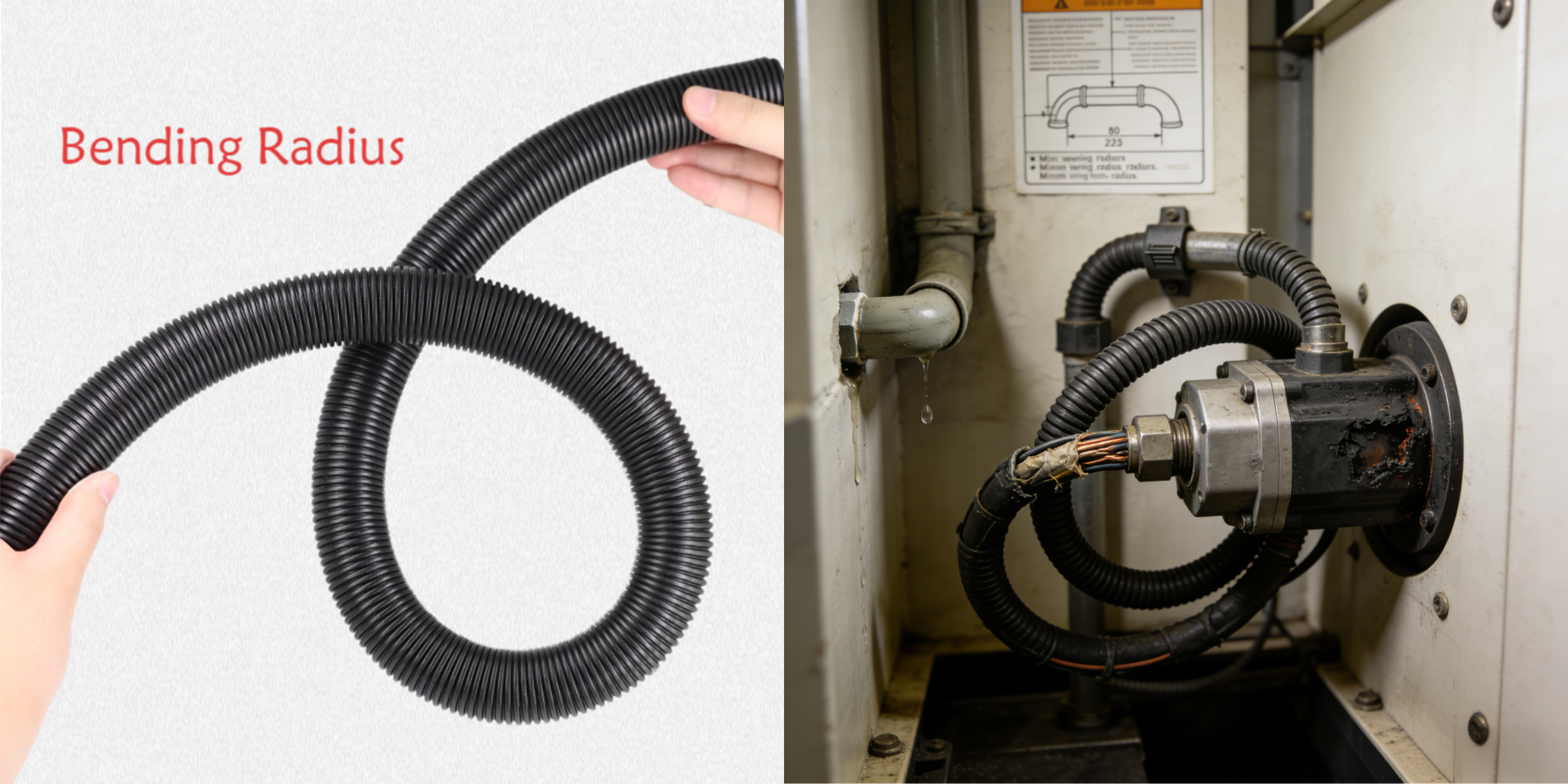
Every conduit has a breaking point when it comes to bending—we call that the bending radius. Two things drive it: the material and the diameter. Softer stuff like PE or PP can handle tighter turns, but rigid PVC or metal? They need plenty of room to curve. And the bigger the diameter, the wider that curve has to be.
The trouble almost always starts when installers are crammed into tight spaces and cut corners on this. Kinks, cracks, or strained internal cables—those are the usual results. Think about machinery enclosures, underground runs, or wall corners: picking a conduit with the right bending radius is the line between a clean install and one that causes friction, makes pulling cables a nightmare, or clogs up fluid flow later.
Temperature Resistance: Build for the World It’s In
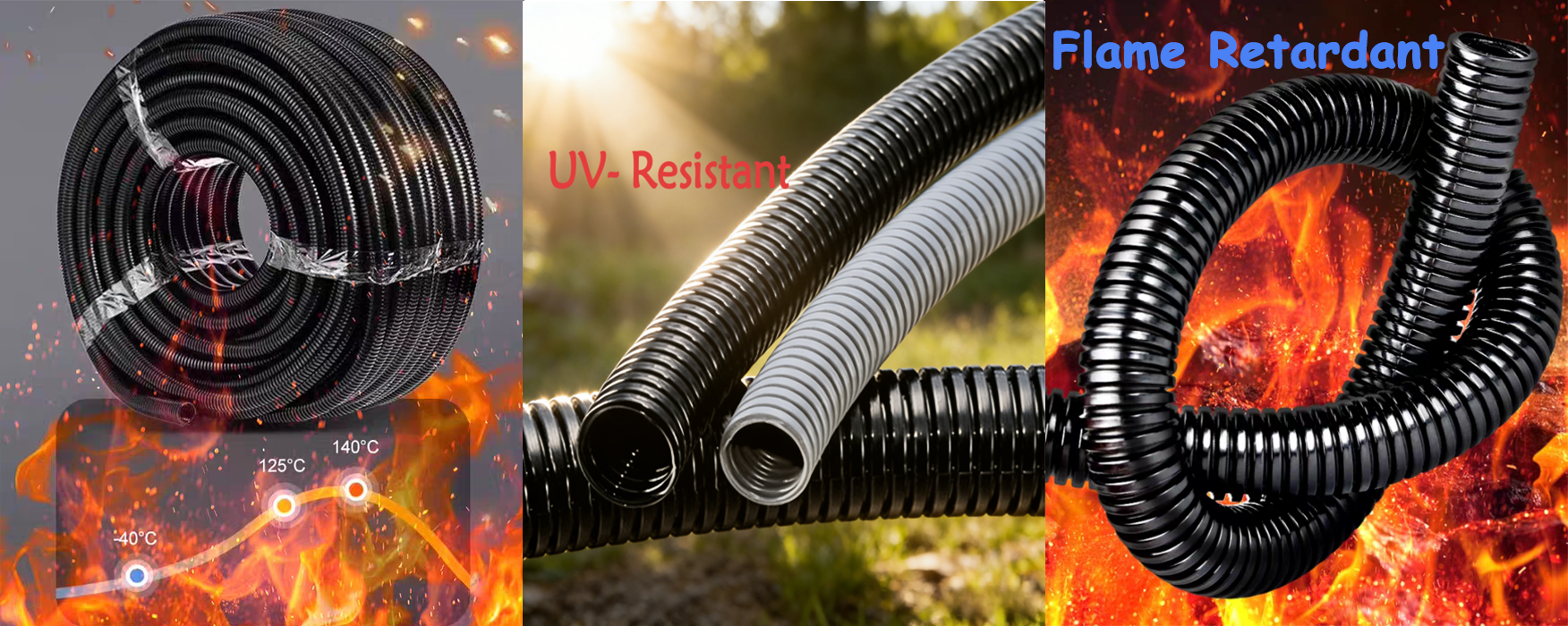
Heat is one of the fastest ways to kill a conduit’s lifespan—but not all heat is the same. Take sudden spikes, for example: welding sparks or the warmth from a nearby engine. Those need materials that can take a quick blast of high temp. Then there’s long-term exposure: constant sun, desert heat, or industrial warmth. That stuff ages plastic slowly, turning it brittle, faded, or cracked over time.
Here’s a rule we’ve learned the hard way for outdoor use: never skip UV stabilization. A non-UV-treated conduit might look perfect on install day, but after two years in direct sun? It could lose half its strength. That’s the kind of hidden damage that leads to early replacements, extra labor, and safety risks you don’t need.
2.Material :A crucial choice.
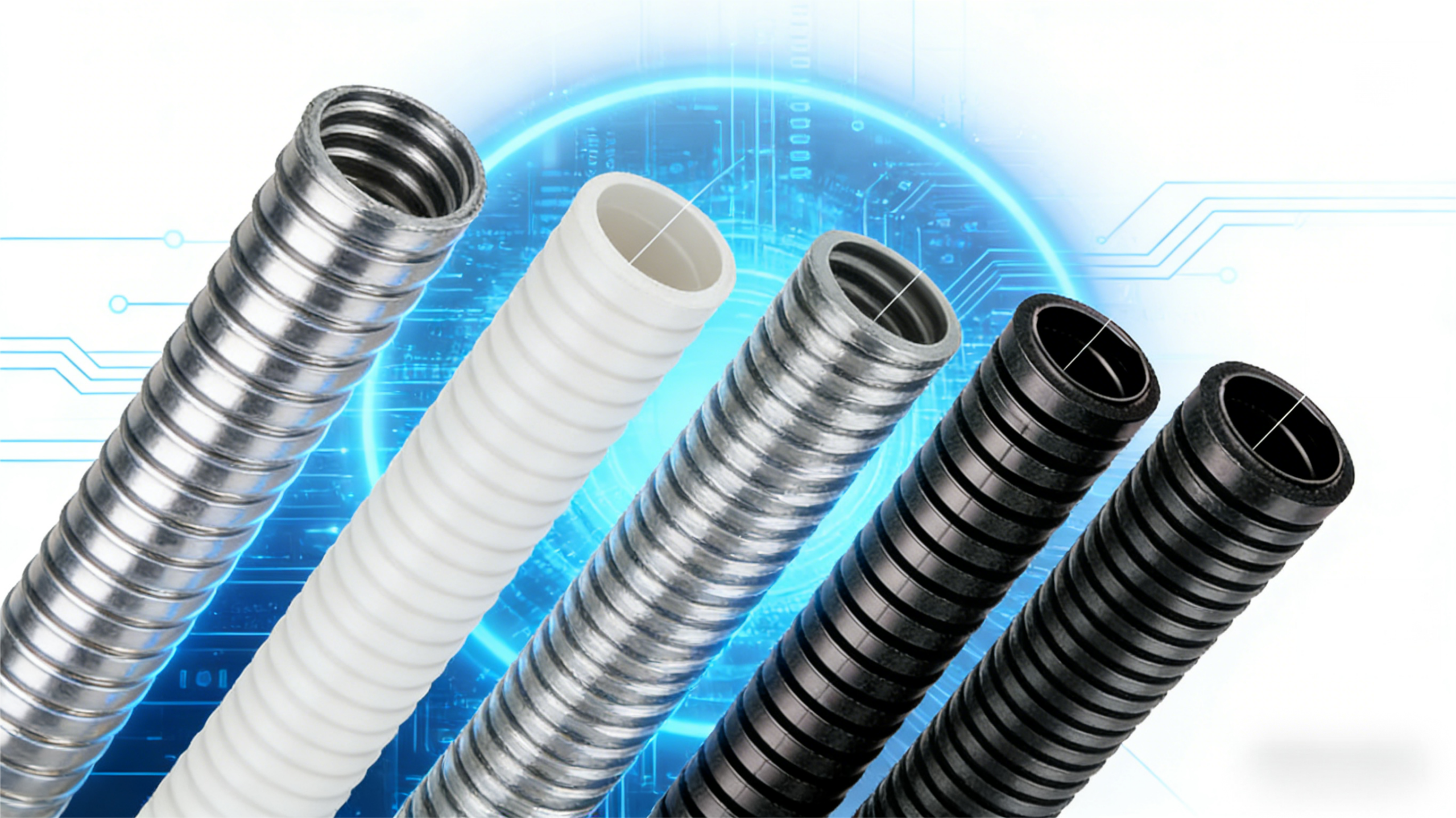
Corrugated conduits are essential flexible components that influence system safety, reliability, and service life. In addition to size, bendability, and temperature rating, the choice of material is a key factor. Material properties determine corrosion resistance, strength, abrasion performance, flexibility, UV stability, and flame behavior, all of which affect long-term maintenance and operational risk. Since each material performs differently under specific conditions, selecting the wrong one can lead to early aging, leakage, or structural failure. Material selection should therefore be based on the actual operating environment.
Polyethylene (PE)
Lightweight and flexible with strong chemical resistance. Suitable for low-pressure, general-purpose conduit protection. Operating temperature: –30°C to 110°C (short-term 130°C).
Polypropylene (PP)
Higher heat resistance and strength than PE but becomes brittle in cold environments. Suitable for industrial and hot-water systems. Operating temperature: –30°C to 110°C (short-term 130°C).
Polyamide (PA6 / PA66, Nylon)
High mechanical strength, excellent abrasion and impact resistance, and strong resistance to oils, chemicals, and UV. Ideal for automotive and industrial wiring protection. Operating temperature: –40°C to 125°C (short-term 140°C).
Polyvinyl Chloride (PVC)
Cost-effective, flame-retardant, and aging-resistant, though with limited heat tolerance. Suitable for drainage, ventilation, and low-temperature cable protection. Operating temperature: –30°C to 110°C.
Stainless Steel 304/316
Exceptional strength and corrosion resistance with broad high/low temperature capability. Used in chemical, food, pharmaceutical, and high-pressure systems.
304: –200°C to 400°C
316: –196°C to 500°C
Copper Alloy
Excellent thermal conductivity and ductility with moderate corrosion resistance; used in precision and heat-transfer applications. Operating temperature: –100°C to 250°C.
Updated Comparison Table
| Material | Operating Temperature | Key Characteristics | Typical Applications |
| PE | –40°C to 60°C (HDPE to –60°C) | Flexible, lightweight, strong chemical resistance | Municipal piping, cable protection |
| PP | –20°C to 100°C (short-term 120°C) | Higher heat resistance and strength; cold-brittle | Industrial pipelines, hot-water systems |
| PA6/PA66 (Nylon) | –40°C to 120°C (short-term 150°C) | High strength, abrasion/impact resistance, oil/chemical/UV resistance | Automotive harnesses, industrial machinery |
| PVC | –15°C to 60°C | Low cost, flame-retardant, aging-resistant | Drainage, ventilation, general cable routing |
| Stainless Steel 304 | –200°C to 400°C | High strength, strong corrosion resistance | Chemical, food, pharma, high-pressure systems |
| Stainless Steel 316 | –196°C to 500°C | Superior corrosion resistance, marine-grade | Chemical media, marine engineering, aerospace |
| Copper Alloy | –100°C to 250°C | High thermal conductivity, ductile, higher cost | Precision equipment, refrigeration, special media |
3. Certifications: Your Passport to Global Markets
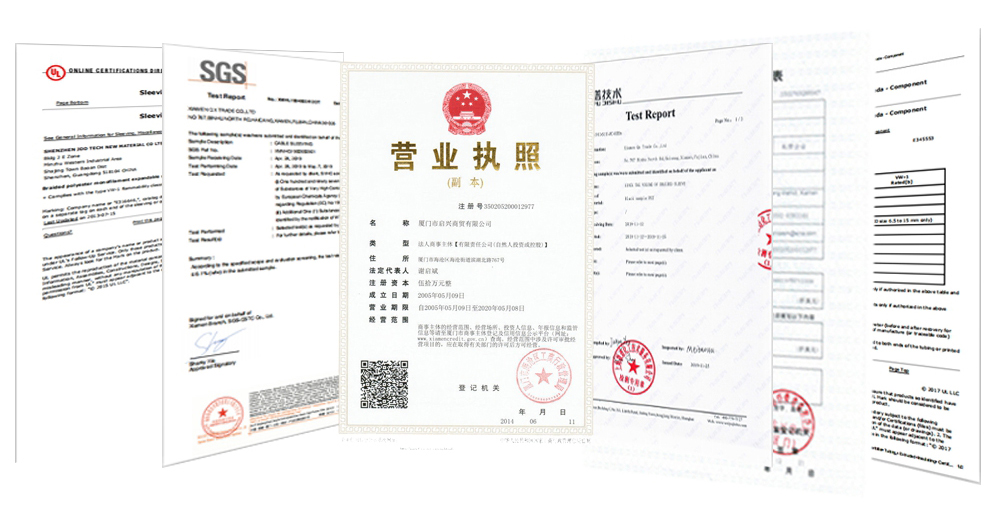
Certifications aren’t just paperwork—they’re proof of safety and compliance. Different regions have strict benchmarks, and cutting corners here risks rejected shipments or legal penalties.
UL94-V0: The Gold Standard for Flame Resistance
For electrical conduits, UL94-V0 is non-negotiable in North America and most Asian markets. This rating requires the conduit to self-extinguish within 10 seconds of removing a flame, with no dripping that ignites cotton below . Our PVC-U electrical conduits not only meet UL94-V0 but also exceed halogen emission limits, making them ideal for data centers and hospitals.
EN Standards: Europe’s Strict Compliance Framework
Entering the EU means navigating two core standards: – EN 10380 (Metal Conduits): Requires 100,000 pressure cycles without leakage and -40℃ low-temperature impact resistance . – EN 1329 (Plastic Conduits): Mandates 43MPa static hydraulic strength at 20℃ and ≤5% longitudinal shrinkage at 150℃ . All our EU-bound products carry CE marking with full test report chains, including material certificates and factory control records .
Regional Extras
Australia requires AS/NZS 2053, while the Middle East prioritizes SASO certification. We tailor certifications to your target market, so you never face customs delays.
Conclusion
Selecting the right corrugated conduit starts with understanding the actual application scenario, followed by a balanced evaluation of three critical dimensions. First, ensure precise alignment of inner and outer diameters, determine the proper bending radius based on material and size, and choose the appropriate temperature resistance—especially UV stability for outdoor use. Second, the conduit material must be selected according to the environment, while also meeting regional certification requirements such as UL94-V0 in North America or EN standards in the European Union. Only by controlling these factors can you avoid installation delays, rework, and system failures, ensuring long-term reliability while reducing maintenance and safety risks.
FAQ
1.How to select conduit size?
Choose a conduit with an inner diameter 20–30% larger than the total cable bundle OD to ensure proper heat dissipation and easy installation. Always confirm the bending radius and material requirements based on the actual application
2.Is conduit sized by ID or OD?
Conduit size refers to the internal diameter of the conduit, which dictates the maximum number of wires or cables that can be securely installed within it.
3.What factors to select the correct size of conduit depends on?
It depends on the type, number, and size of the cables you’re running. You’ll also need to factor in future capacity, bend radius, and the type of conduit system you’re using.
4.What are the three types of conduits?
There are also three material options: PE, PP & PA. You can choose based on the environment and temperature requirements.
Hey there, I’m Tracy!

Get A Quote


Related Post You May Also Like
Spiral Wrap Sizing: 9 Mistakes That Ruin Cable Bundles
[pac_divi_table_of_contents included_headings="off|on|on|off|off|off" exclude_headings_by_class="on" active_link_highlight="on" level_markers_3="icons" title_container_padding="10px|15px|10px|15px|true|false" title_container_bg_color="#333333" body_area_height="650px"...
The Hidden Hero of Electrical Safety: Why Insulation Sleeves Are Often Overlooked
[pac_divi_table_of_contents included_headings="off|on|on|off|off|off" exclude_headings_by_class="on" active_link_highlight="on" level_markers_3="icons" title_container_padding="10px|15px|10px|15px|true|false" title_container_bg_color="#333333" body_area_height="650px"...

Best Cable Sleeves for Home Office Cable Management
[pac_divi_table_of_contents included_headings="off|on|on|off|off|off" exclude_headings_by_class="on" active_link_highlight="on" level_markers_3="icons" title_container_padding="10px|15px|10px|15px|true|false" title_container_bg_color="#333333" body_area_height="650px"...
What Does the Development of Hook and Loop Tape Illustrate?
[pac_divi_table_of_contents included_headings="off|on|on|off|off|off" exclude_headings_by_class="on" active_link_highlight="on" level_markers_3="icons" title_container_padding="10px|15px|10px|15px|true|false" title_container_bg_color="#333333" body_area_height="650px"...
0 Comments