
How to Choose the Right Braided Sleeving: PET or Nylon for Cable Protection?
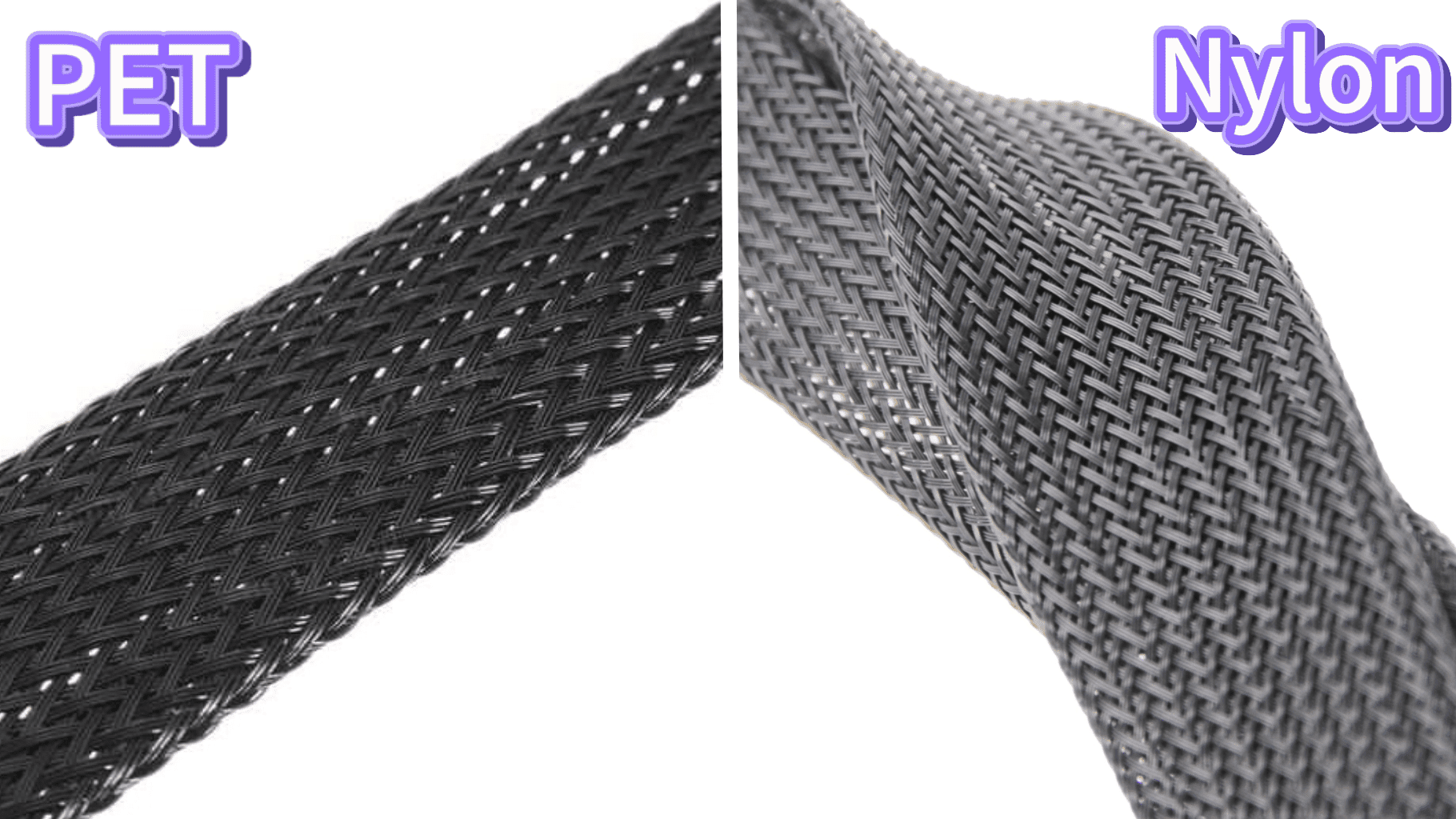
The Core Difference Between Two Types of Braided Sleeve
PET braided sleeving is made of polyester, while nylon braided sleeving is made of polyamide. The difference in their basic materials determines that they each have their own performance strengths. First, understand the basic differences, and then look at the specific comparisons to select the appropriate cable protection solution for your equipment.
Flexibility and Bending Performance
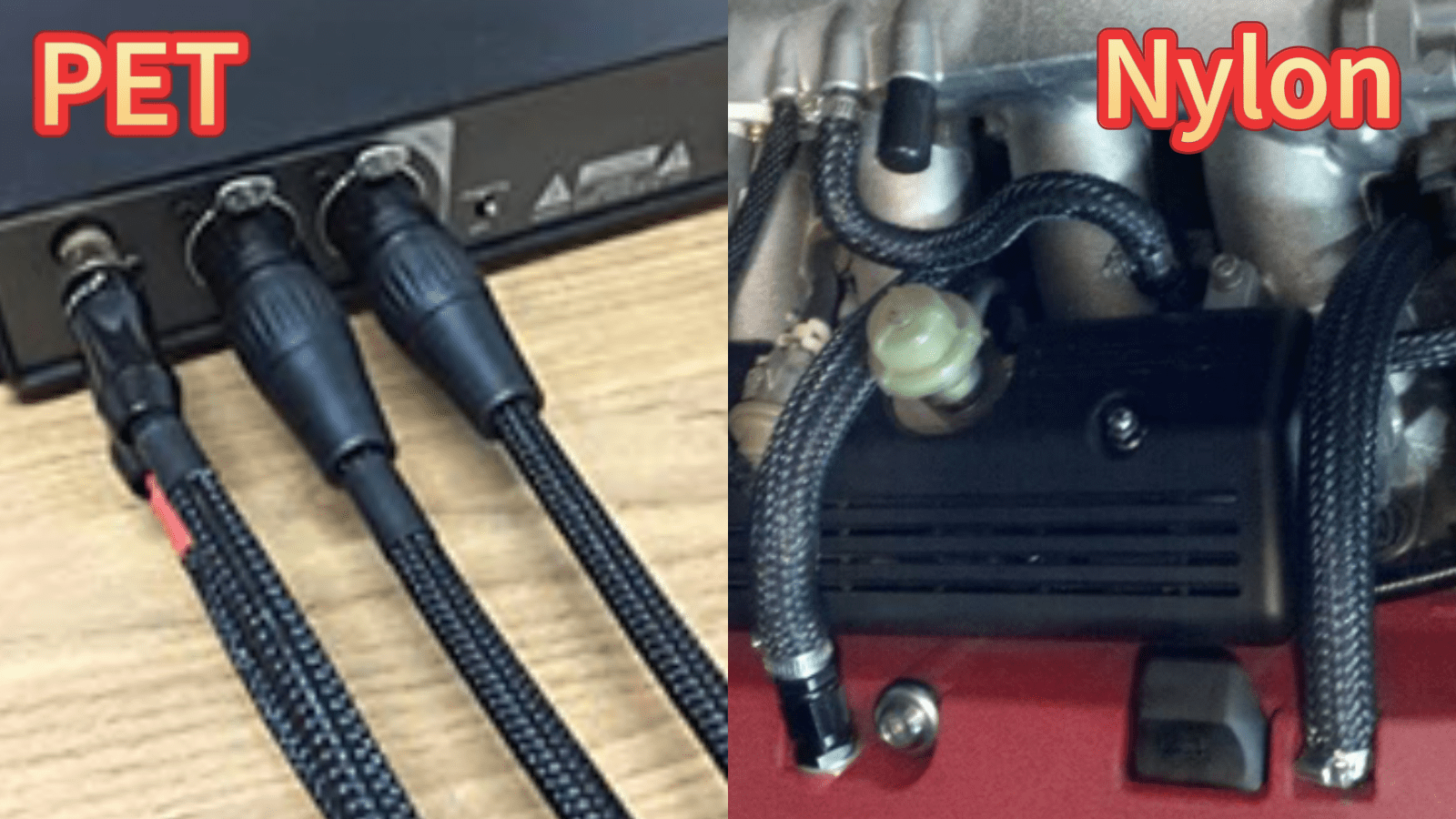
Nylon braided sleeving has better flexibility. Because the molecular structure of nylon is inherently more elastic, it can withstand repeated bending and is suitable for scenarios with frequent vibration such as robot drag chains and elevator running cables.
Compared to flexibility and bending resistance, nylon braided sleeving has a greater advantage.
Oil Resistance Comparison
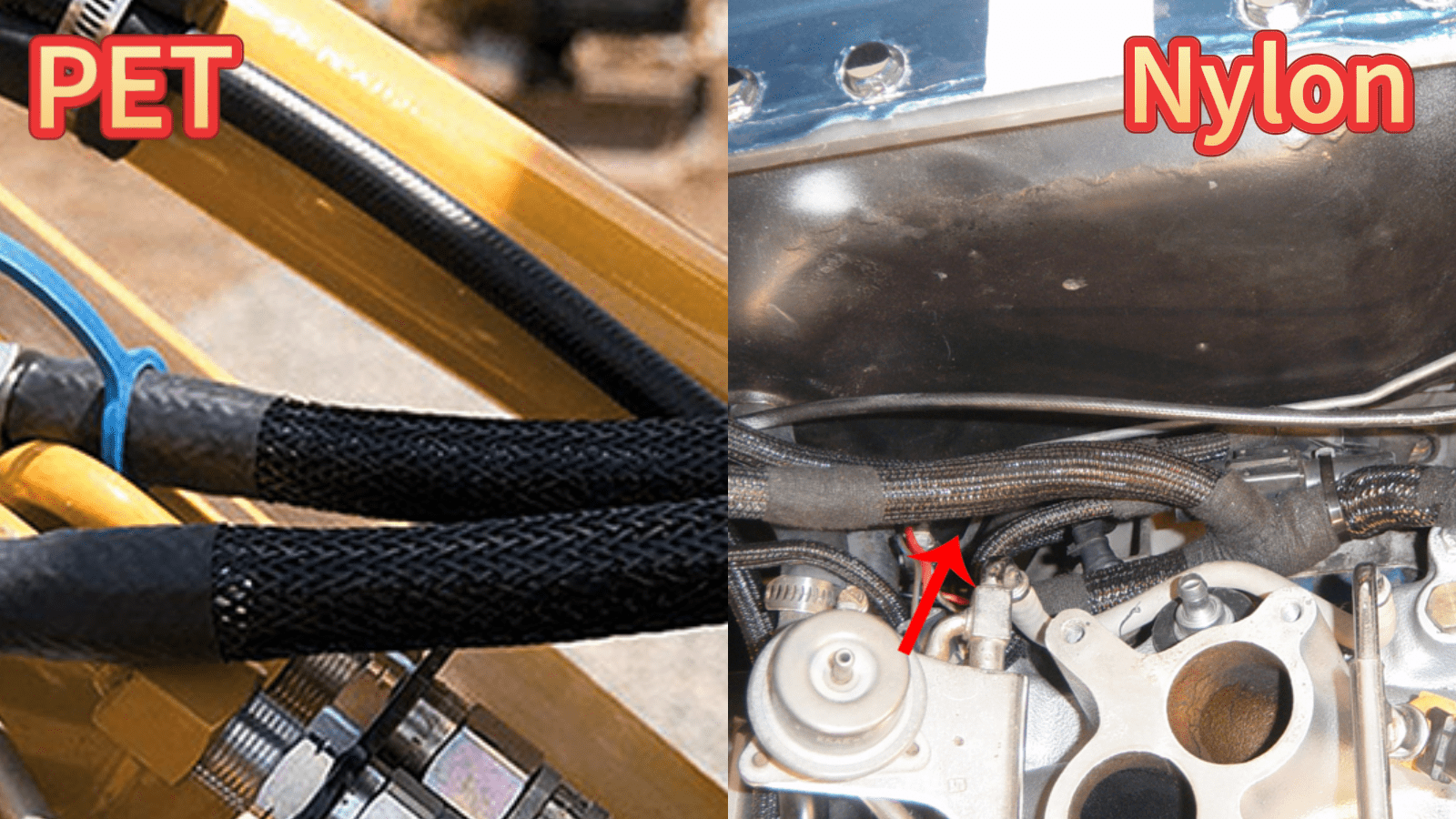
Nylon braided sleeving has strong resistance to engine oil, lubricating oil, and fuel, and does not deform or age easily even after long-term contact. It’s suitable for areas with severe oil contamination such as car engine compartments and machine tools.
Compared to oil resistance, nylon braided sleeving performs better.
Comparison of UV Resistance and Outdoor Application
PET braided sleeving has excellent resistance to ultraviolet rays and is unlikely to age even after long-term exposure to the elements in the outdoors. It’s suitable for indoor areas such as solar power stations and communication base stations.
Nylon braided sleeving is not treated with UV resistance, it will easily age outdoors. Industrial-grade versions can add UV-resistant additives, but they are still more suitable for indoor environments where there is frequent friction and bending.
Compared to UV resistance and outdoor use, PET braided sleeving is more convenient to use.
Abrasion Resistance and Mechanical Strength
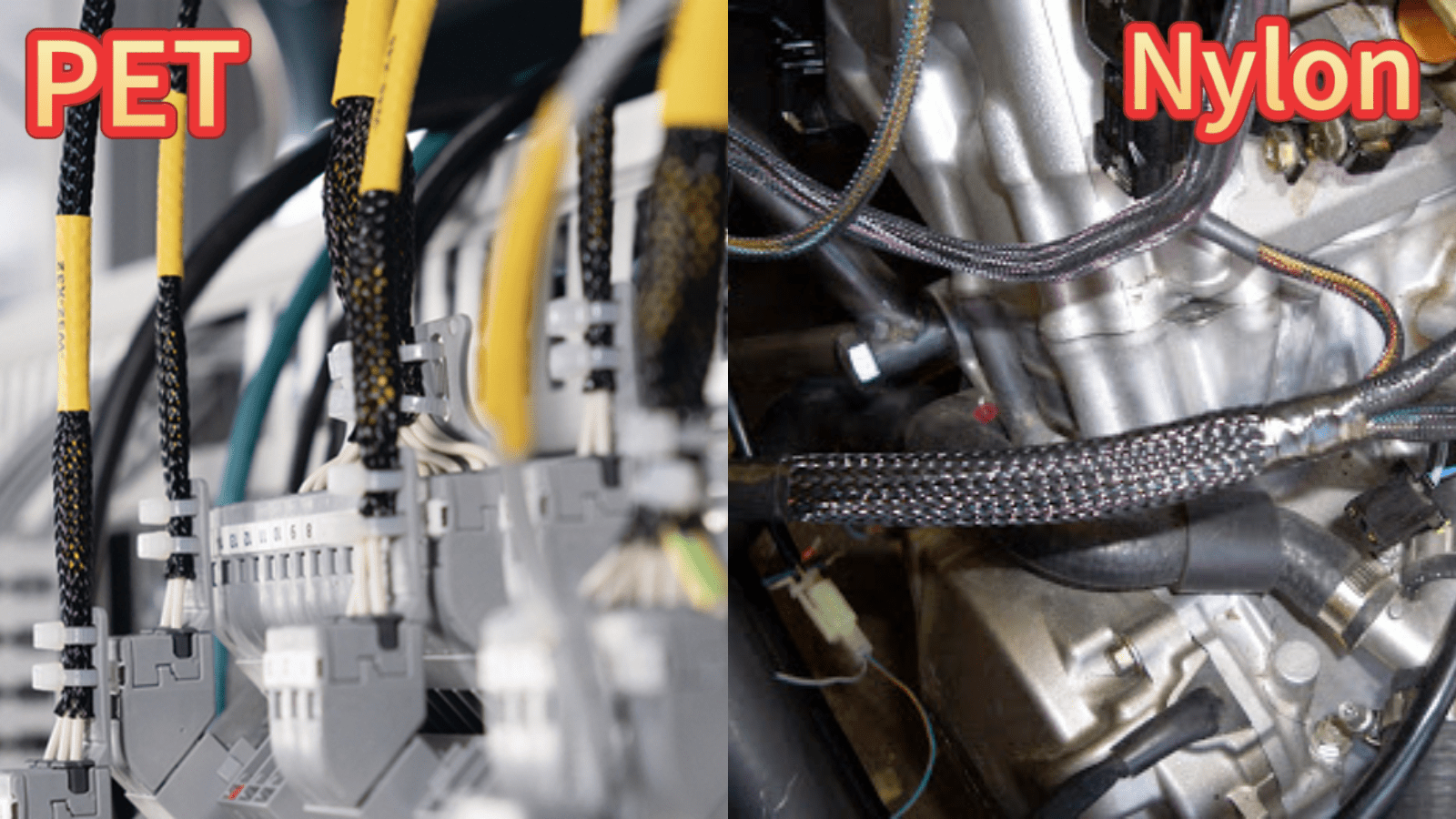
PET braided sleeving provides basic protection for ordinary lines in the regular cable tray or with cable ties, but it’s prone to damage under sharp edges or high-frequency vibration and abrasion.
Nylon braided sleeving has a smooth surface and is flexible in texture. It’s resistant to abrade and suitable for equipment with high vibration and frequent abrasion. For example, in 3D printing equipment, the practice of replacing creality nylon braid sleeve can significantly reduce cable abrasion.
Compared to the wear resistance, the nylon woven sleeve is more reliable.For industrial equipment where cable protection works alongside precision metal assemblies, custom CNC machined parts can help ensure dimensional accuracy and reliable mechanical performance.
Cost Comparison
PET braided sleeving has a lower price and is suitable for those with limited budgets and who have relatively low requirements for performance.
Nylon braided sleeving is more expensive, but it can provide longer protection for harsh working conditions.
Compared to cost, PET braided sleeving has more advantages.
Conclusion
PET braided sleeving and nylon braided sleeving each have their own advantages. There is no absolute good or bad distinction between them. The choice of the braided wrap needs to be made comprehensively based on the actual usage environment, performance requirements, and budget, etc.
If you want to know more, please contact us at any time. We can help you select the appropriate solution based on your usage environment and specific requirements.
FAQ
Q1: Which is better, nylon braided sleeving or PET braided sleeving?
It’s no absolute superiority. Nylon offers the advantages of abrasion resistance and resistance to repeated bending. PET is inexpensive and UV resistance, making it particularly suitable for outdoor applications with reduced maintenance requirements.
Q2: What is a PET braided sleeving?
It’s a braided wrap from polyester fiber, offering sun resistance, oil resistance, and excellent cost-performance.
Q3: Are nylon braided sleeving safe?
Yes. Nylon is inherently abrasion-resistant and oil-resistant, making it ideal for cable protection.
Q3: What is the maximum operating temperature for braided sleeve?
This depends on the material. PET sleeving operates between-50°C and 150°C, while nylon sleeving operates between-60°C and 160°C.
Hey there, I’m Tracy!

Get A Quote


Related Post You May Also Like
How Fire Sleeve Protects Cables
[pac_divi_table_of_contents included_headings="off|on|on|off|off|off" exclude_headings_by_class="on" active_link_highlight="on" level_markers_3="icons" title_container_padding="10px|15px|10px|15px|true|false" title_container_bg_color="#333333" body_area_height="650px"...
Spiral Wrap Sizing: 9 Mistakes That Ruin Cable Bundles
[pac_divi_table_of_contents included_headings="off|on|on|off|off|off" exclude_headings_by_class="on" active_link_highlight="on" level_markers_3="icons" title_container_padding="10px|15px|10px|15px|true|false" title_container_bg_color="#333333" body_area_height="650px"...
The Hidden Hero of Electrical Safety: Why Insulation Sleeves Are Often Overlooked
[pac_divi_table_of_contents included_headings="off|on|on|off|off|off" exclude_headings_by_class="on" active_link_highlight="on" level_markers_3="icons" title_container_padding="10px|15px|10px|15px|true|false" title_container_bg_color="#333333" body_area_height="650px"...
Velcro Cable Management Sleeve: A Reusable Solution
[pac_divi_table_of_contents included_headings="off|on|on|off|off|off" exclude_headings_by_class="on" active_link_highlight="on" level_markers_3="icons" title_container_padding="10px|15px|10px|15px|true|false" title_container_bg_color="#333333" body_area_height="650px"...
0 Comments