
How to Hide the Cables: 5 Easy Cable Management Guide
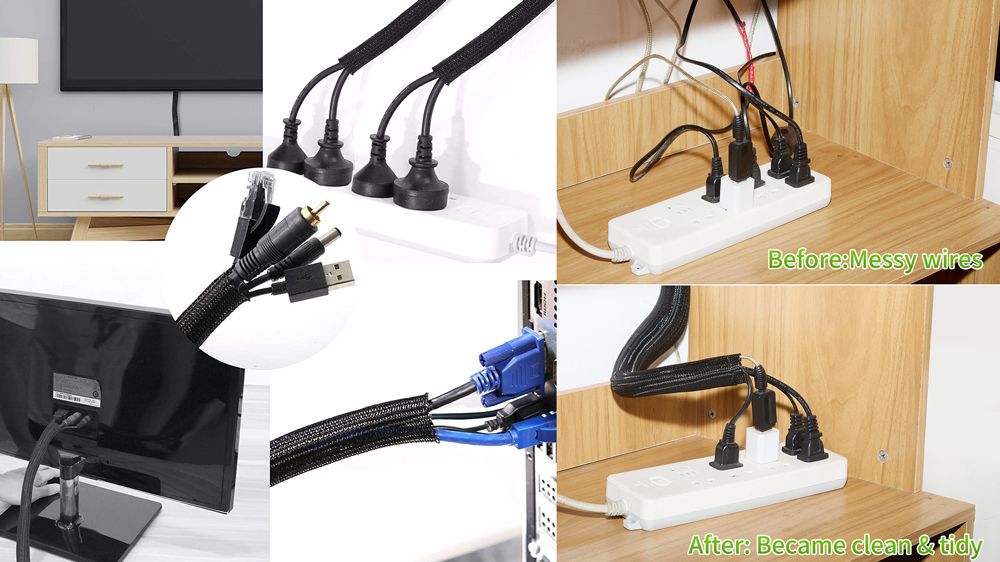
Every time you see the tangled mess of cables under computer desk or TV cabinet, do you also feel a headache coming on? This not only appears messy, but also affects your work efficiency in the office or relaxation at home. If you want a clean and refreshing office and home environment, the key lies in properly hiding cables.
We will compare several popular cable management solutions and show you the easiest way to hide cables, in order to create a neater office or home environment.
Why Hiding Cable Matters?
The tangled and disorderly wires under the TV cabinet and computer table are messy and unorganized. However, their problems go far beyond this. The disordered wires not only ruin the appearance but also bring many potential hazards to daily life. Children might trip over them, and pets might chew on the wires, affecting both safety and the overall living experience. Therefore, rational and standardized cable management has become a necessary measure for family upgrades.
5 Popular Cable Management Ideas for Hiding Cables
Let’s introduce these most popular cable management tools one by one, so that you can choose the one that suits you best.
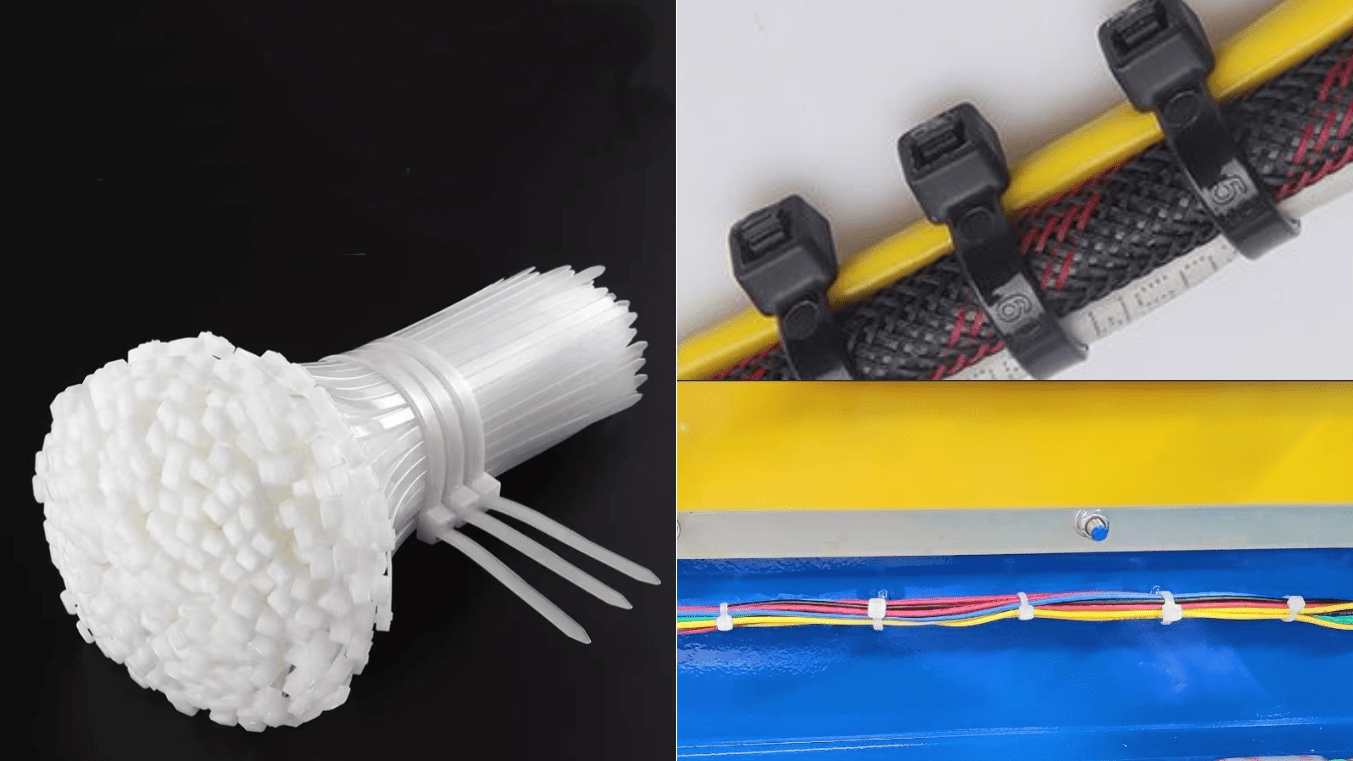
1.Nylon Cable Tie
Pros: Nylon cable ties are one of the most traditional cable hiding tools. Their advantages include being very cheap in price and having strong tensile strength, allowing them to firmly fix several cables together. However, nylon cable ties are disposable. Once they are tightened, they become locked and can only be undone by cutting them.
Cons: If you frequently need to replace or add office equipment in the office, or adjust appliances at home. You have to re-cut and re-bundle each time, which is very troublesome. Additionally, the edges of nylon cable ties are relatively hard. If they are pulled too tightly, they may damage the outer cables.
Best For: Temporary light cable grouping for frequent equipment swap-outs.
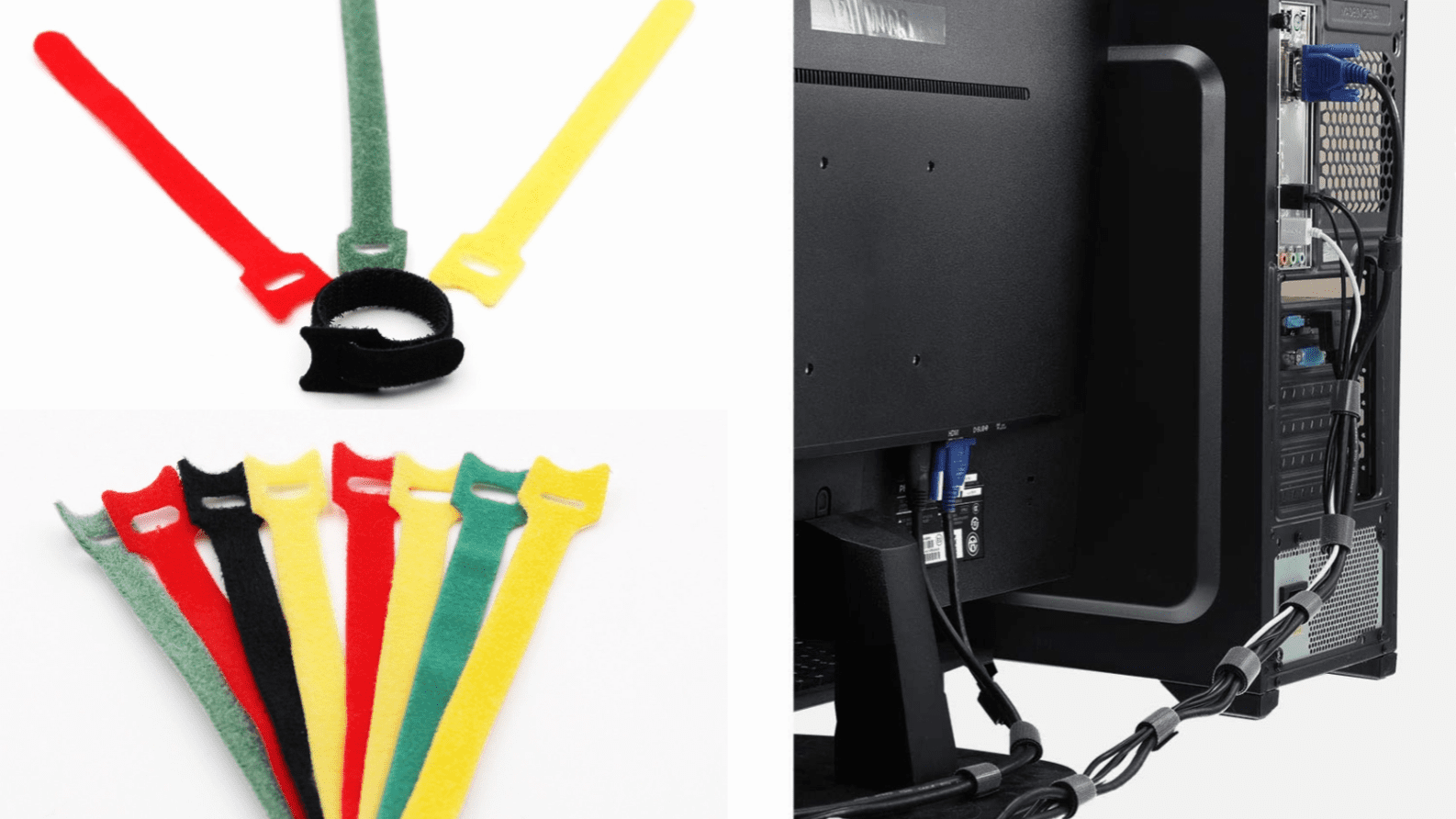
2.Hook and Loop Cable Tie
Pros: Hook and loop cable ties can be regarded as an upgraded version of nylon cable ties. They can be reused and can be fastened or loosened as needed. They are very convenient to adjust and suitable for hiding cables in both office and home environments.
Cons:They can only simply bundle a few cables together, and the cables are still exposed, so visually there is no real improvement.
Best For: Temporary cable grouping for frequent equipment swap-outs.
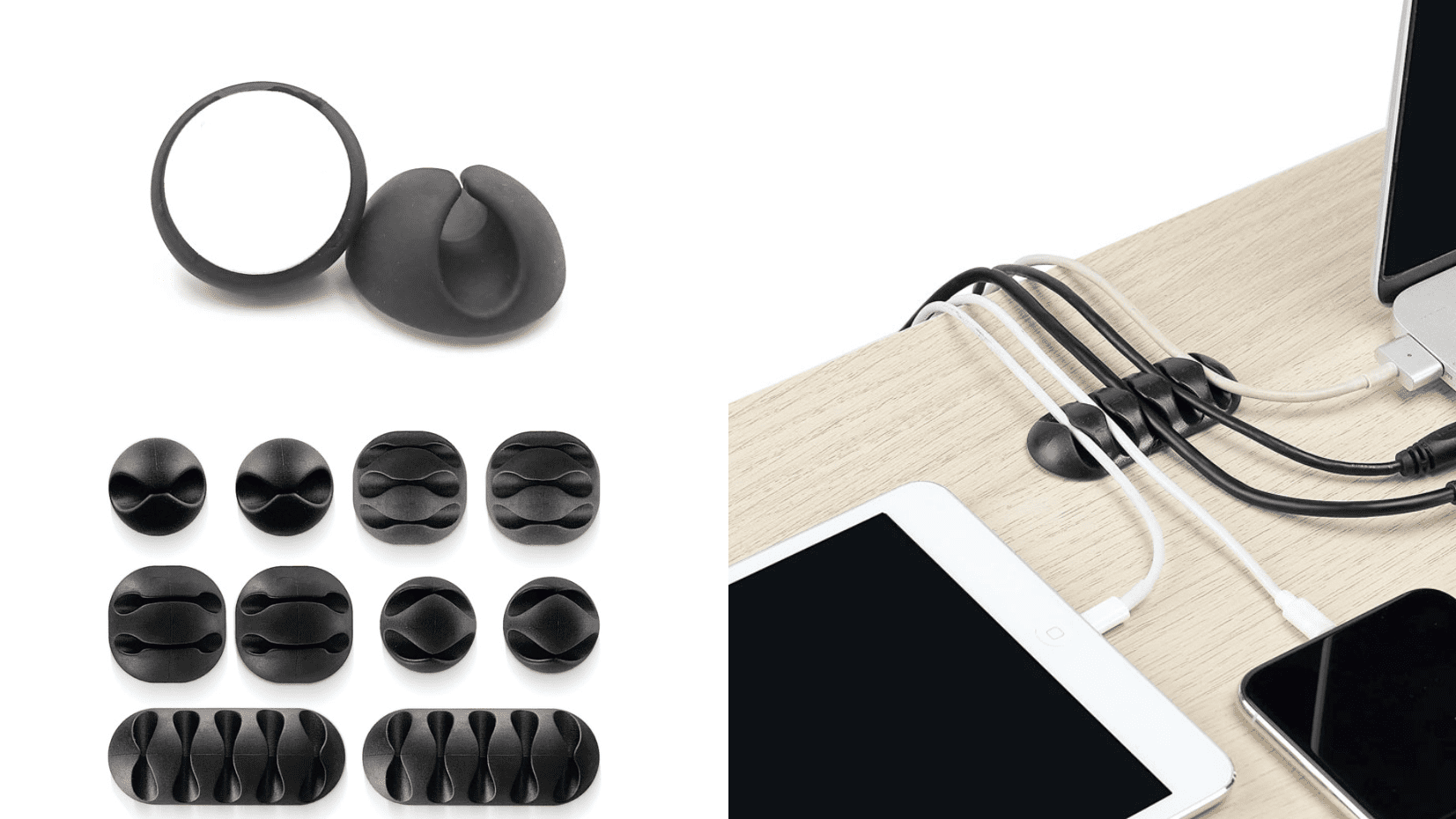
3.Cable Clip
Pros: Small silicone clips stick anywhere on desks, legs or walls, easy to route single wires as you like.
Cons: Each only fits 1 or 2 cords; sticky glue wears out and falls off over time, can’t bundle lots of cables.
Best For: Tucking stray single wires in place around desk.
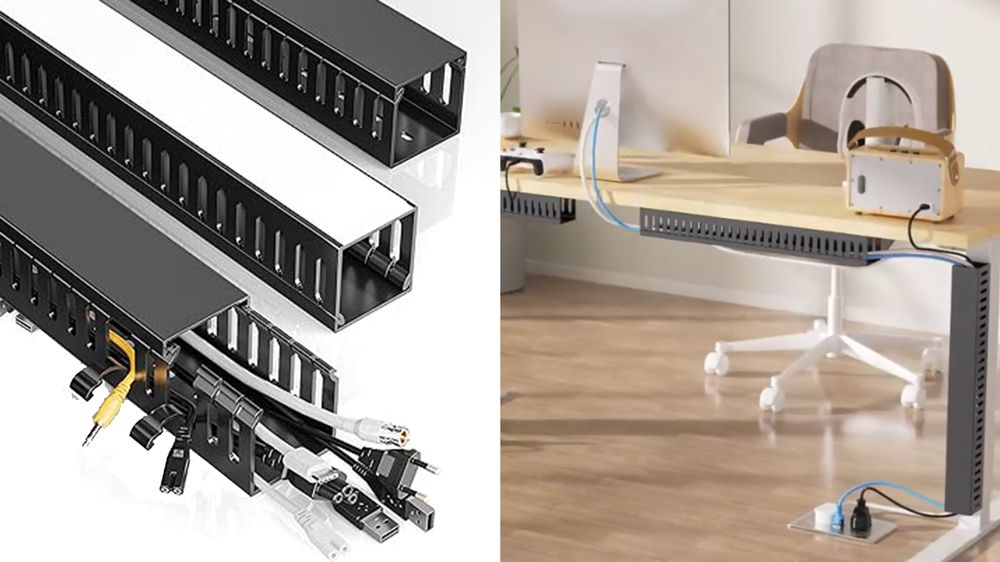
4.Cable Tray
Pros: Fully tuck all wires out of sight, can stick or screw onto walls, baseboards and undersides of desks.
Cons: A hassle to install—you need to measure, cut and glue. Hard to move once mounted and messy to add new cables later.
Best For: Set-it-and-forget-it permanent wiring, great for fixed cable management under desk.
5.Cable Sleeve: A Smarter Way to Hide Cables
Unlike the above-mentioned cable hiding tools, the cable sleeving uses a “wrap-around” management approach. It does not merely bundle or hide a single cable, but rather integrates all the cables that need to be organized into a single entity.
Wrap Multiple Cables into One Unit
The most distinctive feature of the cable sleeve is that it can enclose several or even dozens of cables all within one cable sleeving. Power cables, data cables, mouse and keyboard cables, display cables… regardless of the number of cables, as long as they pass through the sleeve, the output will be a neatly arranged “cable bundle”.
The advantage of this is obvious. The visual clutter under the table disappears immediately, and when cleaning, one won’t be tripped by various hanging cables when using a broom or vacuum cleaner. From the perspective of the effect of cable hiding, the cable sleeving is much more thorough than simple bundling.
Adapt to Various Corners and Bends
In office and home environments, there are rarely absolutely straight wiring paths. Table legs, edge of the tabletop, wall corners, monitor stands… these are all places where cables must pass through. If using cable tray to hide cables, when encountering corners, additional connectors are needed, which is very troublesome.
However, the cable sleeving itself can be easily bent. Routing the cables along the table legs or tabletop edges is not a problem at all. Braided split cable sleeve, hook and loop cable sleeve, and zipper sleeve braided cable wrap are especially convenient. They can be inserted or removed without unplugging the plugs, and the adjustment is very flexible.
Protect the Cable from Compression or Wear
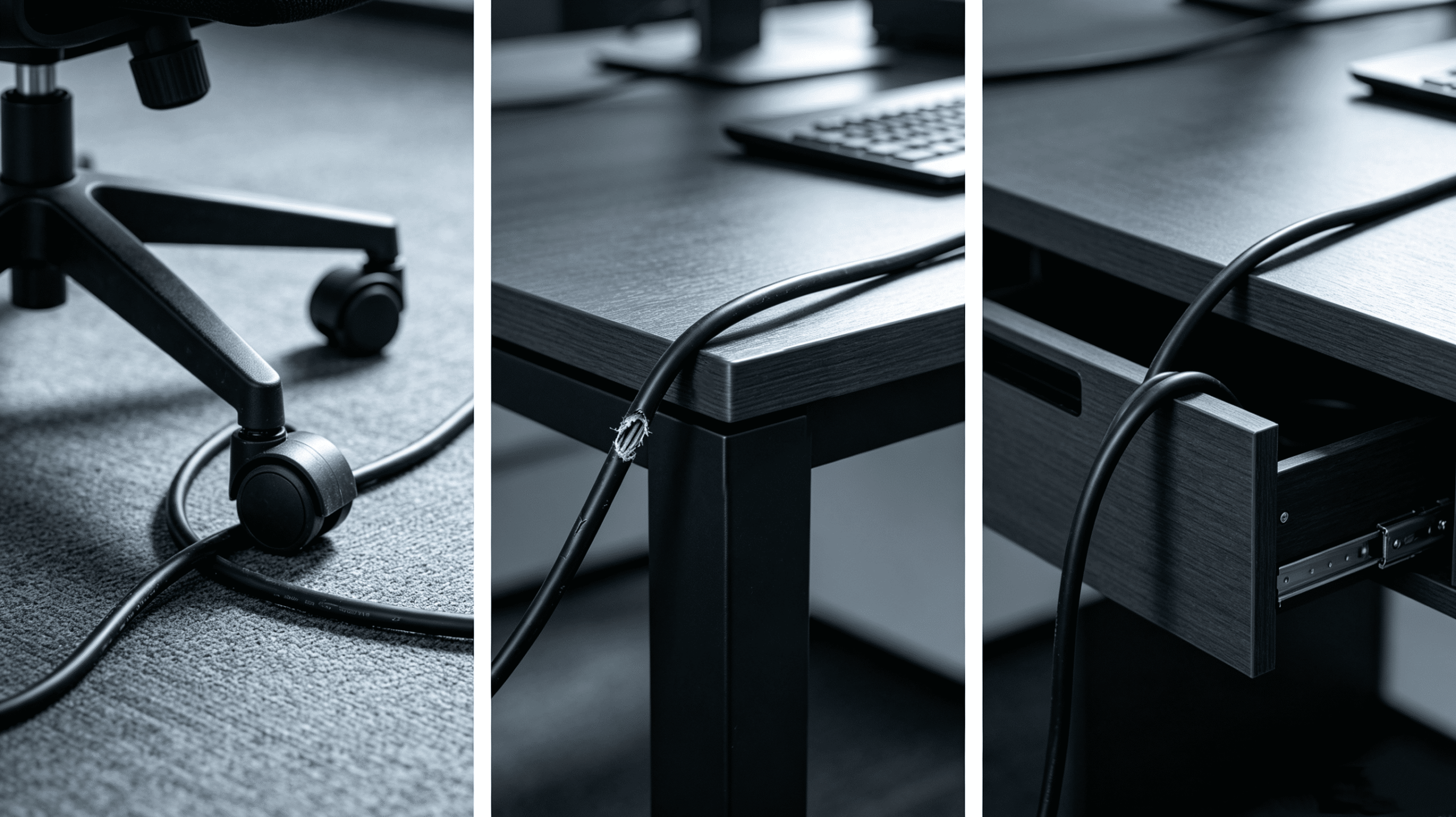
Wires under desks or TV stands get crushed by rolling chair wheels and scraped against desk legs every day, wearing down outer insulation and creating safety risks.
Cable sleeves wrap cords in a tough extra layer to block scratches and squeezing. Braided styles work best, standing up to chair weight and guarding pricey data & custom power cables from premature damage.
One-time Management for Long-term Peace of Mind
Many people are reluctant to hide cables because they are afraid that they will have to redo the process when replacing the equipment in the future. However, the cable sleeving makes things much easier.
Braided split cable sleeve can pull out the cables from the side, allowing for easy reinstallation or maintenance at any time. Zipper sleeve braided cable wrap can release the cables by simply pulling the zipper open, and then it will be neatly reassembled when closed. Hook and loop cable sleeve can be repeatedly opened and closed, allowing you to open it at any section where you want to, and it is very flexible to adjust.
Spending some time planning the routing of the cables for the first time will save you a lot of trouble later on.
Conclusion
If you’re looking for a simple, flexible and cost-effective way to hide cables, cable sleeves are one of the best cable management solutions available.
Whether you’re organizing a home office, gaming setup, TV cabinet or industrial equipment, the right cable sleeve can instantly improve appearance while protecting cables from daily wear and damage.
For more information, please contact us:https://qxcablesleeve.com/
FAQ
Q: Where can the cable sleeve be used?
A: Besides under the desk, the cable sleeve is also suitable for use behind the TV cabinet, in server cabinets, and in equipment areas of live streaming rooms where there is a lot of cable.
Q: Will the cable sleeve affect the heat dissipation of the cables?
A: In office scenarios, the heat generated by cables is very small, so the sleeve won’t cause a heat dissipation problem. If it’s for high-power equipment, a braided sleeve can be chosen, which has better ventilation.
Q: After using the cable sleeve, will there be no cables visible under the desk?
A: Cable sleeve can integrate multiple cables into one, significantly reducing visual clutter. To make it completely invisible, you can follow the desk legs or the back of the desk board to route cables through the sleeve.
Q: Does the installation of the cable sleeve require tools?
A: No. Split cable sleeve, hook and loop sleeve, and zipper sleeve can be completed by hand. If you need to cut the length, a hot knife is the most convenient. If not, use scissors to cut and then burn the edge of the cut with a lighter.
Hey there, I’m Celia!

Get A Quote


Related Post You May Also Like

How Fire Sleeve Protects Cables
[pac_divi_table_of_contents included_headings="off|on|on|off|off|off" exclude_headings_by_class="on" active_link_highlight="on" level_markers_3="icons" title_container_padding="10px|15px|10px|15px|true|false" title_container_bg_color="#333333" body_area_height="650px"...
Spiral Wrap Sizing: 9 Mistakes That Ruin Cable Bundles
[pac_divi_table_of_contents included_headings="off|on|on|off|off|off" exclude_headings_by_class="on" active_link_highlight="on" level_markers_3="icons" title_container_padding="10px|15px|10px|15px|true|false" title_container_bg_color="#333333" body_area_height="650px"...

The Hidden Hero of Electrical Safety: Why Insulation Sleeves Are Often Overlooked
[pac_divi_table_of_contents included_headings="off|on|on|off|off|off" exclude_headings_by_class="on" active_link_highlight="on" level_markers_3="icons" title_container_padding="10px|15px|10px|15px|true|false" title_container_bg_color="#333333" body_area_height="650px"...

Best Cable Sleeves for Home Office Cable Management
[pac_divi_table_of_contents included_headings="off|on|on|off|off|off" exclude_headings_by_class="on" active_link_highlight="on" level_markers_3="icons" title_container_padding="10px|15px|10px|15px|true|false" title_container_bg_color="#333333" body_area_height="650px"...
0 Comments